SpaceX has reportedly signed a massive $6.3 billion compute rental agreement that could significantly boost its monthly revenue, but the move is also raising fresh questions about the future of Grok AI and how aggressively the company plans to compete in the artificial intelligence race.
Under the new agreement, SpaceX will rent access to NVIDIA GB300 GPUs housed at its Colossus 2 data center to Reflection, a company described in the original post as having Pentagon ties. The deal is expected to generate $150 million per month for SpaceX, beginning in July 2026 and continuing through June 2029.
The arrangement highlights a growing trend in the AI industry: advanced GPU capacity has become one of the world’s most valuable technology assets. With demand for NVIDIA AI accelerators still outpacing supply, companies that control large GPU clusters can turn their infrastructure into a powerful revenue engine.
SpaceX appears to be doing exactly that.
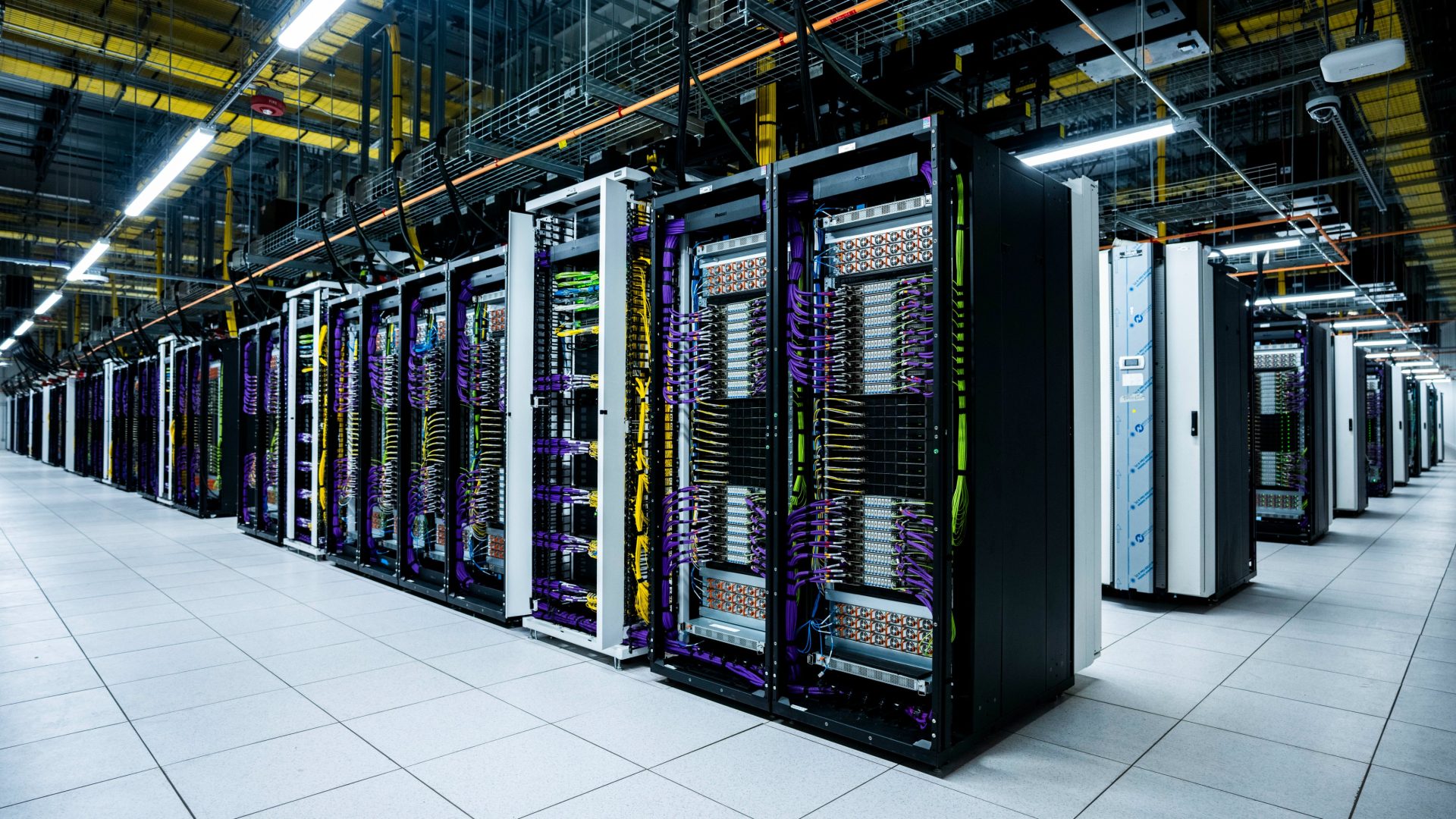
Colossus 2 has become one of SpaceX’s most important AI infrastructure assets. According to the information provided, the data center currently contains more than 550,000 GPUs, mainly split between NVIDIA GB200 and GB300 accelerators. These chips are designed for demanding AI workloads, including large language model training, inference, and high-performance data processing.
SpaceX’s older Colossus 1 data center is also substantial. As of May 2026, it reportedly supported more than 220,000 NVIDIA GPUs, including H100, H200, and around 30,000 GB200 AI accelerators. While still powerful, Colossus 1 is described as having a more mixed GPU setup, which may make it less ideal for training future generations of Grok AI compared with a more uniform, next-generation cluster.
The Reflection deal is not SpaceX’s first major compute rental agreement. In the run-up to its IPO, SpaceX reportedly secured a major cloud service agreement with Google, providing compute capacity equivalent to 110,000 NVIDIA GPUs, along with CPUs, memory, and other related components. That deal was valued at $920 million per month.
SpaceX also reportedly signed a large agreement with Anthropic, giving the AI company access to 220,000 NVIDIA GPUs, including H100s, H200s, GB200s, and other accelerators. That agreement is said to be worth $1.25 billion per month, or about $15 billion per year.
The Anthropic deal is believed to be connected primarily to Colossus 1, while the Google agreement is reportedly centered more heavily on Colossus 2. Now, with Reflection gaining access to GB300 GPUs at Colossus 2, SpaceX is further expanding its strategy of monetizing AI compute capacity.
That is where the bigger strategic question begins.
If Grok AI is meant to compete with leading AI models from OpenAI, Anthropic, Google, and others, why is SpaceX renting out so much of the GPU capacity that could otherwise be used to train and improve its own models?
Large AI models require enormous amounts of compute, especially as companies push toward more advanced reasoning, multimodal capabilities, real-time assistants, and enterprise AI tools. Access to the latest NVIDIA GPUs can be a major advantage. By renting out capacity to outside companies, SpaceX is creating a major revenue stream, but it may also be limiting how much compute remains available for Grok’s development.
One possible explanation is simple economics. AI compute is now so valuable that renting it out can generate extraordinary cash flow. At $150 million per month from Reflection alone, SpaceX is turning its GPU infrastructure into a recurring revenue machine. Combined with the reported Google and Anthropic agreements, the company could be collecting billions of dollars per year from compute services.
Another possibility is that SpaceX may be taking a more flexible view of the AI market. If advanced AI models become increasingly commoditized, especially with the rise of powerful open-source models, owning the infrastructure may prove more profitable than betting everything on a single proprietary AI product. In that scenario, selling compute access to multiple AI companies could be a safer and more lucrative strategy than reserving all resources for Grok.
The timing is also notable. SpaceX is described as being in an exceptionally strong financial position following a historic IPO and a major bond deal, with more than $100 billion in liquidity. Its reported $60 billion acquisition of Cursor is structured as an all-stock transaction, meaning it would not significantly reduce the company’s cash reserves.
That financial strength gives SpaceX room to pursue multiple strategies at once. It can continue investing in AI, satellite internet, launch services, and data centers while also earning large recurring payments from companies hungry for GPU access.
Still, the decision to rent out GB300 capacity at Colossus 2 adds uncertainty around Grok AI’s competitive outlook. OpenAI and Anthropic are expanding aggressively, and AI labs around the world are racing to secure the most powerful chips available. If SpaceX is directing a meaningful portion of its best AI infrastructure toward external customers, observers will naturally wonder whether Grok remains a top priority or whether compute monetization has become the bigger business opportunity.
For now, the $6.3 billion Reflection agreement reinforces one clear point: AI infrastructure has become one of the most valuable assets in technology. SpaceX is no longer just a launch company or a satellite internet powerhouse. With Colossus 1 and Colossus 2, it is positioning itself as a major player in the global AI compute market.
Whether that helps Grok catch up with leading AI models, or signals a shift toward becoming a large-scale compute provider, remains the question investors and AI watchers will be asking next.


