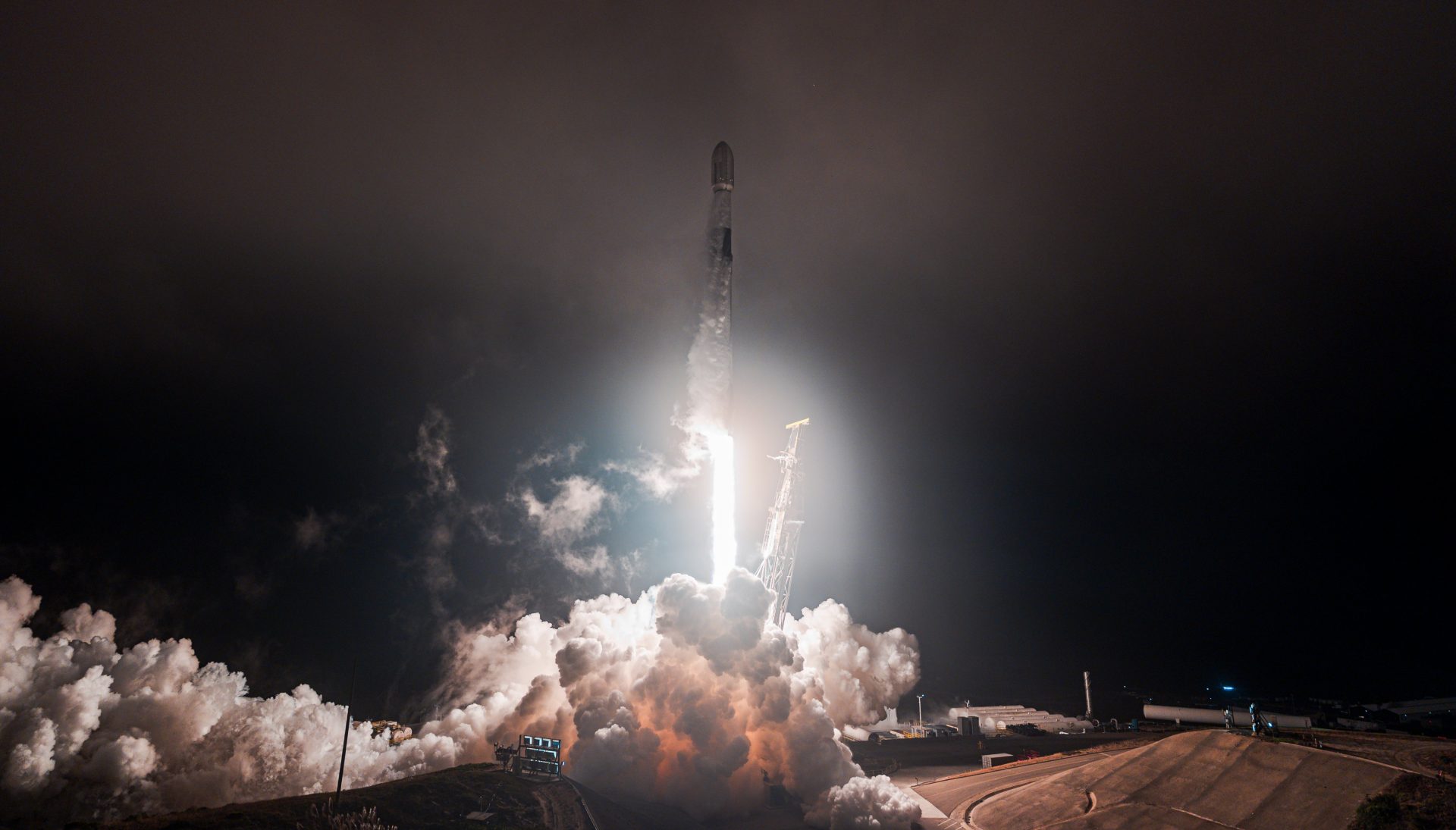
SpaceX and NVIDIA May Be Preparing a Major AI Push After Historic IPO
SpaceX’s long-awaited public market debut has immediately become one of the biggest financial stories of the year. After shares began trading on the Nasdaq, the company finished its first regular session up more than 19%, pushing its valuation to roughly $2.11 trillion. The surge also reportedly lifted Elon Musk’s net worth to a historic milestone, making him the world’s first trillionaire.
But the IPO may only be the beginning of a much larger story. Shortly after SpaceX’s debut, NVIDIA publicly congratulated the company on its successful listing, calling it a historic moment. Elon Musk responded with similarly enthusiastic comments, saying he wants to take SpaceX’s already “exciting partnership with NVIDIA” to the next level.
That exchange has fueled speculation that SpaceX and NVIDIA are preparing to expand their collaboration in artificial intelligence, satellite computing, and next-generation data infrastructure.
A major clue may be SpaceX’s newly unveiled AI1 satellite, the company’s first dedicated satellite platform built for AI compute workloads. The AI1 is designed to support up to 150 kW of peak compute payload and around 120 kW of average compute payload, making it one of the most ambitious space-based computing concepts revealed so far.
According to the details shared, the AI1 satellite includes liquid radiators, meteorite shielding, deployable solar arrays, and a centralized compute module. It also features an interchangeable compute provider design, which could make it flexible enough to support different hardware configurations over time. The satellite is expected to be produced at SpaceX’s Gigasat facility in Texas.
This is where the NVIDIA connection becomes especially interesting. NVIDIA dominates the AI hardware market, and its GPUs are the backbone of many of the world’s most powerful artificial intelligence systems. If SpaceX plans to create a network of AI compute satellites, NVIDIA could become a critical technology partner by supplying advanced chips, systems, or expertise for orbital AI infrastructure.
The potential impact would be enormous. Space-based AI computing could reduce reliance on terrestrial data centers, support real-time satellite intelligence, improve autonomous space operations, and possibly power new services through Starlink and future SpaceX platforms. It could also give SpaceX a unique position in the growing AI infrastructure race, where demand for compute power continues to outpace supply.
SpaceX is not only looking to space for its AI ambitions. The company is also building out its Terafab project in collaboration with Tesla and Intel, pointing to a broader strategy that combines manufacturing, compute capacity, energy systems, and satellite connectivity.
Before its IPO, SpaceX also signed a major cloud services agreement with Google. That deal reportedly gives SpaceX access to compute capacity equivalent to 110,000 NVIDIA GPUs, along with CPUs, memory, and related components, at a cost of around $920 million per month.
In another major agreement, the parent company behind Starlink and xAI reportedly struck a deal with Anthropic, giving the AI company access to 220,000 NVIDIA GPUs, including H100, H200, GB200, and other systems. That agreement is said to be worth about $1.25 billion per month, or roughly $15 billion annually.
Taken together, these moves suggest SpaceX is rapidly evolving beyond rockets, satellites, and broadband internet. The company appears to be positioning itself as a major player in AI computing infrastructure, combining space-based systems, massive GPU access, advanced manufacturing, and partnerships with some of the most influential technology companies in the world.
For NVIDIA, a deeper relationship with SpaceX could open the door to an entirely new frontier for AI hardware: orbit. For SpaceX, NVIDIA’s chips and AI expertise could help transform satellites into high-powered compute platforms capable of supporting future artificial intelligence applications at a global scale.
While neither company has revealed the full scope of the expanded partnership, Musk’s comments suggest that something significant may be underway. With SpaceX now public, flush with market momentum, and pushing into AI-focused satellite technology, the next chapter could center not only on reaching Mars, but also on building the computing network that powers the future of artificial intelligence.