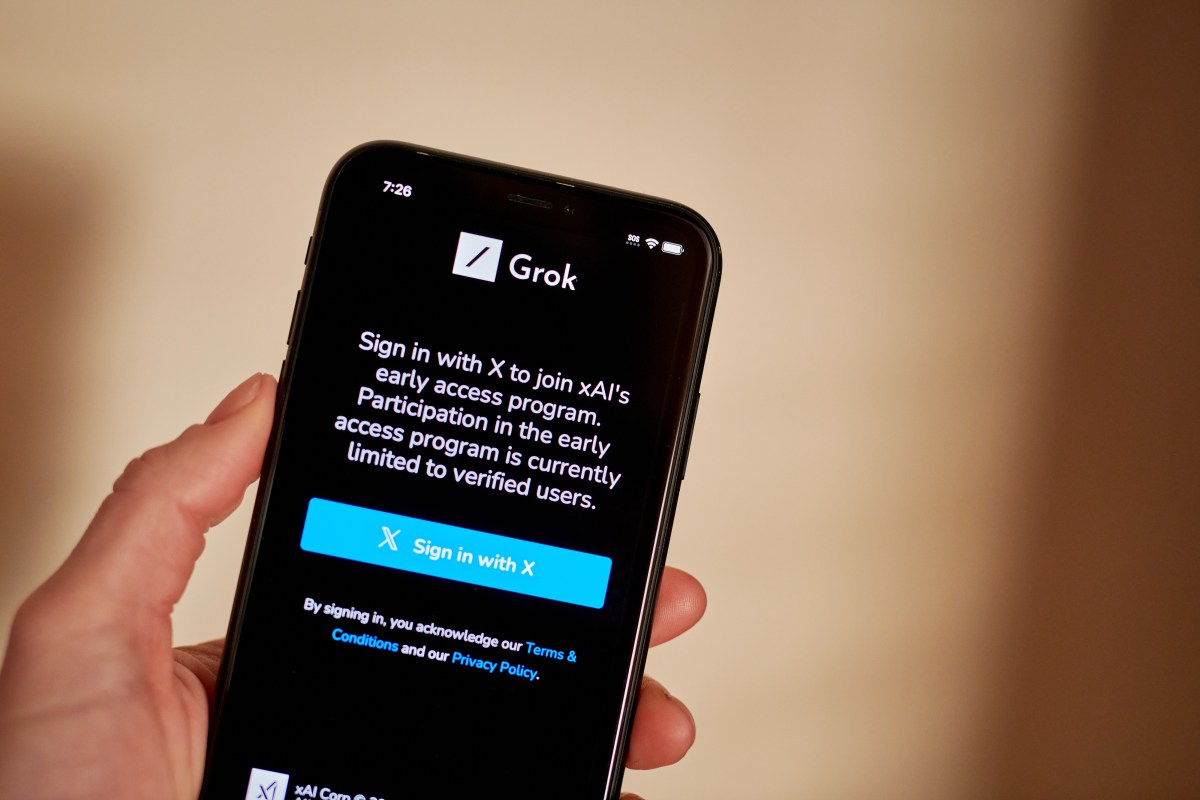
Elon Musk’s AI initiative, xAI, has just unveiled its newest marvel, Grok 3, a cutting-edge AI model that promises to push the boundaries of what artificial intelligence can do. This release also introduces exciting new features for the Grok iOS and web applications, making them more powerful than ever before.
Grok is Musk’s ambitious answer to some of the biggest names in AI today, rivaling models like OpenAI’s GPT-4o and Google’s Gemini. Grok’s capabilities span image analysis, question responses, and more, underlining its integration with Musk’s own social media platform, X. Although initially intended for a 2024 release, Grok 3 has arrived ahead of schedule, after months in development.
The backdrop to Grok 3’s creation is a massive data center in Memphis, where 200,000 GPUs have been diligently training the model. On X, Musk boasted about the significant leap in computing power behind Grok 3 compared to its predecessor, Grok 2, further fueled by an enhanced dataset that intriguingly includes court filings.
During a live-streamed presentation, Musk shared insights about Grok 3’s capabilities, emphasizing its capacity for truth-seeking, even when such truths challenge societal norms. Grok 3 encompasses a range of models, including a streamlined version called Grok 3 mini, catering to quick responses at the expense of some detail.
Grok 3 is already making waves, outperforming GPT-4o in key benchmarks like AIME and GPQA, which test prowess in math and scientific problem-solving. It even shone in the Chatbot Arena, a competitive platform where AI models are pitted against one another.
Two standout models within the Grok 3 family are Grok 3 Reasoning and Grok 3 mini Reasoning. These models mimic human-like problem-solving by scrutinizing issues to minimize errors, a trait shared with other reasoning models like OpenAI’s o3-mini. xAI touts Grok 3 Reasoning as superior even to the best of OpenAI’s o3-mini models, showcasing its prowess in mathematical benchmarks such as AIME 2025.
Users can access these reasoning models through the Grok app, with features like “Big Brain” mode enhancing computational reasoning for tougher queries. According to xAI, these models excel in tackling mathematics, science, and programming challenges.
Grok also introduces DeepSearch in the app, offering a powerful research tool that scours the internet and X for insights, delivering concise summaries in response to user queries.
While subscribers to X’s Premium+ plan are the first to explore Grok 3, xAI plans to introduce another tier, SuperGrok. For a monthly fee, this plan opens doors to more advanced reasoning capabilities and unlimited image generation.
Future enhancements, such as a “voice mode” for Grok models, are on the horizon, alongside enterprise API access. Additionally, Musk highlighted xAI’s commitment to open-sourcing older Grok versions, with Grok 2 set to become publicly available once Grok 3 is fully established.
When Grok was first introduced, Musk described it as bold, unfiltered, and willing to tackle controversial subjects—traits that previous versions somewhat delivered. However, Grok sometimes leaned left on contentious topics, according to studies. Musk attributes this to the training data and has vowed to adjust Grok towards political neutrality. It’s still uncertain whether this objective has been fully realized or what ramifications it might carry. As xAI continues to evolve, the impact and capabilities of Grok 3 will be closely watched by the AI community and users alike.


