SpaceX has moved to turn unused AI computing power into a massive new revenue stream, signing a major cloud services agreement with Google as demand for advanced AI infrastructure continues to surge.
According to a recent SEC disclosure, SpaceX entered into a Cloud Service Agreement with Google on June 5, 2026. Under the deal, Google will receive access to compute capacity equivalent to roughly 110,000 NVIDIA GPUs, along with CPUs, memory, and other supporting components. The agreement is valued at $920 million per month and is scheduled to run from October 2026 through June 2029.
The contract also includes flexibility for both companies. Either SpaceX or Google can terminate the agreement by giving 90 days’ notice, giving both sides room to adjust if market conditions, AI demand, or infrastructure needs change.
This Google agreement follows another major compute deal reportedly signed with Anthropic. That earlier arrangement gives Anthropic access to a much larger block of AI infrastructure, including around 220,000 NVIDIA GPUs such as H100, H200, GB200, and other high-end accelerators. The Anthropic agreement is said to be worth about $1.25 billion per month, or approximately $15 billion per year, and runs through May 2029, also with a 90-day cancellation option.
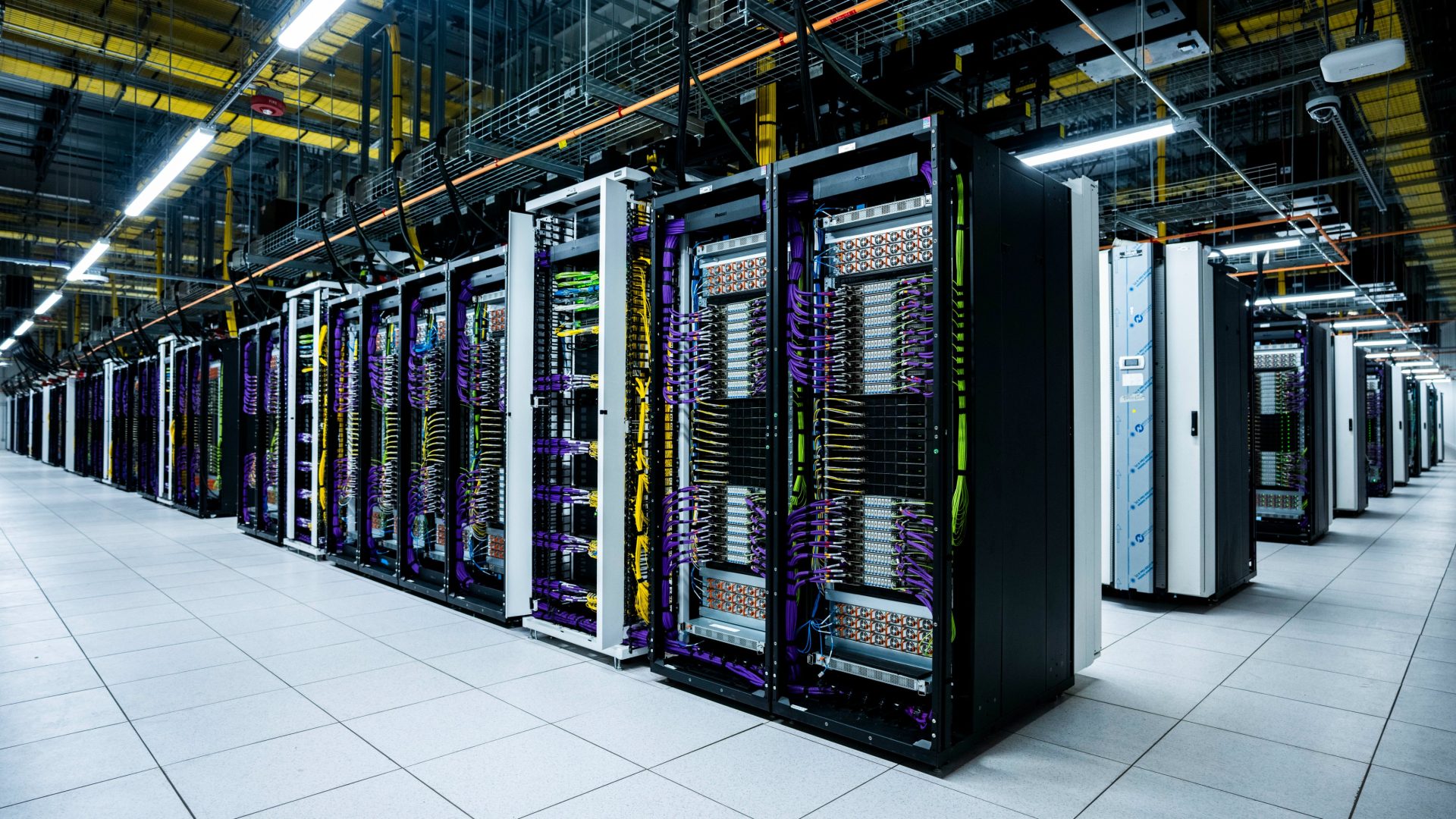
Together, these contracts suggest SpaceX is moving aggressively to monetize the Colossus 1 data center, a massive AI computing facility that had reportedly been underused by xAI. The data center includes a mixed GPU environment featuring different generations of NVIDIA hardware, including H100, H200, and GB200 systems.
The key question is why such valuable AI computing capacity is being leased out instead of being fully used for xAI’s own Grok model development. Reports circulating around the industry suggest that xAI may have faced challenges efficiently training Grok on the mixed architecture inside Colossus 1. Large AI model training often depends on tightly optimized hardware clusters, and combining different GPU types can make it harder to achieve peak performance.
Because of those limitations, xAI is said to have shifted more of its training work to the newer Colossus 2 facility. That move appears to have left significant capacity available at Colossus 1, creating an opportunity for SpaceX to sell access to companies racing to secure high-performance AI compute.
The timing is important. Demand for AI GPUs remains intense as major technology companies and AI labs compete to train and deploy increasingly powerful models. Access to large clusters of NVIDIA accelerators has become one of the most valuable resources in the artificial intelligence industry. By offering access to tens or even hundreds of thousands of GPUs, SpaceX is positioning itself as a serious player in the AI cloud infrastructure market.
The financial impact could be enormous. If the Google deal runs at its stated rate, it could generate more than $11 billion per year. Combined with the Anthropic agreement, SpaceX could be looking at tens of billions of dollars in annualized compute-related revenue, assuming both deals remain active.
That revenue could also improve SpaceX’s financial profile as speculation continues around its long-term public offering plans. Turning idle or underused infrastructure into recurring cloud revenue may make the company more attractive to investors, especially as AI infrastructure becomes one of the hottest areas in the technology sector.
For Google, the deal offers access to scarce AI compute without having to wait for new data center capacity to come online. For SpaceX, it provides a way to extract value from an expensive GPU-heavy facility that may not have been fully optimized for xAI’s internal needs.
The broader message is clear: AI compute has become so valuable that unused capacity is no longer something companies can afford to leave idle. Whether for training frontier models, powering AI products, or supporting cloud customers, large-scale GPU clusters are now among the most sought-after assets in tech.
SpaceX’s latest agreement with Google shows how quickly the AI infrastructure business is evolving. What may have started as excess capacity tied to xAI’s ambitions is now becoming a potentially massive commercial opportunity.