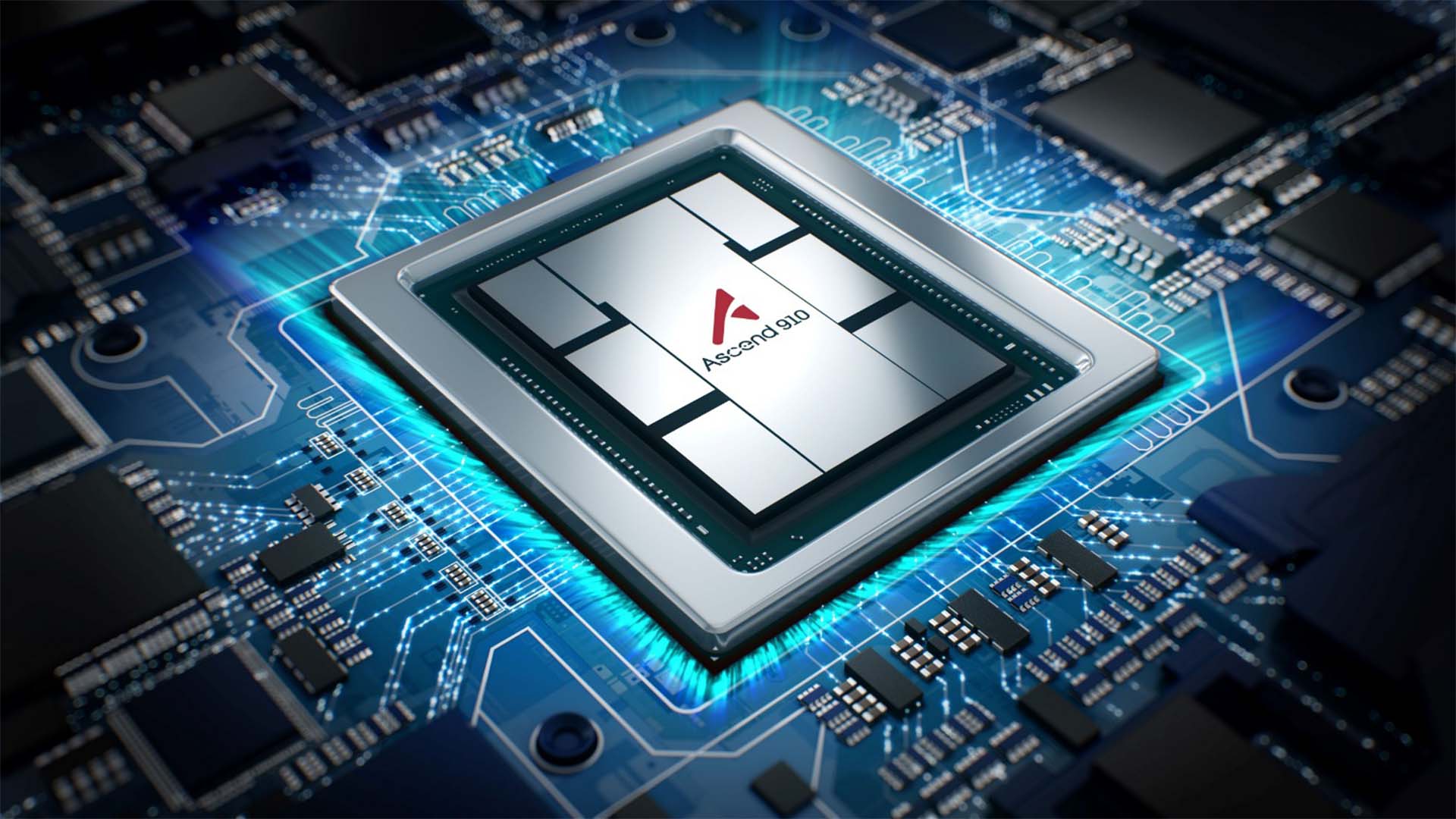
Huawei could accelerate its AI chip ambitions with glass substrate technology by 2027
Huawei is reportedly preparing a major shift in its AI chip strategy, with plans to adopt glass substrates for advanced semiconductor packaging as early as 2027. If the timeline holds, the move could give the Chinese tech giant a meaningful head start over several major Asian competitors and strengthen China’s position in the global AI hardware race.
Huawei currently holds a strong position in China’s AI chip market, largely because NVIDIA’s most advanced accelerators face restrictions in the region. However, market access alone is not enough to compete globally. To challenge established leaders in AI computing, Huawei needs a technical edge, and glass substrate packaging may become one of its most important bets.
According to industry reports from South Korea, Huawei is working with local suppliers to build a production roadmap for glass substrates. The company is said to be coordinating with Chinese display and materials firms such as BOE and Visionox, while also sourcing certain key materials from South Korean suppliers. Mass production could begin in 2027, which would place Huawei roughly one year ahead of Samsung and other companies that are expected to move into similar production around 2028.
Glass substrates are gaining attention because they can solve several problems found in today’s advanced chip packaging. Compared with traditional organic substrates, glass offers a much flatter and more stable surface. That matters in AI chips, where manufacturers need to pack more components into smaller areas while maintaining high reliability.
For Huawei, the biggest advantage may come from denser 3D chip stacking. AI accelerators require massive bandwidth and fast communication between chiplets, memory, and other components. Glass substrates can help enable tighter integration, faster data transfer, and improved signal performance. These gains are especially important for training and running large language models, where performance and efficiency are critical.
Another key benefit is reduced warping during high-temperature manufacturing. Warpage can lower production yields and increase costs, particularly in complex chip packaging. Because glass remains extremely flat, it may help improve manufacturing consistency and reduce defects. Higher yields would be crucial for Huawei if it wants to scale production and offer competitive pricing.
Power efficiency is also a major factor. Glass substrates can reduce current leakage, which helps lower energy consumption while supporting faster data rates. This could make Huawei’s AI chips more appealing to data center operators, many of whom are under pressure to reduce power usage as AI workloads grow rapidly.
The timing of Huawei’s push is significant. The company continues to face restrictions that limit access to advanced chipmaking tools, including extreme ultraviolet lithography equipment. Without the most advanced manufacturing machinery, Huawei may be looking for other ways to improve chip performance through packaging innovation rather than relying only on cutting-edge process nodes.
This strategy could become a practical workaround. Advanced packaging has become one of the most important battlegrounds in the semiconductor industry, especially as traditional chip scaling becomes harder and more expensive. By investing early in glass substrate technology, Huawei could improve the competitiveness of its AI processors even without having access to the same tools used by leading global chipmakers.
Still, major challenges remain. Moving from development to mass production is difficult, especially for a new packaging platform. Huawei must secure enough materials, build a reliable supply chain, refine manufacturing processes, and achieve strong yields at scale. U.S. trade restrictions may also complicate the company’s ability to obtain certain technologies or expand into international markets.
Even so, the potential payoff is large. If Huawei can combine improved performance, better energy efficiency, and lower pricing, it may attract customers looking for alternatives in AI infrastructure. Data centers are already searching for ways to cut power draw, and interest in more efficient memory and packaging solutions continues to rise across the industry.
Huawei’s reported 2027 glass substrate roadmap suggests the company is not simply defending its domestic AI chip market. It is looking for a path to become more competitive in advanced AI hardware. Whether that plan succeeds will depend on execution, supply chain stability, and the ability to turn promising packaging technology into reliable high-volume production.
If Huawei reaches mass production before key rivals, glass substrates could become a turning point in its AI chip strategy and a signal that China’s semiconductor industry is moving faster in advanced packaging than many expected.


