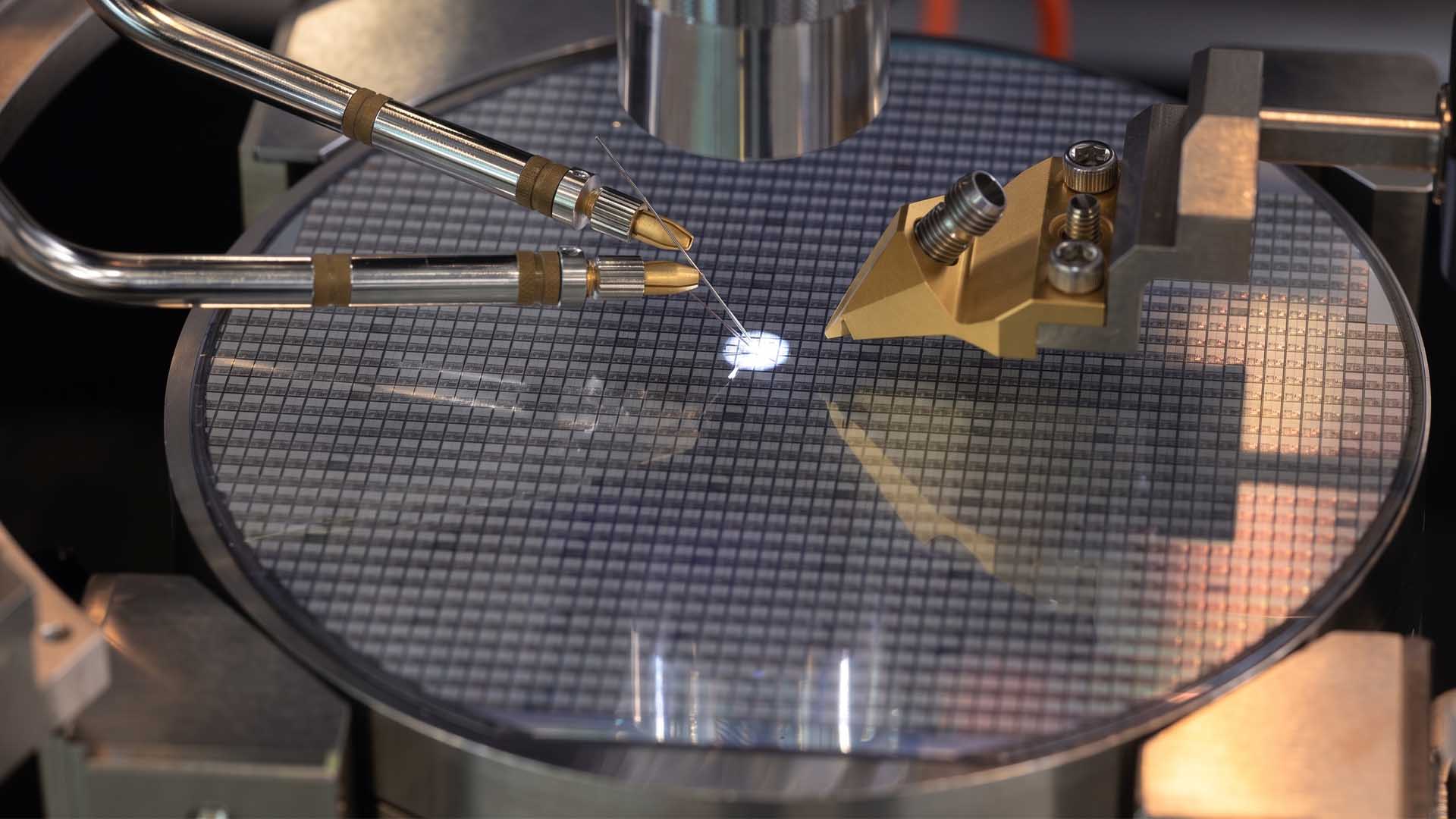
China’s Chip Ambitions Face a Tough Reality Without EUV Lithography
China’s semiconductor industry is still pushing hard to compete at the leading edge, but export restrictions are creating a serious barrier. The biggest challenge is access to extreme ultraviolet lithography, better known as EUV, the advanced chipmaking technology supplied by ASML and supported by key optical systems from Zeiss.
Because U.S.-led export controls prevent China from obtaining cutting-edge EUV equipment, major Chinese foundries have been forced to rely on older deep ultraviolet lithography, or DUV. To make more advanced chips with DUV, manufacturers use a method called multi-patterning, where the same wafer goes through multiple exposure steps to create smaller and more complex features.
On paper, this approach can help China move beyond current limitations. In practice, however, it comes with major trade-offs.
Zeiss CEO Frank Rohmund has suggested that China’s commercially viable advanced chip production is likely to remain around the 7nm class without access to EUV tools. While producing 5nm-class chips with DUV may be technically possible, it would be far more complicated, expensive, and difficult to scale.
The problem is not simply whether a chip can be made once. The real issue is whether it can be manufactured in large volumes with acceptable yields and reasonable costs. Multi-patterning increases the number of production steps, which raises the chance of defects and slows down manufacturing. Lower yields mean fewer usable chips per wafer, making the final product more expensive and less competitive.
This is where EUV becomes critical. EUV lithography allows chipmakers to create extremely small features with fewer process steps, improving efficiency and making advanced nodes more practical for mass production. That is why global leaders such as TSMC are already moving toward 2nm production while China continues to face pressure at the 7nm level.
Huawei’s Kirin 9030 is often seen as an example of China’s progress under restrictions. The chip, manufactured by SMIC using a 7nm-class process, shows that Chinese foundries can still achieve impressive engineering results without EUV. The process reportedly uses a very tight metal pitch and competes in some ways with older EUV-based nodes from global rivals.
Still, performance and power efficiency remain key challenges. Advanced chipmaking is not only about shrinking transistor size; it is also about delivering better speed, lower energy use, and higher efficiency. In this area, chips from companies with access to more mature EUV-based manufacturing continue to hold a meaningful advantage.
Huawei has also talked about future packaging technologies, including LogicFolding, which it claims could help deliver 1.4nm-class chip performance by 2031. Advanced packaging can improve performance by stacking or combining chip components in new ways, but it does not fully replace the need for leading-edge lithography. Without EUV, China may still face higher costs, lower yields, and more complex production even if packaging technology advances.
There have been past reports suggesting China could begin trial production of domestic EUV machines, but so far there has been little concrete evidence of meaningful progress at a commercial level. Developing EUV lithography is extremely difficult because it requires mastery of optics, light sources, precision mechanics, materials, and ultra-clean manufacturing systems. It is one of the most complex technologies in the modern semiconductor supply chain.
For now, China’s chip industry appears capable of making progress through engineering workarounds, government support, and heavy investment. However, without access to EUV lithography, catching up with the world’s most advanced semiconductor manufacturers will remain a difficult and expensive task.
The likely outcome is a widening gap between China and leading chipmakers unless domestic EUV development accelerates dramatically. DUV multi-patterning can extend China’s capabilities, but it is not a long-term substitute for EUV when it comes to high-volume, cost-efficient production of the most advanced chips.


