China’s Domestic DUV Chipmaking Machine Is a Milestone, but ASML Still Holds the Lead
China’s latest progress in semiconductor manufacturing has drawn major attention after reports highlighted a domestically developed deep ultraviolet, or DUV, lithography machine. While the achievement signals Beijing’s continued push to reduce dependence on foreign chipmaking technology, industry analysts suggest it is not yet a serious threat to ASML, the Dutch company that dominates the global lithography equipment market.
The machine is reportedly being developed by Shanghai Aishengna Electronic Technology Group, a Chinese state-owned company with ties to Shanghai Micro Electronics Equipment, also known as SMEE, and Shanghai Electric Group. SMEE has been central to China’s long-term plan to build homegrown lithography tools as the country works around restrictions on access to advanced Western semiconductor equipment.
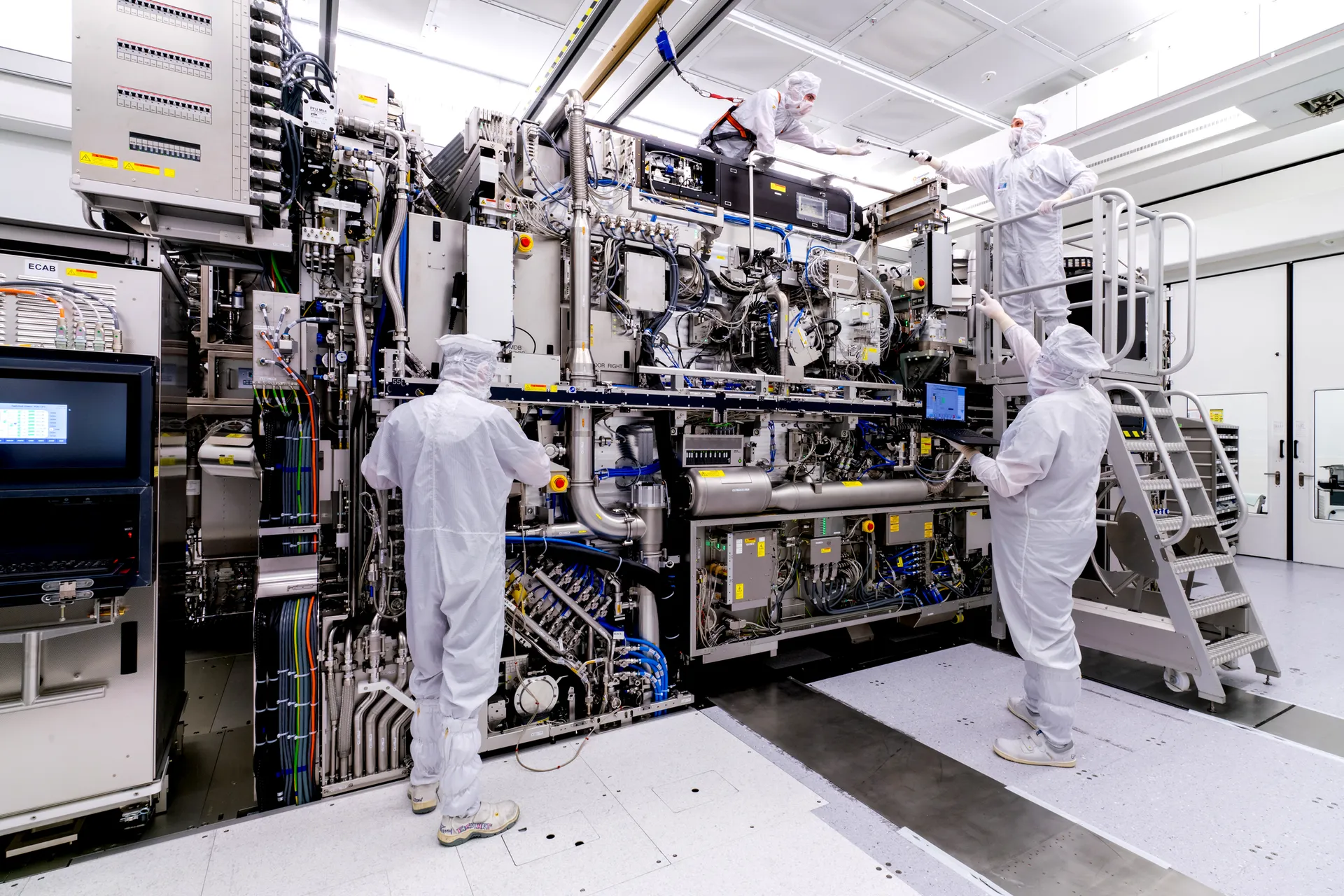
Lithography machines are among the most important and complex tools in chip manufacturing. They are used to print microscopic circuit patterns onto silicon wafers, making them essential for producing processors, memory chips, and other advanced semiconductors.
The newly reported Chinese system is said to be an immersion DUV scanner. Immersion lithography uses a layer of water between the lens and the wafer to improve pattern resolution. This technology has been widely used in the semiconductor industry for years and remains important for producing many types of chips.
However, the machine will still need extensive testing before it can be considered ready for large-scale commercial chip production. Developing a working prototype is only one step. To compete with global leaders, a lithography system must deliver high precision, reliability, strong output, and consistent yields over long production cycles.
ASML continues to dominate the market for advanced lithography systems. The company is best known for its extreme ultraviolet, or EUV, machines, which are required for manufacturing the most advanced chips. EUV systems are far more complex than DUV tools because they use shorter wavelengths of light and require a vacuum environment inside the machine.
Western export restrictions have limited China’s access to the most advanced EUV technology. However, older DUV lithography systems have not been restricted in the same way. ASML remains a key supplier of DUV equipment worldwide, and China has continued to be one of its most important customers.
Recent company data indicates that China accounted for about 16% of ASML’s revenue, or roughly €2.6 billion, in the first half of 2026. That placed China as ASML’s third-largest market after Taiwan and South Korea.
DUV machines are generally used to manufacture chips at 7-nanometer-class nodes and larger. It is possible to use DUV tools to produce more advanced chips, but doing so usually requires a technique called multi-patterning. This process involves multiple exposure steps to create finer circuit patterns.
While multi-patterning can extend the usefulness of DUV technology, it also brings major drawbacks. It can increase production complexity, reduce wafer throughput, raise costs, and create a higher risk of defects. As a result, even if China improves its domestic DUV capabilities, matching the efficiency and performance of leading global manufacturing tools will remain difficult.
China is also reportedly working toward future EUV lithography development, with some expectations suggesting domestic EUV systems may enter production around 2030. Companies such as Huawei are believed to be involved in broader efforts to strengthen China’s semiconductor supply chain.
For now, China’s domestic DUV lithography progress is an important symbolic and technological step. It shows that the country is investing heavily in chipmaking independence and making measurable advances in equipment development.
Still, ASML’s position remains extremely strong. Its decades of experience, mature supply chain, proven machine performance, and deep customer relationships make it difficult for any new competitor to quickly challenge its lead.
China’s new DUV system may help reduce reliance on imported equipment over time, especially for mature-node chips used in cars, industrial systems, consumer electronics, and communication devices. But in the high-end semiconductor race, the gap between producing a machine and matching ASML’s commercial performance is still significant.


