China May Need a Decade to Catch ASML in EUV Chipmaking Technology, UBS Says
China’s ambition to build a fully self-reliant semiconductor industry may face one of its toughest challenges yet: extreme ultraviolet lithography, better known as EUV. According to a recent UBS assessment, China is unlikely to match ASML’s EUV lithography machines within the next ten years, highlighting just how difficult it is to reproduce one of the most advanced technologies in chip manufacturing.
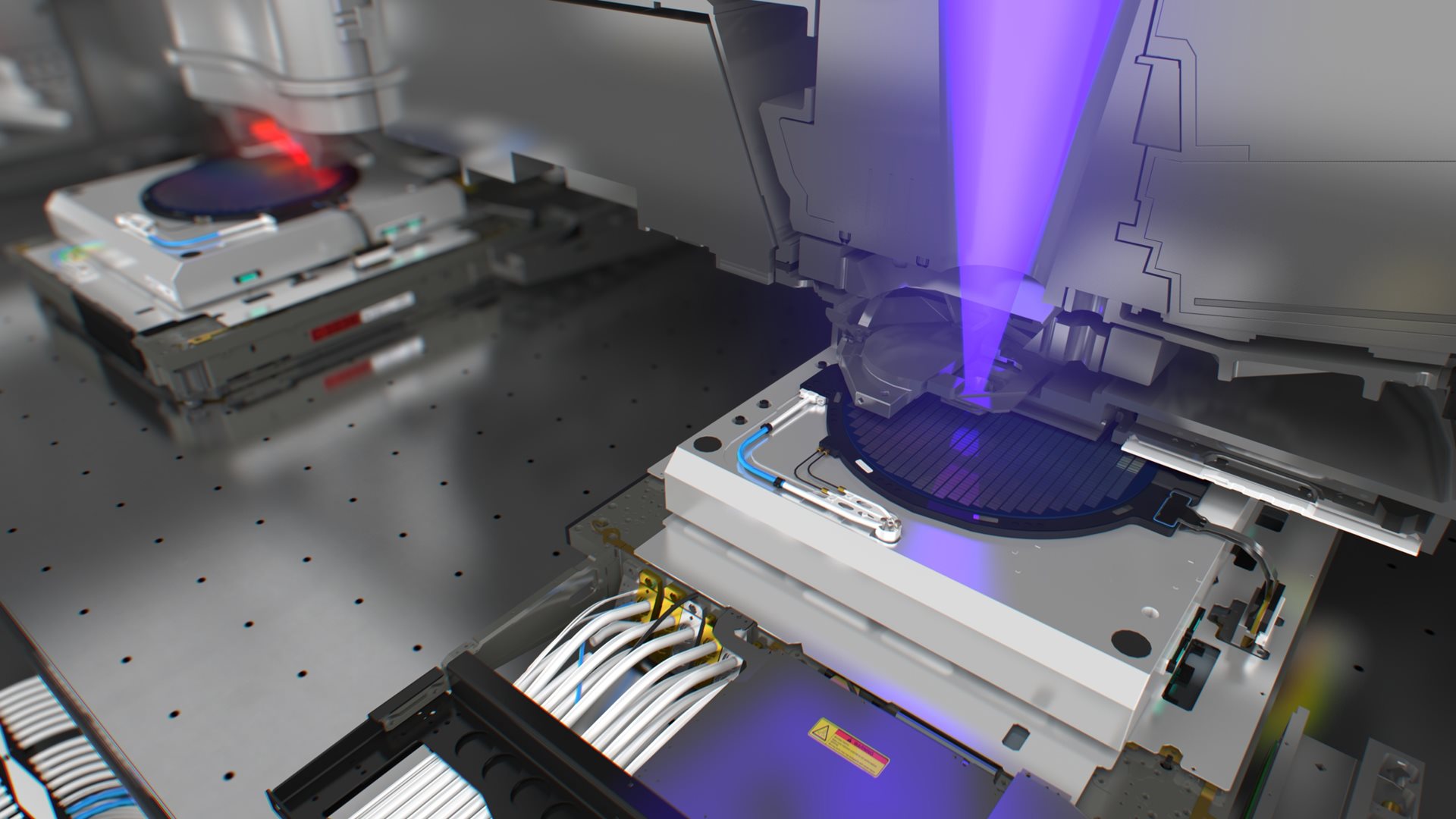
EUV lithography machines are essential for producing the world’s most advanced semiconductors. These systems allow chipmakers to print incredibly tiny patterns onto silicon wafers, making it possible to manufacture cutting-edge processors used in smartphones, artificial intelligence servers, high-performance computing, and other advanced electronics. Without access to EUV tools, producing the latest-generation chips becomes far more complex, expensive, and less efficient.
ASML, based in the Netherlands, is currently the only company in the world capable of manufacturing commercial EUV lithography systems at scale. This gives the company a central role in the global semiconductor supply chain. However, due to export restrictions led by the United States and supported by allied governments, China’s leading chipmakers are blocked from purchasing ASML’s EUV machines.
UBS believes this restriction creates a major technological gap that China will struggle to close quickly.
The investment bank reportedly compares China’s current EUV progress to where ASML stood around 2004. At that time, ASML was still working through major technical hurdles, including functional testing, vacuum testing, advanced mirror development, and new light-source technologies needed for EUV systems.
EUV lithography operates at a wavelength of 13.5 nanometers, far shorter than the wavelengths used in older deep ultraviolet, or DUV, lithography systems. Working with such short wavelengths requires an entirely different engineering approach. Standard lenses cannot be used, so EUV machines depend on highly specialized mirrors, vacuum chambers, powerful laser-produced plasma light sources, and extremely precise control systems.
These requirements make EUV one of the most complicated pieces of manufacturing equipment ever created. A single system contains hundreds of thousands of parts and depends on a global network of highly specialized suppliers. Recreating that ecosystem is not simply a matter of copying one machine; it requires mastering optics, materials science, plasma physics, precision mechanics, software, metrology, and semiconductor process integration.
ASML has spent decades refining the technology. Today, the company is already moving beyond standard EUV and developing high-NA EUV systems. High-NA EUV uses optics with a higher numerical aperture to improve focus and patterning precision, enabling even smaller chip features for future semiconductor nodes.
This means that while China is trying to close the gap in current EUV technology, ASML is already pushing into the next generation.
UBS notes that China may make faster progress in DUV lithography, especially immersion DUV systems. Unlike EUV, DUV lithography is older, better understood, and less difficult to reproduce. Immersion DUV, sometimes called wet lithography, uses a thin layer of ultra-pure water between the lens and wafer to improve resolution and depth of focus.
This technology is still widely used across the semiconductor industry, especially for mature and some advanced chipmaking processes. UBS suggests China could catch up to ASML in immersion DUV lithography within two to five years.
Two companies are viewed as important players in China’s domestic lithography effort: Shanghai Micro Electronics Equipment, often known as SMEE, and Shanghai Yuliangsheng Technology. UBS appears to see these firms as more relevant to China’s DUV progress than to immediate EUV competition.
Even if China succeeds in advancing domestic DUV tools, UBS believes the country may still depend on ASML for some time. The reason comes down to yield and throughput.
In semiconductor manufacturing, yield refers to the percentage of usable chips produced from each wafer. Throughput refers to how many wafers a machine can process in a given period. A lithography machine that technically works is not enough; it must also operate reliably, quickly, and with extremely high precision in mass production. Small differences in performance can have a major impact on manufacturing costs and competitiveness.
This is why catching up to ASML is so difficult. The challenge is not only building a machine that can expose wafers, but building one that can do it consistently in high-volume production for leading-edge chips.
China remains an important market for ASML despite export controls. UBS estimates that China accounted for about 33% of ASML’s 2025 sales, a sharp increase compared with levels below 10% before 2020. However, the bank expects China’s share of ASML sales to decline to around 15% to 20% by 2027, especially if further restrictions are placed on DUV equipment exports.
The semiconductor industry is now a key battleground in global technology competition. China has invested heavily in domestic chip production, equipment, materials, and design tools in response to tightening export controls. Its chipmakers have shown the ability to make progress under pressure, but EUV remains a particularly steep mountain to climb.
UBS’s view is clear: China may be able to narrow the gap in DUV lithography within a few years, but matching ASML in EUV could take a decade or longer. Given ASML’s continued advances in high-NA EUV, the technological race is likely to remain one of the most important stories in global chip manufacturing for years to come.


