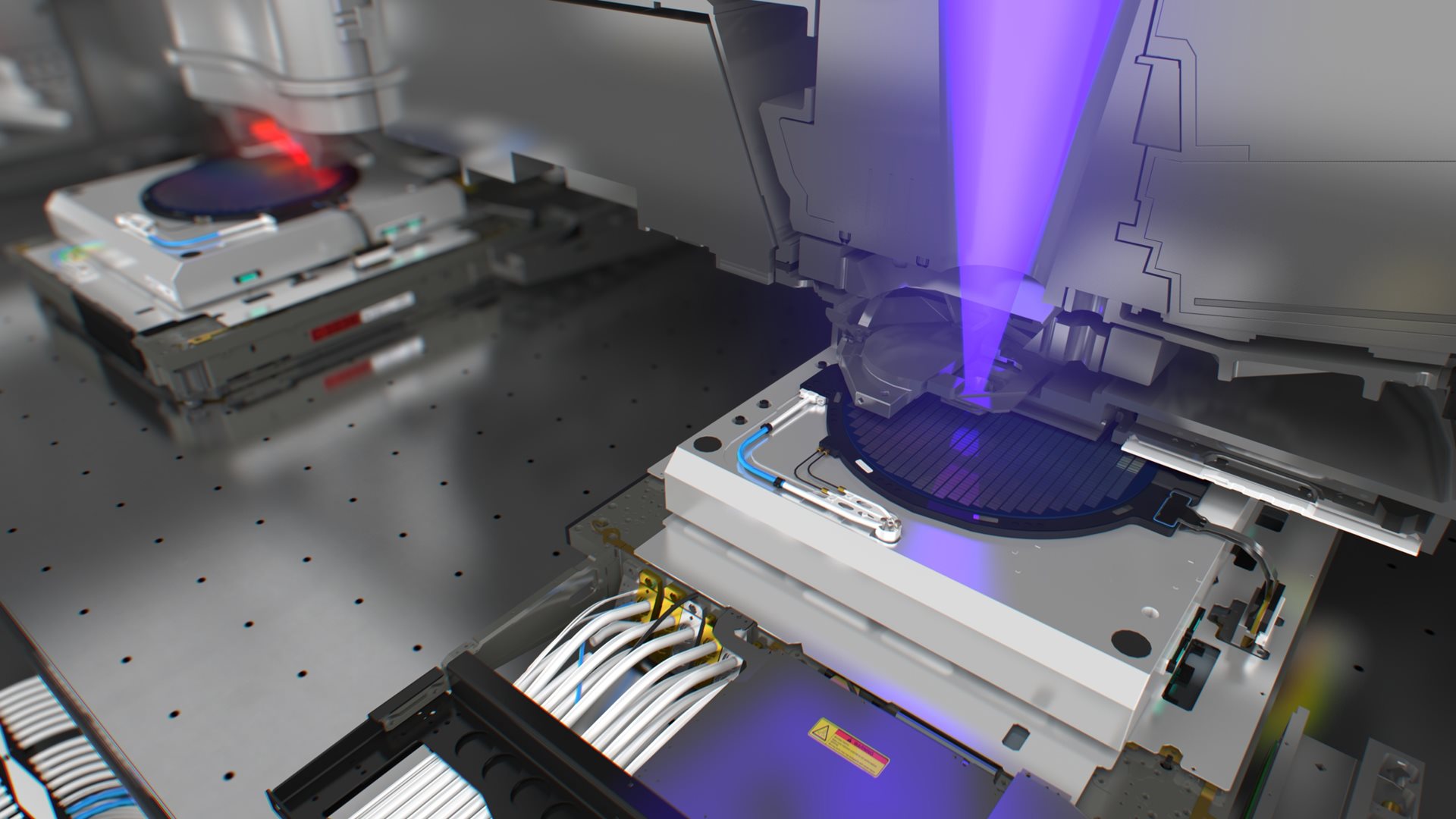
China’s semiconductor industry may be heading toward another major disruption as U.S. lawmakers push new legislation that could block the export of key ASML chipmaking tools to China. If the proposal advances, it would expand restrictions beyond the already-tight limits that have shaped China’s ability to manufacture leading-edge chips.
At the center of the debate is deep ultraviolet (DUV) lithography equipment, especially DUV immersion systems. While extreme ultraviolet (EUV) tools have effectively been out of reach for China for some time, DUV remains the workhorse technology that Chinese fabs rely on to produce advanced chips through complex techniques such as multi-patterning. That reliance is exactly why a DUV-focused export clampdown could hit hard.
The proposed legislation, known as the MATCH Act, is being described by its supporters as an update to U.S. export controls aimed at stopping “chokepoint” semiconductor manufacturing equipment from reaching strategic competitors. Lawmakers backing the bill argue that tighter coordination with allied countries, along with fewer loopholes around servicing and entity-based restrictions, would help preserve the U.S. lead in critical areas like artificial intelligence.
Why does this matter so much? Because DUV is currently the most practical path for China’s advanced manufacturing ambitions. Major Chinese chip and memory players depend on these tools across the board. Foundries use DUV to push into 7nm-class production by relying on multi-patterning approaches, and memory makers use DUV equipment to scale density and expand output. With domestic demand for chips surging and companies investing heavily in new production capacity, cutting off access to DUV tools—or even limiting sales and ongoing servicing—could slow those expansion plans significantly.
The MATCH Act specifically targets not just the sale of DUV immersion technology, but also servicing. That servicing language is crucial, because chipmaking tools are not “set and forget” systems. Fabs need continuous maintenance, parts, and technical support to keep yields stable and production lines running. Restrictions that block support can be just as disruptive as restrictions that block new purchases.
The bill also signals an intent to treat key Chinese chipmakers and customers of DUV equipment with restrictions similar to those applied under entity-based controls, which can limit access to international suppliers and markets. Although the MATCH Act is still under discussion and has not become law, it reflects growing momentum in Washington to tighten pressure on a critical layer of China’s semiconductor supply chain.
The ripple effects wouldn’t stop at China. China has been a meaningful revenue driver for ASML’s lithography business, with a significant portion of recent sales linked to DUV systems. If U.S.-led restrictions further reduce shipments or prevent ongoing support, it could create another geopolitical and business challenge for the Dutch equipment maker by limiting access to one of the world’s largest semiconductor markets.
China has spent years trying to reduce dependence on foreign semiconductor equipment, but progress has largely been concentrated in mature manufacturing nodes such as 28nm. Moving up to more advanced processes has remained far more difficult without access to top-tier lithography systems. That’s why a DUV export ban—especially one that includes servicing—could become a major headache for Chinese fabs attempting to scale 7nm-class production and expand memory output.
If the MATCH Act gains traction, it may mark the next significant turning point in the ongoing technology and trade fight over advanced semiconductor manufacturing, with consequences for supply chains, equipment vendors, and the pace of China’s chip self-sufficiency drive.


