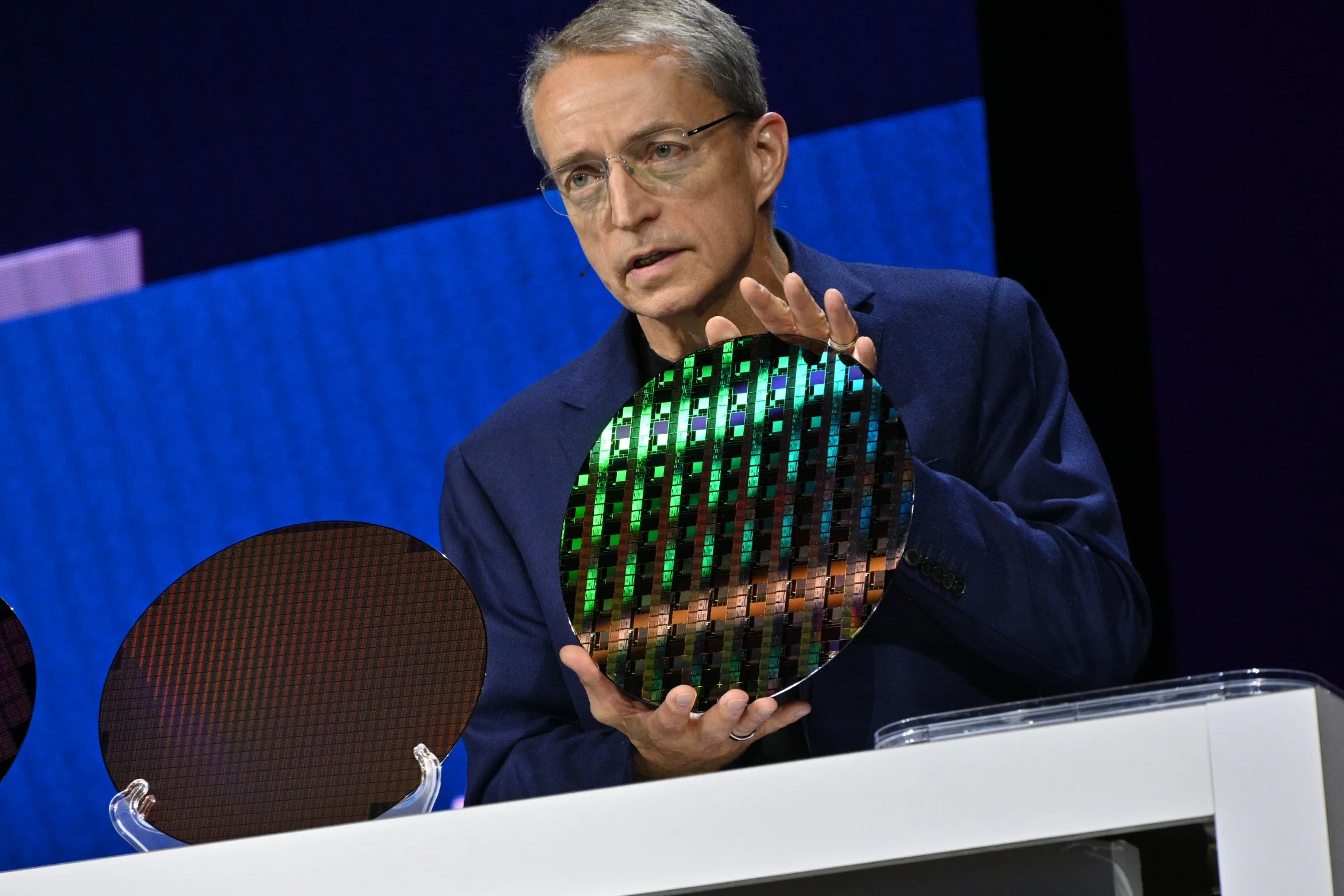
Intel’s former CEO Pat Gelsinger appears to be back in the semiconductor world, and this time the spotlight is on chip lithography. A new update from the lithography startup xLight says the company has secured $150 million in federal incentives tied to the CHIPS Act, signaling growing government interest in expanding advanced chipmaking capabilities inside the United States.
The move fits into a broader push to strengthen domestic semiconductor manufacturing and reduce reliance on overseas supply chains. In recent years, Washington has made chip production a strategic priority, encouraging major investments across the industry while also supporting projects that could protect and advance American technology. With xLight now receiving significant federal backing, the Commerce Department is showing it wants more than just chip factories on US soil—it also wants key parts of the chipmaking toolchain to be developed domestically.
xLight is targeting one of the hardest and most important pieces of the semiconductor pipeline: lithography, the process used to print incredibly small circuit patterns onto silicon. Specifically, the company is focused on improving extreme ultraviolet (EUV) light sources, which are essential for producing cutting-edge chips.
Instead of relying on the common Laser-Produced Plasma (LPP) method used to generate EUV light, xLight plans to use free-electron lasers (FELs). The idea is to use a particle accelerator to create high-energy electron beams that can generate EUV photons more efficiently. If it works as promised, xLight believes it can deliver major gains in energy efficiency and performance—potentially the kind of improvement that helps the industry keep pushing forward on Moore’s Law.
Gelsinger, now serving as Executive Chairman of xLight’s board, framed the project as a rare opportunity to revive momentum in chip scaling and rebuild US leadership in critical photonics and lithography capabilities. He says the goal is an energy-efficient EUV laser with improvements far beyond current technology, which could increase fab productivity and support the next era of semiconductor progress.
What’s also turning heads is how rare this kind of effort is. Lithography is an elite, high-barrier segment with very few serious players worldwide, so any credible new entrant tends to draw attention. xLight isn’t the only startup trying to disrupt the status quo, either. Another company, Substrate, has drawn interest for exploring chip patterning using shorter-wavelength X-rays, highlighting how the race to find alternatives and breakthroughs in next-generation lithography is heating up.
xLight’s plan includes building FEL-based development environments with support from partners at the Albany Nanotech Complex, giving the company access to a strong research and engineering ecosystem.
Still, the road ahead is far from simple. Even if xLight successfully develops a working FEL-based EUV light source, it would likely need to be integrated into existing EUV lithography tools already used by chipmakers. That integration is expensive, complex, and could face hesitation from entrenched tool ecosystems that may be cautious about adopting a radically different light source approach.
There’s also a performance question. FEL systems are known for delivering research-grade results, but it’s not yet clear how well they would translate into the relentless demands of high-volume chip manufacturing, where uptime, stability, and repeatability are everything.
Even with those hurdles, the bigger story is why efforts like this matter. Lithography remains one of the biggest bottlenecks in advanced semiconductor manufacturing, and for US-based production, access to the most advanced lithography tooling is a critical dependency. If xLight—or other ambitious lithography startups—can deliver a practical breakthrough, it could strengthen domestic chipmaking resilience and help push forward the next generation of processors, AI chips, and high-performance computing hardware.
For now, xLight’s federal support and high-profile leadership put it firmly on the industry’s radar. Whether FEL-based EUV becomes a real manufacturing solution or stays an ambitious experiment will be a key development to watch in the future of US semiconductor innovation.


