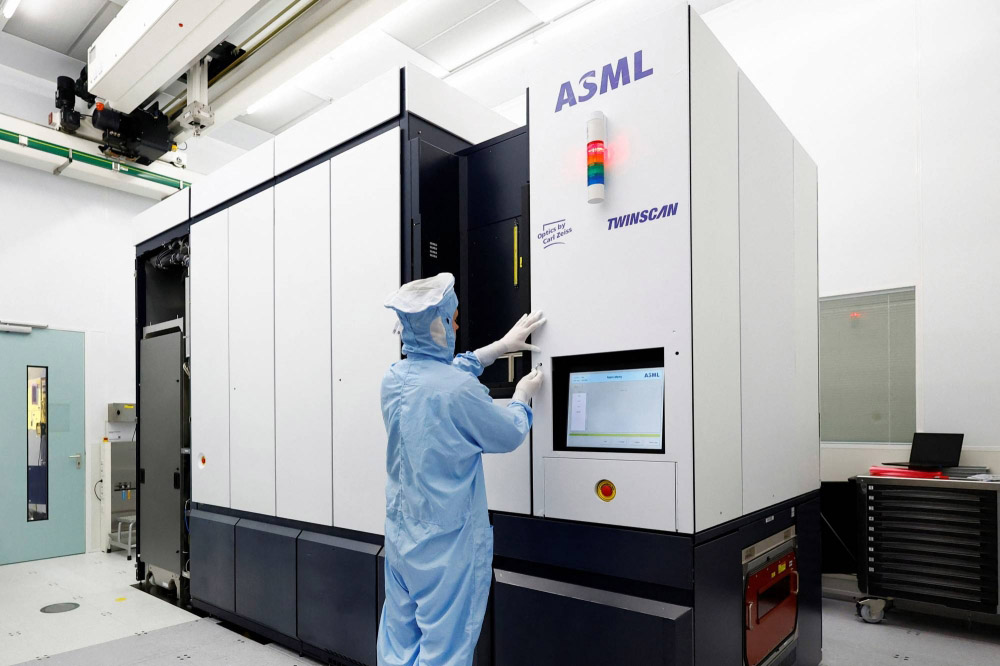
Chinese Chipmakers Stockpile ASML DUV Lithography Machines as Domestic Tool Production Accelerates
Chinese semiconductor manufacturers are moving quickly to secure critical chipmaking equipment as global technology restrictions continue to reshape the industry. According to a report from the Financial Times, major Chinese memory chip producers CXMT and YMTC have purchased enough deep ultraviolet lithography machines from ASML to support their planned capacity expansion for the next three years.
The move highlights China’s determination to strengthen its domestic semiconductor supply chain, especially as demand for memory chips remains strong and access to the most advanced chipmaking tools is tightly controlled.
ASML, based in the Netherlands, is the world’s leading supplier of lithography equipment used in semiconductor manufacturing. While Chinese companies are restricted from purchasing ASML’s most advanced extreme ultraviolet lithography machines, they can still buy older deep ultraviolet systems. DUV lithography remains essential for producing a wide range of chips, particularly those built on mature process nodes used in consumer electronics, automotive systems, industrial equipment, and memory products.
For companies such as CXMT and YMTC, securing DUV tools is strategically important. Both firms play key roles in China’s memory chip ambitions, and the current focus on domestic supply has increased pressure on them to expand production. By stocking up on ASML equipment now, they appear to be preparing for possible future restrictions while ensuring their factories can continue to grow.
At the same time, China is accelerating efforts to develop its own lithography equipment. Domestic manufacturer Yuliangsheng is said to be on track to produce 12 DUV lithography machines by the end of this year. That figure suggests faster progress than earlier expectations, which indicated that related local production efforts could deliver only a smaller number of machines in the near term.
Previous reports had pointed to Shanghai Aishengna Electronic Technology Group as one of the state-supported companies involved in bringing Chinese DUV lithography equipment into production. Earlier projections suggested the company could produce five machines by year-end and potentially scale output to 20 units by the end of 2027. Yuliangsheng and Aishengna are believed to be closely linked, with reports noting that the two entities have been associated with the same Shanghai address.
Despite this progress, Chinese-made DUV tools are not yet viewed as a direct replacement for ASML’s equipment by major chip manufacturers. ASML’s machines are widely trusted across the semiconductor industry for their reliability, precision, and production efficiency. For memory chipmakers aiming to increase output quickly, proven equipment remains the preferred option.
Still, the rise of Chinese lithography suppliers is attracting significant attention. While China’s domestic equipment makers are believed to remain far behind ASML in the most advanced EUV lithography segment, their progress in DUV technology appears to be moving faster. This matters because DUV machines continue to support the bulk of global semiconductor production.
China’s semiconductor strategy increasingly relies on two tracks: buying as much approved foreign equipment as possible while building local alternatives for long-term self-sufficiency. The stockpiling of ASML DUV machines by CXMT and YMTC fits directly into that strategy.
The situation also reflects a broader shift in the global chip industry. Export controls have limited China’s access to cutting-edge manufacturing tools, but they have also encouraged heavier investment in domestic equipment, materials, and production methods. Some Chinese firms are also researching ways to produce more advanced chips without relying entirely on the newest EUV systems.
For now, ASML remains the dominant force in lithography, and Chinese chipmakers continue to depend on its DUV machines for serious capacity expansion. However, the rapid push by domestic suppliers such as Yuliangsheng shows that China is working to reduce that dependence over time.
If Chinese DUV machine production continues to scale, it could eventually give local chipmakers more flexibility and strengthen China’s position in mature-node semiconductor manufacturing. While matching ASML’s technology will likely take years, the latest developments suggest that China’s chip equipment industry is gaining momentum at a time when lithography tools have become one of the most important assets in the global technology race.