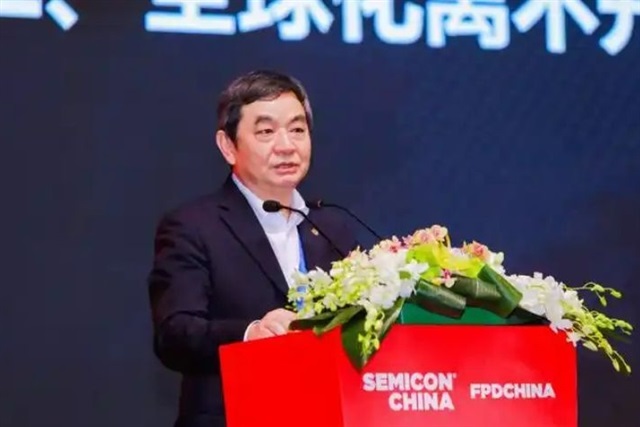
China’s chip industry is entering a pivotal moment. As the country prepares its Fifteenth Five-Year Plan, Chen Nanxiang—who chairs the China Semiconductor Industry Association and leads YMTC—urged the sector to accelerate efforts to build a self-reliant, resilient semiconductor supply chain and push harder on homegrown innovation.
His message is clear: to compete globally and withstand external shocks, China’s semiconductor ecosystem must close critical gaps, reduce single points of failure, and scale domestic capabilities across the entire stack. That means strengthening everything from chip design and EDA software to materials, manufacturing equipment, advanced fabrication, packaging, and testing. It also means aligning resources behind strategic technologies where rapid progress can unlock broader ecosystem gains.
Chen highlighted that several major shifts are already reshaping the industry. Companies are moving faster toward advanced process technologies, placing greater emphasis on quality, reliability, and security, and tightening collaboration between upstream suppliers and downstream device makers. At the same time, the sector is prioritizing sustainable growth, smarter manufacturing, and better risk management to handle cyclical demand and supply-chain volatility.
Talent and R&D remain central to this push. Chen’s call underscores the need to expand the pipeline of engineers and technicians, deepen university–industry partnerships, and speed the path from lab breakthroughs to commercial products. Targeted investment, coordinated standards, and a pragmatic approach to international cooperation where possible will help accelerate time-to-market while improving cost efficiency.
The upcoming planning cycle is a chance to turn ambition into execution. By focusing on core technologies, reinforcing domestic supply lines, and building a more collaborative, innovation-driven ecosystem, China’s semiconductor industry aims to raise its competitiveness and reduce exposure to external constraints. Chen’s remarks signal a coordinated, long-term strategy to translate research leadership into manufacturing strength and to ensure that the next phase of growth is both scalable and sustainable.