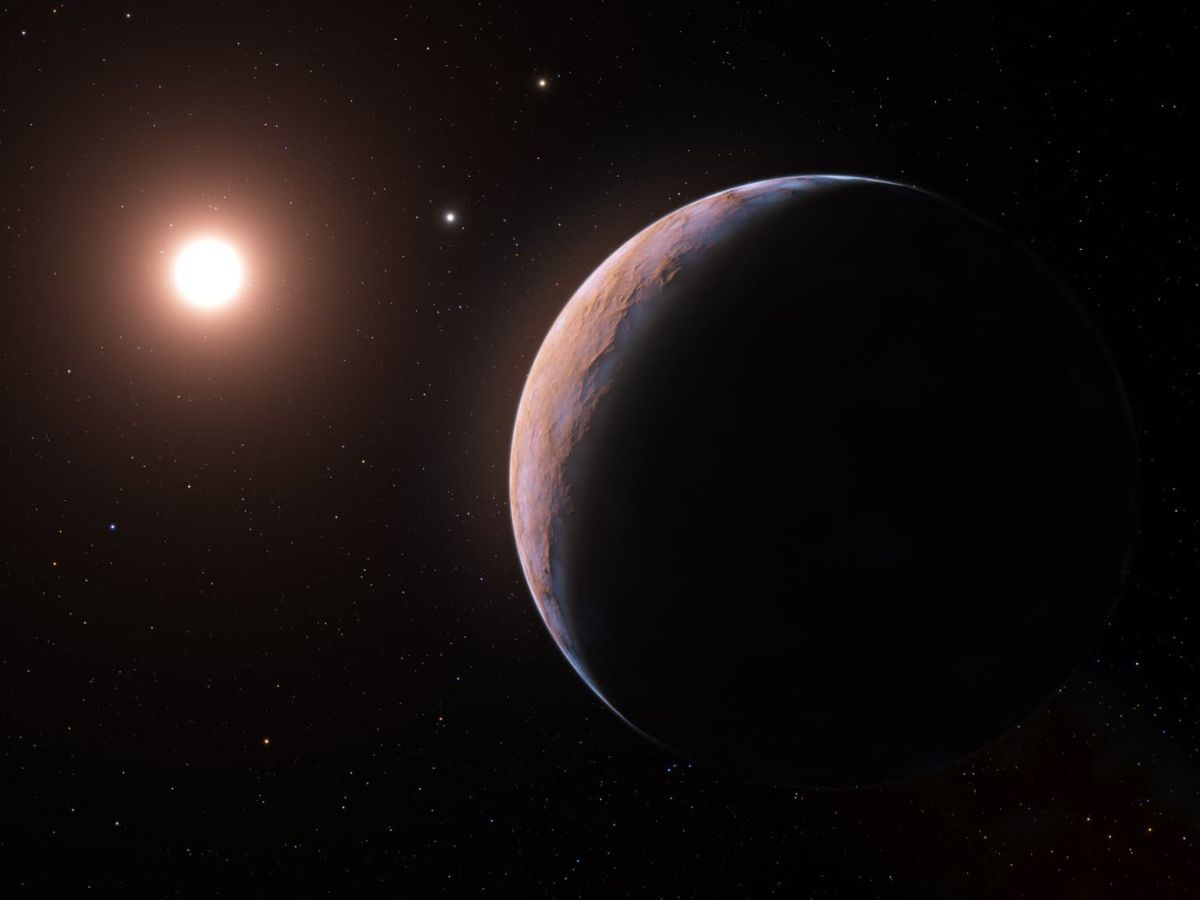
A groundbreaking discovery has captivated astronomers with the finding of a new celestial body in our solar system. Dubbed “Ammonite,” this intriguing object raises questions about the long-discussed existence of the elusive Planet Nine.
The cosmos never fails to surprise, and this year is no different. While countless cosmic discoveries occur annually, it’s thrilling to find new mysteries within our solar neighborhood. Researchers, utilizing the powerful Subaru telescope, have uncovered “2023 KQ14,” a striking addition to the group known as sednoids—trans-Neptunian objects with distinctive orbits far from the sun. This discovery was spearheaded by the FOSSIL project, leveraging the Subaru telescope’s Hyper Suprime-Cam for detailed observation.
Following its initial spotting, further insights were gathered thanks to the Canada-France-Hawaii Telescope. Fascinatingly, Ammonite was observed previously in 2005, 2014, and again in 2021. By piecing together these observations, scientists were able to map Ammonite’s eccentric orbit.
Ammonite, sized between 220 and 380 kilometers in diameter, follows a highly elliptical path, bringing it as close as 50 astronomical units from the sun, and stretching out to about 252 astronomical units at its farthest.
What’s astonishing is Ammonite’s orbit’s stability over the course of 4.5 billion years, revealing both the complexity and richness of our outer solar system. This discovery presents a challenge to the Planet Nine hypothesis, particularly since Ammonite’s orbit diverges from those of other known sednoids. Dr. Yukun Huang from the National Astronomical Observatory of Japan notes this misalignment diminishes the probability of the hypothesized ninth planet. It suggests that a planet might have existed, influencing these peculiar orbits before being ejected from the solar system.
This discovery could significantly advance our understanding of outer solar system dynamics. As Dr. Fumi Yoshida points out, Ammonite resides in a remote area where Neptune’s gravitational pull is minimal. The presence of such uniquely orbiting objects implies extraordinary ancient events. Deciphering their origins and behavior is key to uncovering the deeper history of our solar system.
This finding is not just a significant leap for astronomical science, but also a captivating glimpse into the cosmic forces that have shaped our celestial neighborhood.


