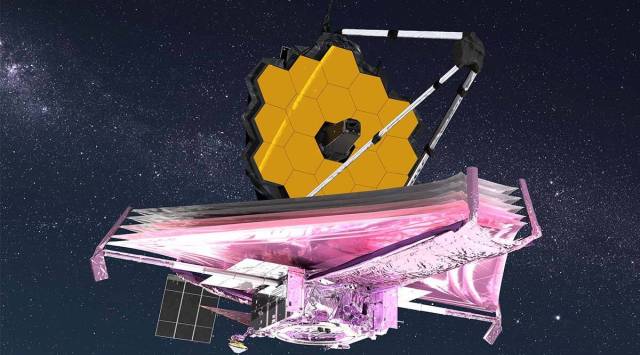
The James Webb Space Telescope (JWST), the most powerful space telescope to date, has been making remarkable discoveries that challenge and expand our understanding of the universe. This groundbreaking observatory has provided fresh insights into the cosmos, granting scientists the ability to peer back in time and observe the universe in its infancy.
Revolutionizing Our Concept of the Early Universe
One of the most astonishing revelations made by the JWST is the detection of ancient galaxies, which existed between 500 million and 700 million years after the Big Bang. These galaxies are surprisingly massive, rivaling the size of our very own Milky Way. Before the JWST observations, the existence of such sizeable galaxies in the nascent universe was considered highly improbable. The prevailing scientific view was that only much smaller galaxies could have formed during that early period.
The discovery of these massive early galaxies, which scientists have colorfully labeled as “universe breakers,” challenges the long-held belief regarding the 13.7 billion-year-old age of the universe. Their existence raises questions about the accuracy of this estimate and suggests that our cosmic timeline may be due for a significant revision.
The Mystery of ZF-UDS-7329
Among the early massive galaxies that the JWST has identified, one in particular, known as ZF-UDS-7329, stands out due to its impressive size and early formation time—only 800 million years following the Big Bang. This discovery is critical because it suggests that such massive galaxies could form much earlier than we previously thought, disputing the notion that a seeding of dark matter throughout the universe was necessary for their formation.
New Phenomena Closer to Home
Beyond these distant discoveries, the JWST has also shed light on some intriguing structures within our own Milky Way galaxy, located around 25,000 light years away, in the vicinity of Sagittarius C. A particularly curious observation includes a spread of ionized hydrogen manifested as a blue cloud, which envelops a vast space area. Additionally, scientists have identified mysterious “needle-like” features within this cloud, pointing indiscriminately in various directions—further fueling the intrigue and mystique surrounding our galactic neighborhood.
Conclusion
The observations by the James Webb Space Telescope represent a significant leap forward in our quest to unravel the mysteries of the universe. As the telescope continues to peer into the depths of space, we can anticipate a continual stream of surprising discoveries. These findings not only enhance our grasp of cosmic history but also push the boundaries of astrophysics, prompting us to reevaluate many foundational assumptions.
For scientists and astronomy enthusiasts alike, the JWST’s revelations are an invitation to reconsider the structure and evolution of the cosmos. The coming years promise a thrilling adventure as humanity gains a deeper and more nuanced understanding of the universe that we call home.