NASA’s James Webb Space Telescope has made a groundbreaking discovery that could reshape our understanding of the nearest star system, Alpha Centauri. Known for its complexity, Alpha Centauri consists of three stars: the Sun-like Alpha Centauri A and B, and the dimmer red dwarf, Proxima Centauri. While Proxima Centauri is already known to host three planets, finding planets around the brighter Alpha Centauri A and B has been exceedingly challenging due to their luminosity.
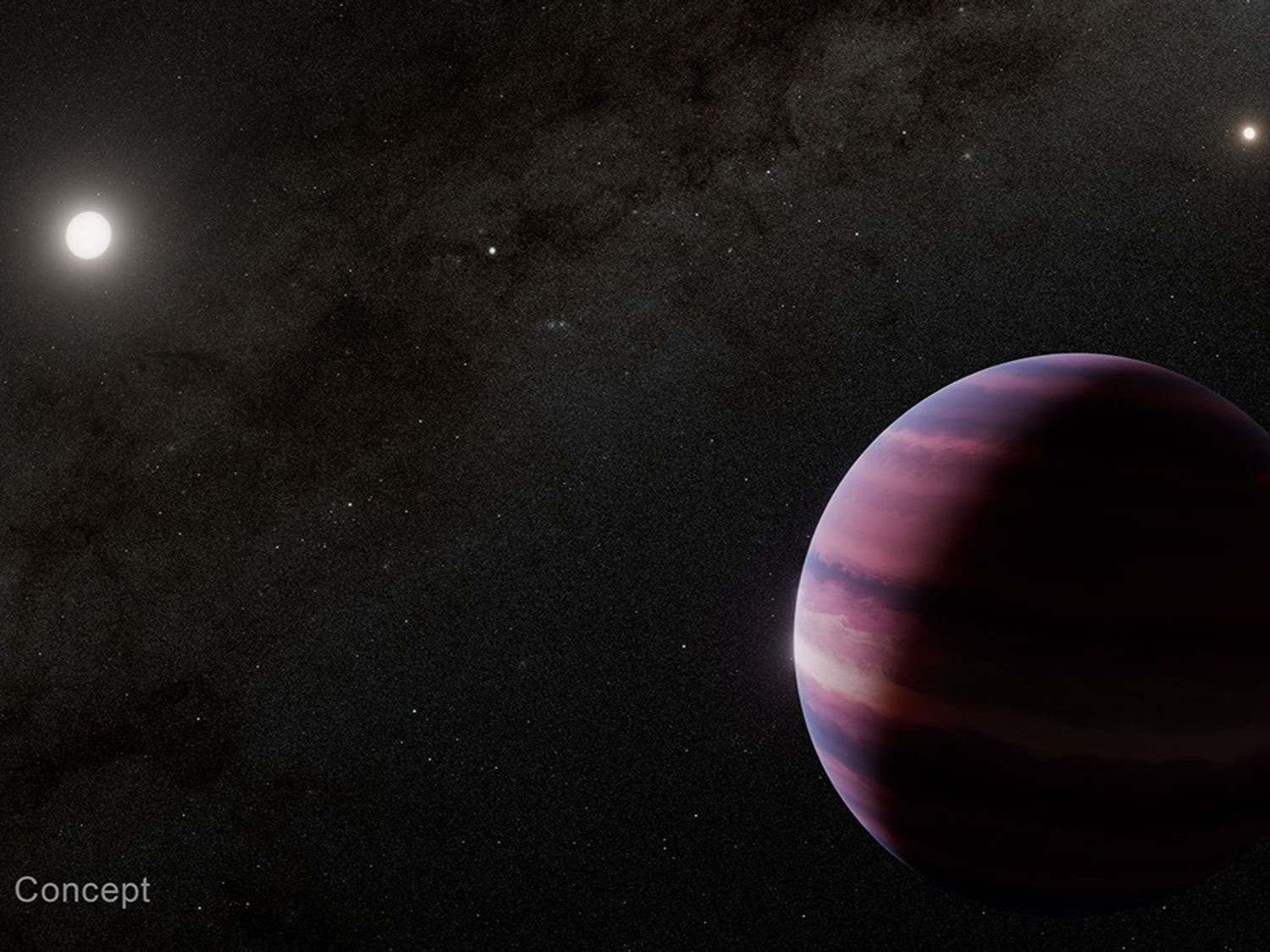
In a pivotal discovery, Webb’s Mid-Infrared Instrument detected what appears to be a massive planet orbiting Alpha Centauri A. This celestial body is suspected to be a gas giant, roughly equivalent in size to Saturn, orbiting in an elliptical path that takes it between one to two times the distance from Earth to the Sun.
To capture this elusive find, Webb employed a coronagraphic mask to block out the overwhelming light from Alpha Centauri A, while additional efforts helped minimize the glare from Alpha Centauri B. This sophisticated technique revealed a faint object, thought to be a planet, shining 10,000 times less brightly than the star it orbits.
Interestingly, while the first sighting occurred in August 2024, follow-up observations in February and April 2025 did not confirm the planet’s presence. Aniket Sanghi from Caltech, co-author of the study, referred to this as the mystery of the “disappearing planet.” It’s speculated that the planet’s close proximity to the star during subsequent observations might have rendered it invisible to the telescope.
Future missions, including potential observations using the Nancy Grace Roman Space Telescope, are poised to provide further insights into this enigmatic planet. This discovery not only underscores the capabilities of the James Webb Space Telescope but also opens exciting possibilities for future explorations in our cosmic neighborhood.