## Discovering the Cosmos: Over 350 New Moons Identified in Our Solar System
The celestial bodies orbiting within our vast solar system are as numerous as they are fascinating. Recently, meticulous observations and advanced technology have led to the groundbreaking identification of over 350 new moons, enhancing our understanding of the cosmic neighborhood.
### Unveiling Astronomical Wonders
The discovery of these moons was made possible through state-of-the-art equipment designed to detect subtle shifts in the movement of celestial objects and changes in luminosity on their surfaces. The deviation in orbits due to gravitational interactions, along with the dimming effects when a body is shrouded by another, are key indicators that help astronomers distinguish binary systems from solitary bodies.
### Enhancing Precision in Space Observation
The instruments involved in these observations boast a staggering improvement in precision—almost 200 times greater than those used in previous space missions. Coupled with prolonged observation periods, this upgrade allows astronomers to determine the paths of celestial bodies with a level of accuracy that surpasses previous capabilities by a factor of 20.
### A Cosmic Census: Adding Over 150,000 Asteroids
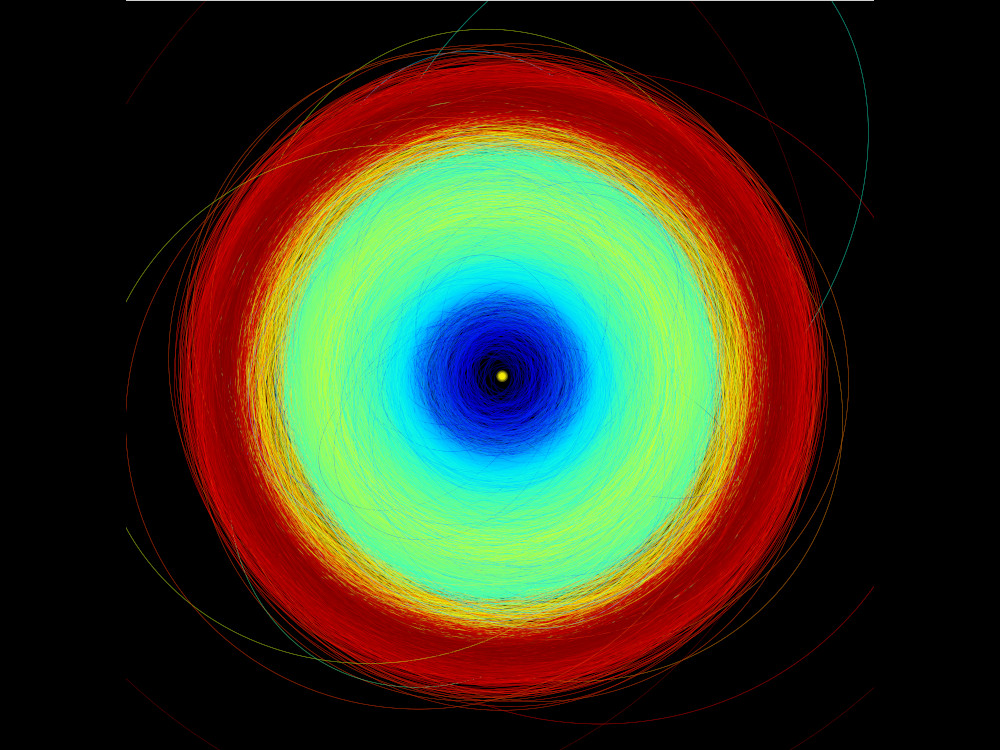
Extended observation has not only led to the discovery of new moons but also significantly increased the known asteroid population. Already, the count has risen by over 150,000, and with additional data on the way, this figure is expected to climb even higher.
### Inter-Agency Missions and Future Discoveries
The momentum of discovery is anticipated to continue well into the future, thanks to collaborative efforts between international space agencies. The European Space Agency (ESA) and National Aeronautics and Space Administration (NASA) are at the forefront, with missions such as ESA’s Hera and NASA’s DART focusing on researching the diversion of potentially hazardous asteroids.
These initiatives underscore the proactive strategy of learning about asteroids—pinpointing their locations, understanding their nature, and unraveling whether they are part of a single or binary system is crucial for the protection of our planet.
### Implications and Insights
The implications of these discoveries are multifaceted. For one, with more moons and asteroids charted, the potential for future scientific research and space exploration broadens. Each new moon brings with it a wealth of potential knowledge about the early solar system and the processes that govern celestial mechanics.
### Conclusion
The discovery of these new moons is more than a numerical addition to our solar system’s tally; it’s a testament to human curiosity and technological prowess. As the tools and techniques for space observation advance, so too does our capacity for uncovering the secrets of the cosmos. This continued endeavor not only enriches our scientific knowledge but also allows us to better safeguard our home planet through vigilant space monitoring and planetary defense strategies.


