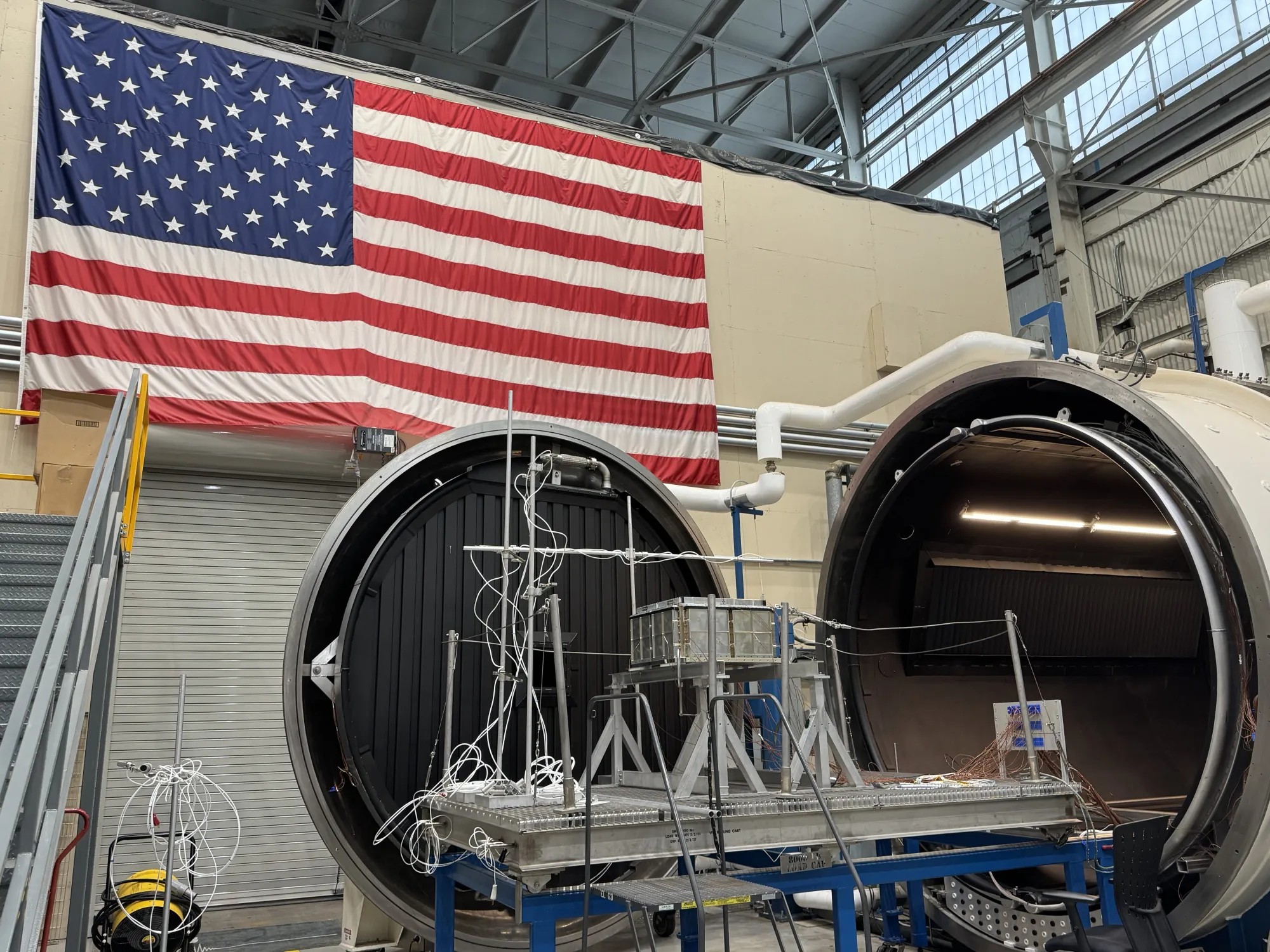
NASA’s StarBurst mission just cleared a major hurdle on its path to space. After successfully completing a demanding round of thermal and vibration testing, the StarBurst instrument is now one step closer to being launch-ready—bringing scientists nearer to answering big questions about some of the most extreme events in the cosmos and how elements like gold and platinum are created.
StarBurst is a NASA-led mission built to catch the first flash of short gamma-ray bursts, intense bursts of high-energy radiation that can occur when two neutron stars collide and merge. These mergers rank among the most powerful explosions in the universe, and they’re also believed to be a primary source of many heavy elements. In other words, the same kind of cataclysmic event StarBurst is designed to study is tied to the cosmic origin story of precious metals such as gold and platinum.
Scientists already have a way to “hear” these neutron star mergers. Ground-based observatories can detect the gravitational waves rippling through space-time when these massive objects collide. What StarBurst adds is the ability to detect the gamma rays from the same event at the same time, delivering a more complete, real-time picture of what’s happening during and immediately after a merger. Observing both signals together is crucial for astronomers who want to pinpoint where these events occur, how they unfold, and how they produce the heavy elements found throughout the universe.
To make sure the instrument can survive the harsh realities of spaceflight and operate reliably in orbit, StarBurst underwent a series of environmental tests at NASA’s Marshall facility. Thermal testing took place inside a vacuum chamber, recreating the airless environment of space while cycling through the hottest and coldest temperatures the instrument is expected to experience in operation. It also passed vibration testing designed to mimic the intense shaking, turbulence, and mechanical stresses that occur during launch.
With these tests complete, StarBurst’s next milestone is instrument calibration—an essential step that ensures the detector measurements are accurate and ready for scientific work once the mission is in orbit.
NASA is targeting a launch as early as 2027, timing StarBurst to align with the next observing run of the Laser Interferometer Gravitational-Wave Observatory. That schedule is strategic: launching during an active gravitational-wave observing period maximizes the chance of capturing neutron star mergers with both gravitational waves and gamma-ray signals detected simultaneously.
So far, astronomers have only documented one neutron star merger that was observed with both gravitational waves and an accompanying gamma-ray burst at the same time. StarBurst could dramatically expand that catalog. Scientists expect the mission could help identify up to 10 of these joint detections per year, potentially transforming our understanding of short gamma-ray bursts, neutron star mergers, and the cosmic processes that forge heavy elements.
By combining rapid gamma-ray detection with gravitational-wave observations, StarBurst aims to turn rare, once-in-a-generation events into regular scientific opportunities—and to shed new light on how the universe produces some of its most prized ingredients.