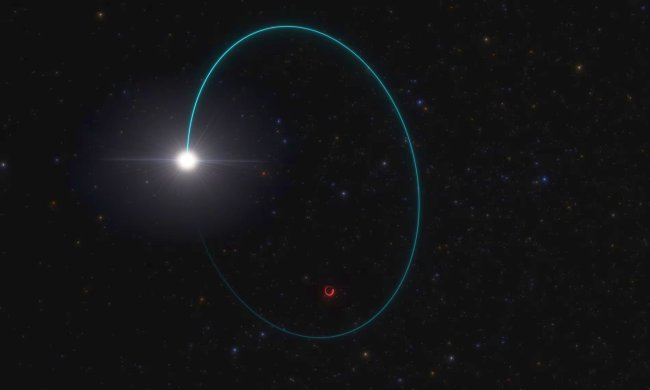
Astronomers have been continuously mesmerized by the mysterious cosmic entities known as black holes. The recent uncovering of a black hole named BH3 is no exception. Positioned a mere 2,000 light-years away from Earth, BH3 is a celestial phenomenon, not just because of its proximity to us, but also due to its colossal size.
BH3, a stellar black hole nestled within the Milky Way, is an awe-inspiring discovery. It’s truly gigantic with a mass estimated to be 33 times greater than our Sun. This places BH3 as the dominant stellar black hole in terms of size within our galaxy. Generally, the stellar black holes discovered so far in the Milky Way average around ten times the mass of our sun, making BH3 an outlier in terms of its mass.
The European Space Agency’s Gaia mission, an observatory that took the cosmos exploration baton from its predecessor, the Hipparcos mission, played a pivotal role in this find. Gaia’s detailed cosmic survey, launched in 2013, is expected to wind down its operations next year. Its mission has allowed astronomers to deepen their understanding of the universe, with discoveries including previously unknown binary systems that harbor black holes.
BH3 is located in the Aquila constellation and stands out from other black holes due to its formation process. An exploded star gave rise to this black hole, enriching our galactic neighborhood with a colossal gravitational abyss. To confirm and detail the characteristics of BH3, astronomers also utilized the significant observational might of the European Southern Observatory’s Very Large Telescope based in Chile’s Atacama Desert. The neighboring star’s lengthy orbit around BH3, almost a 12-year-long journey, necessitates patience for precise measurements and confirmation of the black hole’s properties.
Despite the impressive size of BH3, it pales in comparison to the Milky Way’s central supermassive black hole, Sagittarius A, which contains the mass of several million suns. Unlike BH3, Sagittarius A is not the result of a star’s demise but is thought to have formed from the gravitational collapse of massive cosmic gas and dust clouds.
For those fascinated by the mysteries of these cosmic giants, exploring further educational materials can provide a deeper dive into the subject. One recommended resource is “Death by Black Hole: And Other Cosmic Quandaries” by renowned astrophysicist Neil deGrasse Tyson. It offers insightful reflections on black holes and other cosmic phenomena in a range of formats for different reading preferences.
The exploration of space consistently brings new wonders into the light, and as observatories like Gaia conclude their operations, the anticipation for what new discoveries await with ongoing and future missions keeps the excitement among astronomers and the public alike perennially high.


