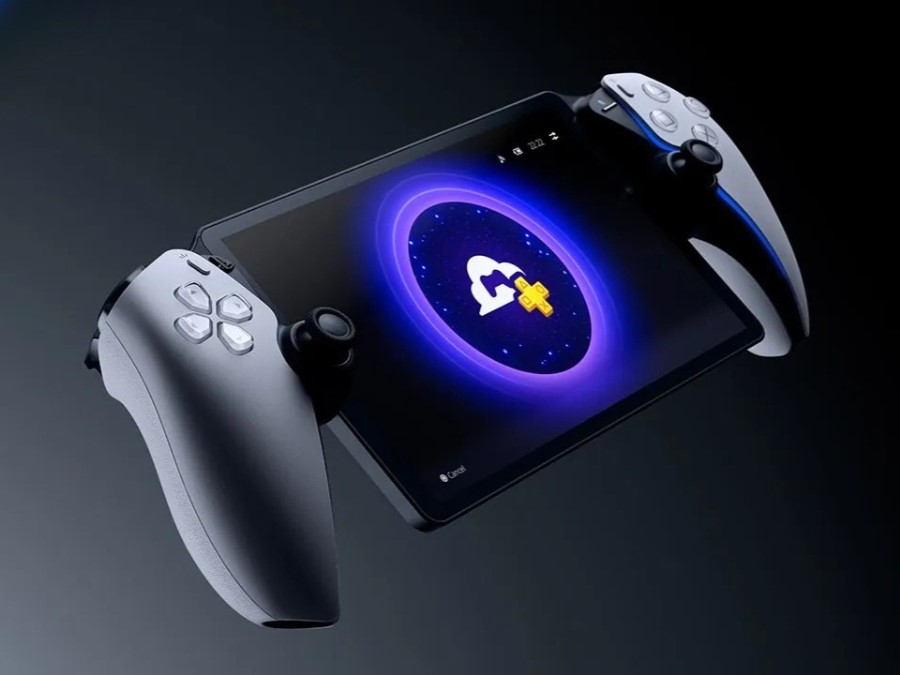
Sony may be gearing up for a bigger 2026 push into handheld gaming, with fresh leaks pointing to two different products aimed at two very different audiences: a refreshed PlayStation Portal with an OLED screen, and a separate, more powerful handheld designed to run games natively.
According to a new leak from well-known hardware leaker Kepler_L2, Sony is preparing an OLED version of the PlayStation Portal that could arrive within the current calendar year. If that happens, it would mark a mid-cycle upgrade for Sony’s streaming-focused handheld, giving players a higher-contrast, more vibrant display that’s especially noticeable in darker scenes and high-saturation games. The timing also lines up with Sony’s recent software update that enabled cloud streaming on the Portal, making an upgraded screen feel like a logical next step for people using it as a dedicated remote play and cloud streaming device.
While the PlayStation Portal OLED rumor is largely about a display refresh, the same stream of leaks also adds more detail to Sony’s long-rumored native PlayStation handheld—often referred to as “Project Canis” in online chatter. Unlike the Portal, this device is said to be built for running games directly on the handheld hardware rather than relying on streaming from a console or the cloud.
The most notable claim is the reported use of AMD’s next-generation graphics architecture, described as RDNA 5 (also referenced as UDNA in some discussions). Earlier rumors suggested Sony might target up to 20 compute units (CUs) for the GPU, but the latest information says internal goals have shifted to a 16 CU configuration instead. That adjustment would make sense for a portable gaming system that has to balance performance with battery life, heat, and limited bandwidth. At around a 15W power envelope—common in handheld PCs and gaming portables—pushing to 20 CUs may not translate into a meaningful real-world advantage if the system becomes constrained by thermals or memory bandwidth.
To help current games run properly on hardware with tighter power limits, Sony has also reportedly updated PlayStation 5 development kits with a required “Low Power Mode” (also described as a “Power Saver Mode”). In practical terms, that would give developers and Sony’s internal teams a consistent performance target, allowing the existing PS5 game library to scale down in ways that could make native handheld play more feasible without requiring entirely separate versions of titles.
Memory is another key piece of the rumor. The handheld is expected to use LPDDR5X-9600, a fast mobile memory standard designed to improve data throughput—an important factor for gaming performance on portable chips that can’t rely on the wider memory buses typical in full-size consoles.
As for release timing, the native handheld is rumored to arrive closer to the PlayStation 6 era, suggesting it could be positioned as part of the next-generation PlayStation ecosystem. The OLED PlayStation Portal, on the other hand, is expected to be revealed sooner—potentially this year—if the leak holds up.
None of this is official yet, and Sony hasn’t confirmed an OLED PlayStation Portal refresh or a native handheld. Still, between the recent Portal cloud streaming update and the renewed wave of hardware rumors, 2026 is shaping up to be an especially interesting year for anyone watching the future of PlayStation handheld gaming.