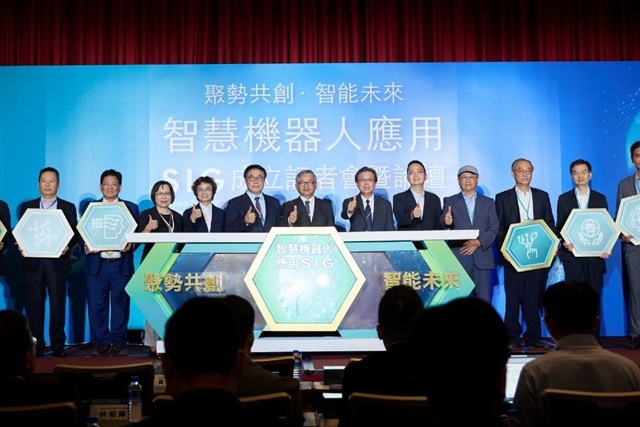
Taiwan is rallying its tech ecosystem behind a powerful new push to turn smart robots into real-world solutions. The newly created Smart Robot Application Special Interest Group (SIG) has united more than 60 Taiwanese companies with a clear mission: accelerate the application-driven deployment of intelligent robots. Steering the initiative is Asus co-CEO Samson Hu, who serves as the group’s chairman.
Rather than focusing only on hardware specs or research milestones, this initiative zeroes in on practical use cases and deployment at scale. Application-oriented development puts end-user needs at the center—integrating robotics with AI, sensors, edge computing, and software platforms to solve specific problems in industries that are ready for transformation.
The Smart Robot Application SIG brings together a broad cross-section of Taiwan’s technology strengths, from component makers and device manufacturers to software providers and system integrators. By working collectively, members can identify high-impact scenarios, reduce integration hurdles, and shorten the time from prototype to production. In an era where intelligent robots are moving rapidly from lab demos to factory floors, warehouses, hospitals, and public spaces, this kind of coordinated approach can make the difference between a promising pilot and a widely adopted solution.
Application-driven deployment is about outcomes. It emphasizes interoperability, safety, reliability, and total cost of ownership—factors that determine whether robots deliver measurable value. For businesses evaluating automation, that means solutions tailored to their environment, with clearer return-on-investment timelines and smoother integration into existing workflows.
While the group has not detailed specific programs, the most immediate opportunities for intelligent robots in Taiwan and beyond typically include:
– Manufacturing and smart factories: precision assembly, inspection, material handling, and flexible automation that adapts to changing production needs.
– Logistics and warehousing: autonomous mobile robots for picking, packing, and last-meter movement; improved throughput and labor efficiency.
– Healthcare and eldercare: assistive robotics for routine tasks, delivery, sanitation, and patient support to ease staff workloads.
– Retail and service: customer assistance, inventory checks, and back-of-house automation that enhances the shopping experience.
– Agriculture and food processing: monitoring, sorting, and handling that boosts consistency and productivity.
With a leader from a major global technology brand serving as chairman, the SIG benefits from strong industry visibility and an understanding of how to scale technology platforms. Taiwan’s established role in semiconductors, sensors, edge devices, and ODM/OEM manufacturing provides a solid foundation to build end-to-end robotics solutions that can compete internationally.
Collaboration at this scale can also help address persistent challenges that have slowed broader adoption of intelligent robots:
– Integration complexity: aligning hardware, software, and AI so systems work reliably in dynamic environments.
– Standards and compatibility: common frameworks that reduce vendor lock-in and simplify maintenance.
– Safety and compliance: best practices that meet regulatory requirements and build trust with end users.
– Skills and support: training, documentation, and service ecosystems that keep deployments running smoothly.
As the Smart Robot Application SIG advances, expect to see more reference designs, proof-of-concept trials, and cross-industry playbooks that demonstrate how intelligent robots deliver tangible results. By focusing on real applications rather than one-off demos, the group is positioned to help businesses adopt automation with confidence and clarity.
For companies exploring robotics, this development is a timely signal. The market is shifting toward deployable solutions that solve specific pain points—whether that’s reducing bottlenecks in production, improving logistics accuracy, or enhancing service experiences. Taiwan’s coordinated effort aims to make those solutions more accessible, scalable, and cost-effective.
The bottom line: with more than 60 companies aligned under the Smart Robot Application SIG and leadership from Asus co-CEO Samson Hu, Taiwan is doubling down on intelligent robots that work in the real world. The focus on application-driven deployment should accelerate adoption, sharpen competitive advantages, and set a higher bar for what next-generation robotics can deliver across industries.