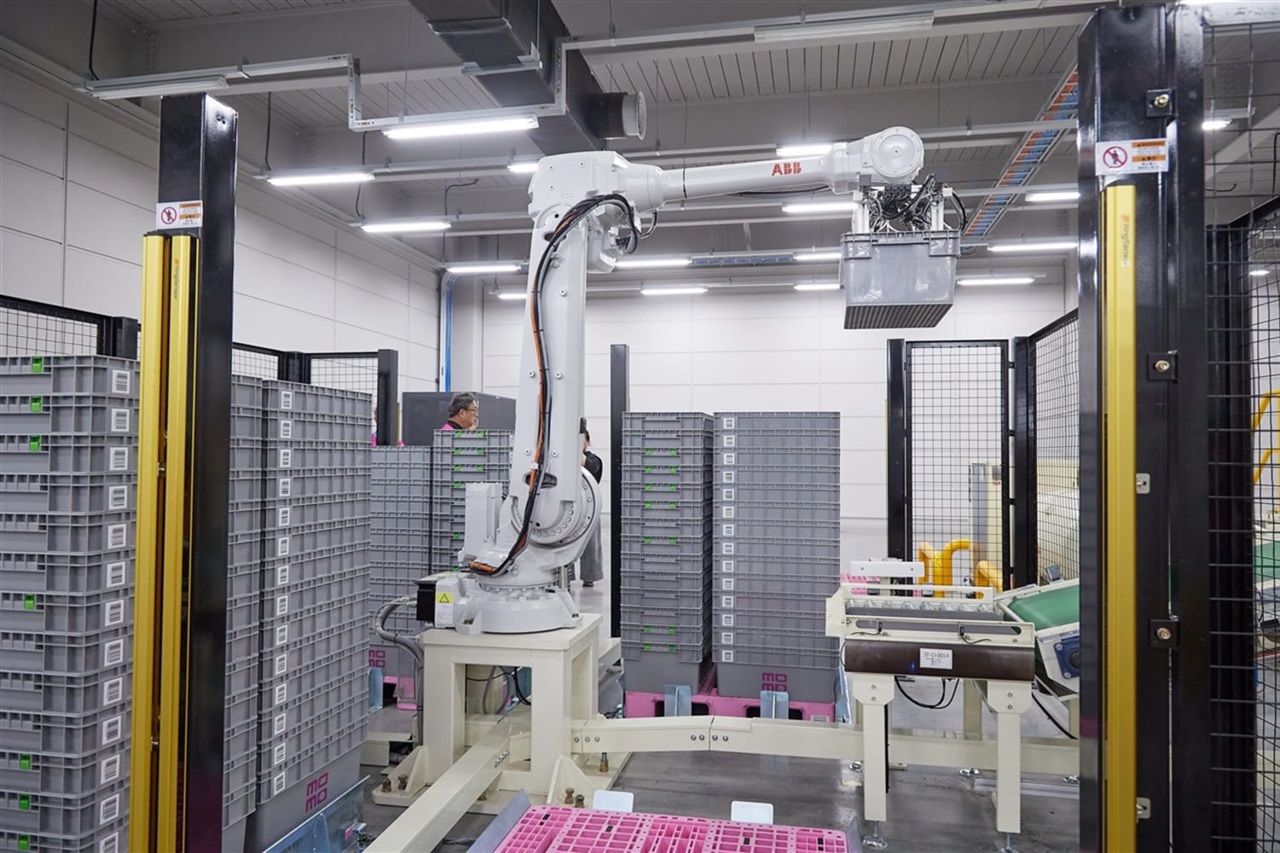
SoftBank to acquire ABB’s robotics unit for about $5.4 billion: how it could reshape automation, AI, and global manufacturing
SoftBank Group’s plan to buy ABB’s robotics business for roughly $5.4 billion isn’t just another tech deal—it’s a directional bet on the next decade of industrial automation. If the transaction closes, it would expand Japan’s influence in factory robotics and signal a strategic shift among Europe’s industrial heavyweights.
Why this matters now
Robotics has moved from a niche tool to a core pillar of modern manufacturing. Persistent labor shortages, rising wages, and the push for resilient, near-shored supply chains are accelerating adoption of industrial robots and collaborative robots (cobots). By pairing ABB’s installed base and customer relationships with SoftBank’s AI-first playbook, the combined platform could become a central engine of smart factories—where robotics, machine vision, and edge AI work in concert.
SoftBank’s thesis has been consistent: as AI models get cheaper and faster to run at the edge, hardware becomes exponentially more capable. With its investments in chips, AI, and robotics, the company sees a flywheel where better algorithms drive better machines, which generate more data to further improve those algorithms. ABB’s portfolio gives that vision a global launchpad across automotive, electronics, logistics, and healthcare.
A lift for Japan’s automation edge
Japan is already a powerhouse in industrial robotics, with dense supplier networks and deep expertise in motion control, sensors, and precision manufacturing. Absorbing ABB’s robotics business would bolster that position with added geographic reach and product breadth. Expect momentum in areas like machine vision, safe human-robot collaboration, and AI-driven predictive maintenance—capabilities that cut downtime and boost throughput.
A window into Europe’s strategic reset
For Europe, a sale would underscore a focus on core strengths. Diversified engineering groups are streamlining portfolios to double down on electrification, automation software, and energy-transition technologies. Divesting robotics could be a way to redeploy capital into categories where scale, specialization, and returns look strongest. It’s part of a wider trend: sharpen focus, partner for scale, and exit where capital intensity is rising.
The AI–robotics feedback loop
The strategic upside comes from the compounding cycle between AI and autonomous systems:
– Advanced AI now powers perception, motion planning, and real-time decision-making for robots on the factory floor.
– Edge computing and specialized chips shrink latency and boost reliability in harsh industrial environments.
– Smarter robots broaden use cases beyond welding and assembly to precision handling, inspection, and safe cobot workflows.
– Every new deployment generates data that improves models, which then unlocks even more complex automation.
SoftBank spans multiple nodes in this loop. Combined with ABB’s footprint, that could speed the rollout of next-generation industrial robotics platforms.
Implications for competitors and customers
A larger, AI-centric robotics platform would raise competitive pressure across industrial automation, cobots, and control software. Customers—from automakers to 3PLs—could benefit from:
– Faster product cycles and more integrated hardware–software stacks
– Tighter coupling between robots, sensors, and edge/cloud AI
– Easier-to-deploy, modular systems that lower barriers for small and mid-sized manufacturers
– Improved total cost of ownership via uptime, self-diagnostics, and predictive maintenance
What to watch next
– Regulatory scrutiny: Cross-border deals involving strategic technologies typically face competition and national security reviews in multiple markets.
– Unified software stack: Signals on common developer tools, simulation, and AI frameworks will reveal how quickly the portfolio integrates.
– Services and lifecycle support: Training, maintenance, and managed services will determine real-world adoption and ROI.
– Talent and R&D continuity: Retaining engineering expertise and accelerating joint research in perception, control, and human–robot interaction will be critical.
Key takeaways
– A roughly $5.4 billion acquisition would spotlight the rapid convergence of AI, edge computing, and industrial robotics.
– Japan’s role in global automation could strengthen through expanded scale, talent concentration, and market reach.
– Europe’s industrial reshuffle continues as leaders prioritize core growth categories and redeploy capital.
– Manufacturers may gain faster innovation and more cohesive automation solutions—provided execution preserves quality and know-how.
FAQ
What changes for manufacturers if the deal closes?
Expect tighter integration among robots, AI, and edge computing. That can shorten deployment times, improve predictive maintenance, and expand automation to variable, complex tasks without sacrificing safety.
Why is this important for AI progress?
Industrial robots generate rich, real-world data and require millisecond-level decisions. Aligning the hardware platform with the AI stack creates a continuous improvement loop that accelerates learning and performance.
Will costs rise or fall?
It depends on competition, component prices, and product mix. Scale and integration can reduce costs, while high-end features may keep premium SKUs at the top tier. The bigger shift is likely in total cost of ownership as uptime and reliability improve.
How soon will we see tangible results?
Strategic benefits typically emerge over several product cycles. Early indicators to watch include joint announcements on software platforms, developer ecosystems, digital twins and simulation tools, and AI-first robot designs.
Bottom line
SoftBank’s planned purchase of ABB’s robotics arm is a high-conviction wager that intelligent automation will define the next era of manufacturing. By uniting capital, AI expertise, and a global robotics footprint, the deal could accelerate the pace at which smart, adaptable robots move from pilot projects to production-scale reality.