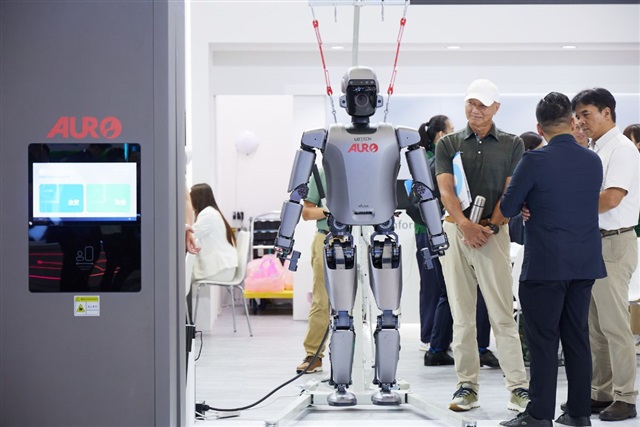
Taiwan’s robotics and automation sector is on a tear, with leading companies posting record-breaking revenues this quarter as factories worldwide rush to upgrade with AI-powered, smart manufacturing systems. The surge underscores how quickly Industry 4.0 is moving from pilot projects to full-scale deployment, and it highlights Taiwan’s unique position at the intersection of precision hardware, advanced semiconductors, and intelligent software.
Behind the momentum is a perfect storm of global forces. Manufacturers in electronics, automotive, battery production, logistics, healthcare, and food and beverage are investing heavily to boost productivity, counter labor shortages, and build more resilient supply chains. AI-enabled automation is delivering measurable gains in throughput, quality control, and energy efficiency, making the business case clearer than ever.
Taiwan’s advantage lies in its dense ecosystem: component suppliers, motion control specialists, machine vision experts, and edge AI developers collaborate closely, shortening development cycles and enabling highly customized solutions. With strong OEM and ODM capabilities, firms can scale fast while tailoring systems for diverse factory environments—whether that means a precision electronics line, a fast-moving logistics hub, or a cleanroom-ready assembly cell.
What’s driving the revenue records
– A global pivot to smart factories: Companies are accelerating automation roadmaps to stay competitive on cost, speed, and quality.
– AI at the edge: Vision systems, predictive maintenance, and adaptive control are shifting from cloud-only to edge and on-device AI, cutting latency and improving reliability.
– Workforce dynamics: Aging populations and skilled labor gaps make collaborative robots and intuitive interfaces more attractive to plant managers.
– Supply chain resilience: Re-shoring and near-shoring strategies are fueling localized, automated production lines.
– ESG and energy efficiency: Smart systems help reduce waste, optimize energy use, and support sustainability targets.
What factories are buying
– Collaborative and articulated robots for flexible assembly, pick-and-place, and packaging tasks
– Autonomous mobile robots for intralogistics, material handling, and just-in-time delivery
– AI-powered machine vision for defect detection, metrology, and traceability
– Advanced motion control, sensors, and safety systems for high-precision automation
– Edge computing and industrial PCs for real-time analytics on the factory floor
– Software that ties everything together, including MES/ERP integration and digital twins
These investments are translating into packed order books and strong quarterly results for Taiwan-based suppliers and system integrators. Demand is particularly strong from sectors where precision and speed are critical, such as semiconductors, consumer electronics, and EV components. Logistics and warehousing continue to adopt mobile robots and smart tracking to streamline operations, while medical device makers and food processors are turning to hygienic, vision-guided automation to meet stricter standards.
The road ahead
With record quarters stacking up, many firms are expanding capacity, investing in R&D for safer human-robot collaboration, and refining AI software stacks that make systems easier to deploy and maintain. Private 5G networks, standardized industrial protocols, and no-code interfaces are lowering barriers for small and mid-sized manufacturers, accelerating adoption beyond the largest enterprises.
There are challenges to watch. Global component availability, currency fluctuations, and shifting geopolitics can affect lead times and pricing. Demand may normalize in some categories after a period of rapid catch-up. Still, the long-term trajectory points upward as more factories digitize, more data flows from connected machines, and AI models become more accurate and easier to run at the edge.
Why this matters
– Faster, smarter manufacturing helps companies shorten time-to-market and adapt to demand swings.
– Consistent quality and traceability are becoming non-negotiable in regulated and high-spec industries.
– Automation augments workers, enabling safer tasks and upskilling paths rather than one-for-one replacement.
– A robust robotics supply chain strengthens regional competitiveness and innovation.
For businesses considering their next move, the lesson is clear: the combination of robotics, machine vision, edge AI, and integrated software is no longer experimental—it’s a revenue driver. Taiwan’s record-setting quarter is a signal that smart manufacturing has entered a new phase of scale, one where performance, reliability, and ROI are aligning to reshape production lines across the globe.