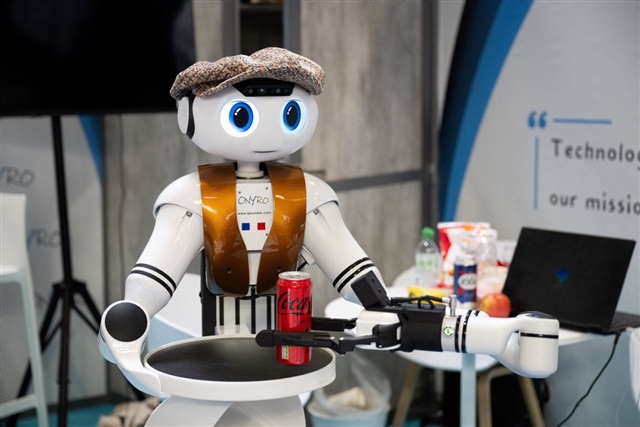
The robotics industry is rapidly evolving, with new advancements reshaping the way we think about automation and artificial intelligence. A critical part of this transformation is the increasingly prominent roles of human-robot collaboration and humanoid robots. As these trends become more pronounced, they are poised to revolutionize various aspects of human life, from industry to services, and beyond.
### Human-Robot Collaboration on the Rise
In the realm of human-robot collaboration, robots are no longer confined to fenced-off areas on factory floors. They are now working alongside humans, contributing to a more dynamic work environment. This collaboration ranges from simple, repetitive tasks to more complex and precise operations that benefit from a human touch enhanced by robotic precision.
#### The Benefits of Collaborative Robots
Collaborative robots, or cobots, can increase productivity, reduce the strain of physically demanding work, and bring more flexibility to production lines. They are designed to be safe around people, using sensors and software to avoid collisions and injuries. In sectors like manufacturing, healthcare, and logistics, cobots support workers by taking over tasks that are tedious, dangerous, or ergonomically challenging.
#### Implementing Cobots in the Workplace
For businesses looking to integrate cobots into their workflow, careful planning is essential. This includes identifying tasks suited to automation, training staff to work with cobots, and ensuring the right safety protocols are in place. However, given their potential to boost efficiency and reduce costs, cobots offer a compelling option for businesses keen to maintain a competitive edge.
### The Emergence of Humanoid Robots
The development of humanoid robots has accelerated, bringing us closer to robots that resemble and operate like humans. These robots are designed to navigate complex environments and perform tasks that require a level of dexterity and mobility similar to that of human beings.
#### Why Humanoid Robots?
The idea behind humanoid robots is not just for them to mimic human appearance, but also to function in spaces designed for people. With limbs capable of manipulating objects and the ability to move in ways similar to humans, these robots could undertake activities ranging from caregiving to search and rescue missions, in environments designed for human occupancy.
#### Challenges and Progress
Creating humanoid robots presents enormous technical challenges, including balancing, walking, and accurately perceiving and interacting with the environment. However, thanks to advancements in artificial intelligence, sensor technologies, and materials, these once insurmountable obstacles are being overcome. Robot developers are continuously refining the capabilities of humanoid robots, inching closer to practical, wide-scale deployment.
### Practical Applications and Future Trends
As humanoid robots and collaborative robotics technology continue to advance, their practical applications are expected to diversify. Here are some examples and trends to watch:
1. **Healthcare Assistance**: Humanoid robots could assist with patient care, helping lift and move patients or providing companionship to those in need of social interaction.
2. **Disaster Response**: Humanoids are being developed to operate in hazardous environments, such as after natural disasters, where they could search for survivors and assess dangers.
3. **Retail and Hospitality**: Robots have the potential to enhance customer service by providing information, guiding customers, or even serving food and drinks.
4. **Education and Entertainment**: Humanoid robots could serve as interactive educational tools or entertainers.
5. **Personal Assistance**: In the future, humanoid robots could become personal assistants, helping with household chores and errands.
To integrate these trends into our daily lives or workplaces, we must stay informed about the latest developments in robotics, assess how these technologies can benefit our particular needs, and prepare for the societal and ethical implications of working alongside increasingly autonomous machines.
The future of robotics is unfolding before our eyes, promising a world where collaboration between humans and robots is commonplace and humanoid robots are a part of our social fabric. As these technologies continue to evolve, they present exciting opportunities and challenges that will shape the future in unimaginable ways. Embracing these trends with an open mind and strategic planning is key to harnessing their full potential.


