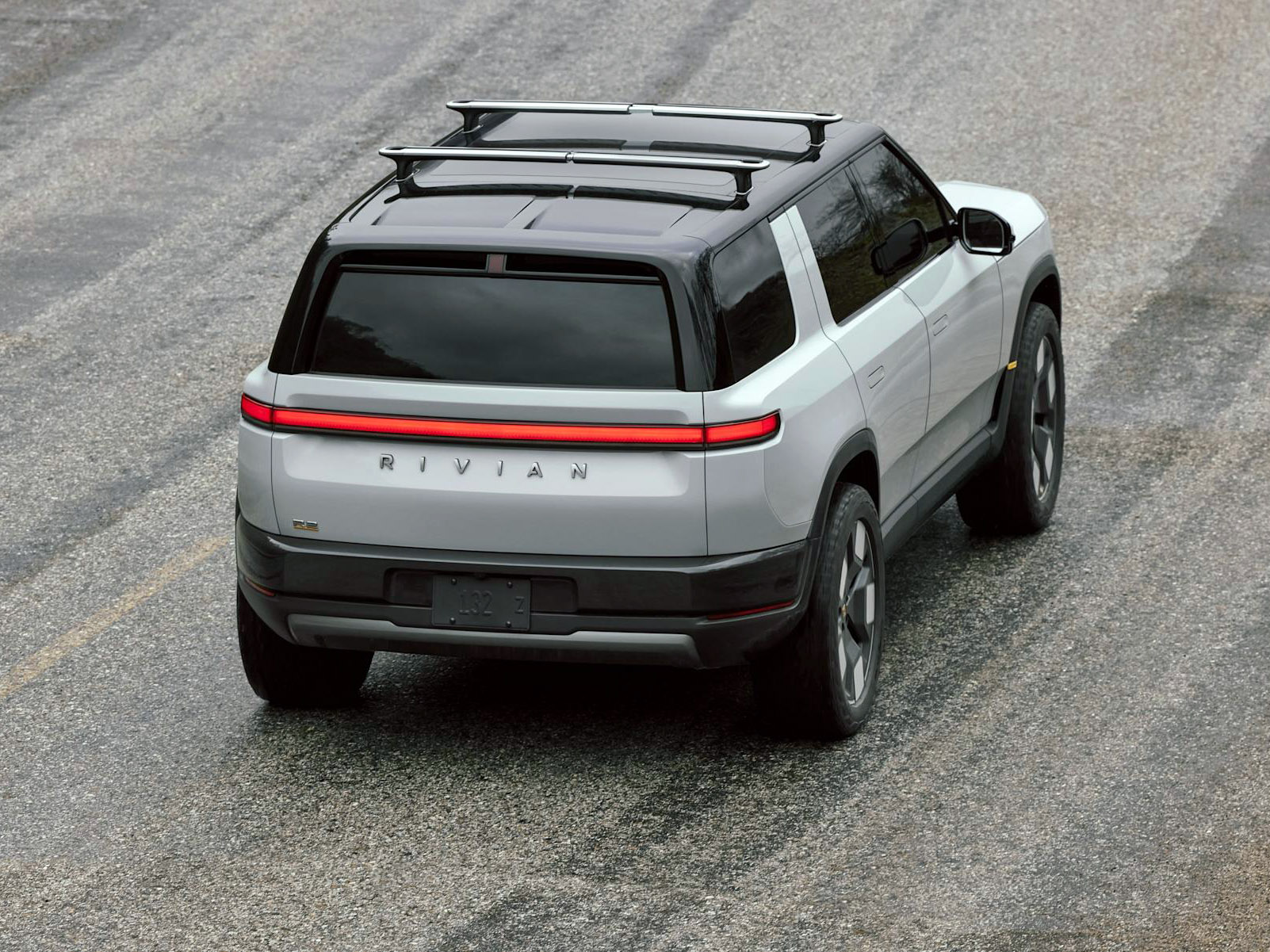
Rivian just unveiled what many are calling its most important vehicle yet: the Rivian R2 SUV. Revealed at SXSW, the new R2 goes straight after the Tesla Model Y, not only by targeting similar pricing but also by making a strong case on performance, range, charging speed, and in-car tech.
Rivian plans to launch the R2 lineup in stages, starting with the R2 Performance at $57,990. That puts it right in the same neighborhood as the Model Y Performance and signals that Rivian isn’t positioning the R2 as a niche alternative. Next comes the R2 Premium at $53,990, with a more affordable R2 Standard arriving later at around $45,000.
Rivian R2 range, performance, and charging details
The first version out of the gate, the R2 Performance, comes with dual electric motors, all-wheel drive, and a hefty 656 horsepower. Rivian estimates a range of about 330 miles, which is competitive in the midsize electric SUV class. Charging is also a major talking point: Rivian says the R2 can go from 10% to 80% in under 30 minutes.
The Performance model rides on 21-inch wheels and includes semi-active suspension along with multiple drive modes, aiming to deliver both everyday comfort and the kind of responsiveness buyers expect from a performance-branded EV.
The R2 Premium, planned to arrive later in 2026, keeps the same estimated 330-mile range and AWD setup, but tones output down to 450 horsepower. For buyers who want Rivian design and range without going all-in on peak power, this could end up being the sweet spot.
Big bet on edge AI and hands-free driving
Rivian is also leaning hard into software. The R2 is said to offer 200 TOPS of edge AI compute, supporting an onboard Rivian Assistant and the brand’s Autonomy+ hands-free driving system. Rivian claims Autonomy+ will cover 3.5 million miles of roads across the US and Canada, with the longer-term goal of competing more directly with Tesla’s driver-assist ambitions.
New battery cells: 4695 format and why it matters
Under the floor, the R2 uses LG Energy Solution’s 4695 cylindrical battery cells. Rivian says this is the first US vehicle to use the larger 4695 format. The company emphasizes improved energy density and better thermal performance compared to the 2170 cells used in Rivian’s R1 lineup.
Thermal performance matters because it can influence real-world charging behavior and sustained fast-charging capability. Rivian is clearly trying to make the case that it’s not simply meeting the Model Y feature-for-feature, but pushing key engineering upgrades that could translate to a better ownership experience, especially for road trips.
Rivian R2 Standard model: the $45,000 volume play
The R2 Standard is scheduled to arrive in 2027 and is expected to start at $45,000. It features a single-motor setup rated at 350 horsepower and 355 lb-ft of torque, with an estimated range of more than 275 miles.
That range is solid for the price, but it may face tough comparisons from EVs that pair similar pricing with faster charging. This matters because Rivian’s bigger challenge isn’t building a compelling vehicle—it’s scaling volume in a segment that’s getting crowded quickly.
Why the R2 matters for Rivian’s future
Rivian’s leadership has framed the R2 as a turning point. The company is still projecting significant adjusted pretax losses for 2026, estimated between $1.8 billion and $2.1 billion, underscoring how much is riding on the R2 reaching a far broader audience than Rivian’s earlier, more expensive models.
Sales expectations for 2026 are hovering around 65,000 vehicles, while at least one optimistic forecast suggests annual R2 demand could eventually reach 200,000 units. If Rivian can translate its strong brand loyalty, distinctive boxy-modern styling, and highly praised interior design into mass-market momentum, the R2 could be the model that changes its trajectory.
Still, Rivian won’t be alone. Competition in the midsize electric SUV category continues to intensify, and upcoming rivals are expected to challenge on price and charging speed. Whether Rivian’s design appeal, tech package, and fresh battery approach are enough to stand out will become clearer once R2 deliveries begin later in the spring.