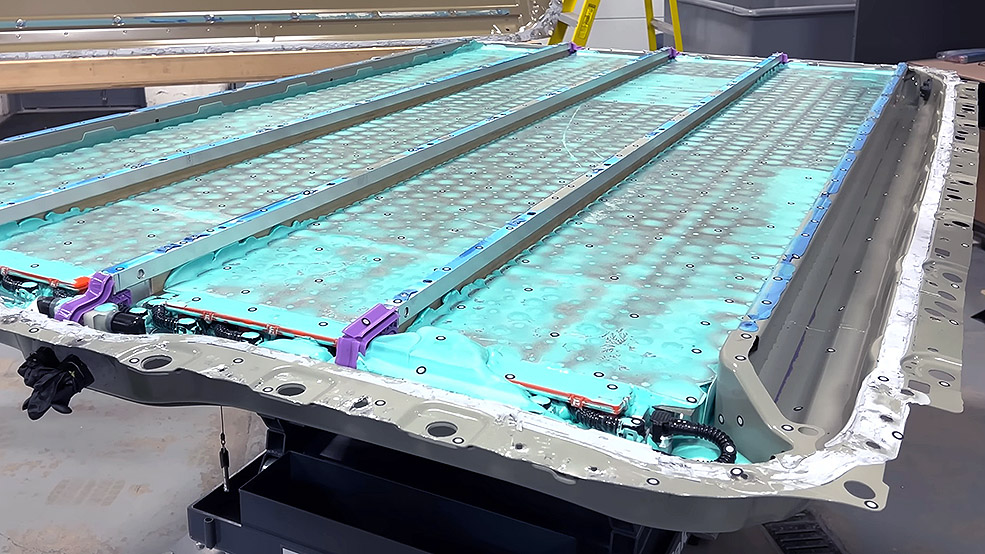
Tesla Inc. has recently experienced a notable overhaul in its leadership structure, particularly in areas vital to its advancements such as battery technology. Amongst these changes, the company has introduced a new lead for the development of its 4680 battery cells, signaling ambitious objectives for these power sources, which are critical to vehicles like the Model Y and the much-touted Cybertruck.
The new executive responsible for the battery development, Bonne Eggleston, has a clear mission: to reduce the production costs of the 4680 battery cells. Eggleston’s mandate is to achieve lower production costs than major battery producers Panasonic and LG by the year 2025, with an intermediate goal of surpassing supplier costs for nickel-based cells by the end of the current year.
This strategic move aims to strengthen Tesla’s market position and utilize potential federal tax credits more efficiently, which are currently partly directed towards suppliers like Panasonic.
Despite the forward momentum, Tesla’s journey toward a 50% reduction in 4680 battery costs compared to standard batteries has faced challenges. The initial integration of 4680 batteries into the Model Y’s structure showed a promising 20% cost reduction, mainly due to the cell’s larger size and its integral role within the vehicle’s chassis. The more intricate milestone of scaling up the dry-coated electrode production process – a breakthrough that could lead to significant cost savings – appears to be a more gradual achievement.
With the introduction of the Cybertruck, Tesla has made strides in the utilization of 4680 cells incorporating dry-coated electrodes, but this innovation has yet to reach mass production, and current projections suggest a capacity of 60,000 Cybertruck battery packs per year.
The change in leadership and the realigned goals reflect a shift towards increasing production yield and enhancing the cost-effectiveness of the 4680 battery cells. Moreover, exploring alternative cathode suppliers is included in this comprehensive strategy in order to secure more feasible short-term targets. Yet, engineers at Tesla are conscious that these efforts, while necessary, might not fully realize the aspiration for a 50% reduction in costs, considering the comparative advantages of the 4680 cells in terms of safety, longevity, or charging performance.
The reduction in manufacturing costs remains crucial as Tesla competes with EV battery giants CATL and BYD, which are producing batteries at substantially lower costs. With Cybertruck’s battery cells potentially costing double the price of these competitors, even if Tesla achieves its end-of-year cost reduction goals, it creates competitive tension for the pricing of the Cybertruck and Model Y.
Tesla’s ambition for the 4680 battery cells extends beyond immediate cost concerns. These efforts underscore the company’s commitment to innovate within the electric vehicle market, focusing on creating more accessibly priced electric vehicles and optimizing production to meet the growing demand.
In conclusion, while the path to a larger cost reduction remains a challenging endeavor, Tesla’s repositioning under new leadership for its 4680 battery team is a telling sign that the company is committed to its vision of driving the electric vehicle revolution forward through groundbreaking battery technology.