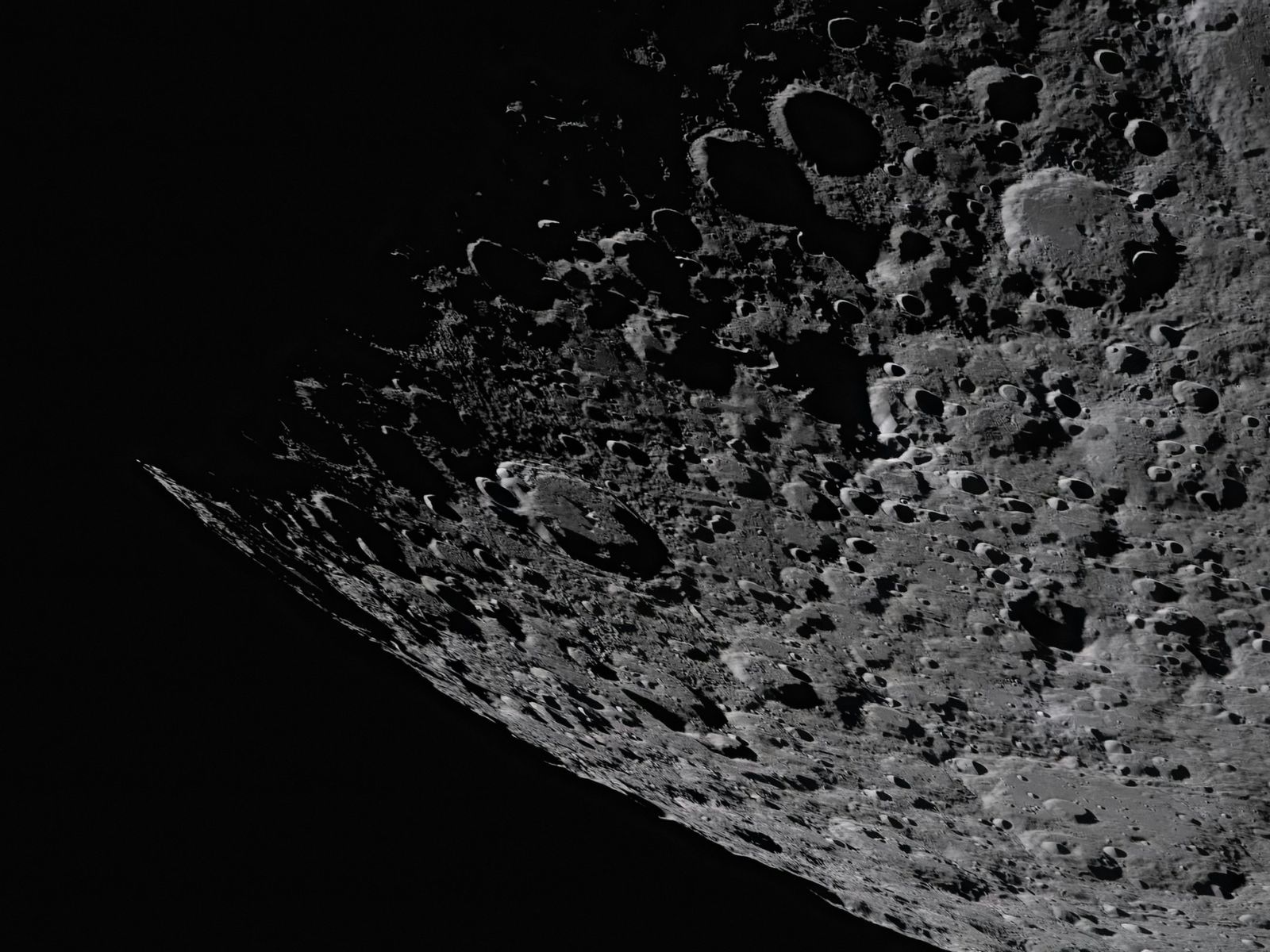
Astronomers Discover a Massive New Crater on the Moon Formed by a Recent Impact
The Moon’s surface is already famous for its countless craters, but scientists have now identified a remarkably large new impact site that appears to have formed in 2024. The discovery is drawing attention because the collision went unnoticed when it happened, despite leaving behind one of the largest newly formed craters observed in the solar system in recent years.
The crater, now named McGetchin, measures about 728 feet wide, or 222 meters, and is estimated to be around 141 feet deep, or 43 meters. It was first spotted in 2025 through data gathered by NASA’s Lunar Reconnaissance Orbiter, a spacecraft that has been mapping and studying the Moon in exceptional detail for years. Additional observations were later used to confirm that the crater was new.
Researchers believe the impact was caused by a fragment of an asteroid or comet. Based on the size of the crater, the object may have been roughly as large as a three- to six-story building before it slammed into the lunar surface. The force of the impact blasted dust, rock, and debris across a vast area, with material scattered more than 100 kilometers from the impact point.
What makes this discovery especially important is that the impact was not detected in real time. Scientists estimate that an event of this size may happen on the Moon roughly once every 132 years. While that may sound rare, it is highly relevant as space agencies and private companies continue planning future lunar bases and long-term human activity on the Moon.
A major concern is not only the impact itself, but also the debris it sends flying across the surface. On the Moon, where there is no thick atmosphere to slow objects down, ejected material can travel long distances and potentially threaten equipment, habitats, rovers, or astronauts. Understanding how far debris spreads and how dangerous it can be is crucial for designing safer lunar missions.
Because of this, some researchers are now interested in sending a robotic mission to the McGetchin crater. A rover or lander could study the fresh impact zone up close, examine the scattered material, and help scientists better understand how powerful lunar impacts affect the surrounding landscape.
The discovery of McGetchin is a reminder that the Moon is not a completely static world. Even today, its surface is still being reshaped by cosmic collisions. As humanity prepares to return to the Moon for longer missions, studying fresh craters like this one could play an important role in protecting future explorers and building safer lunar infrastructure.