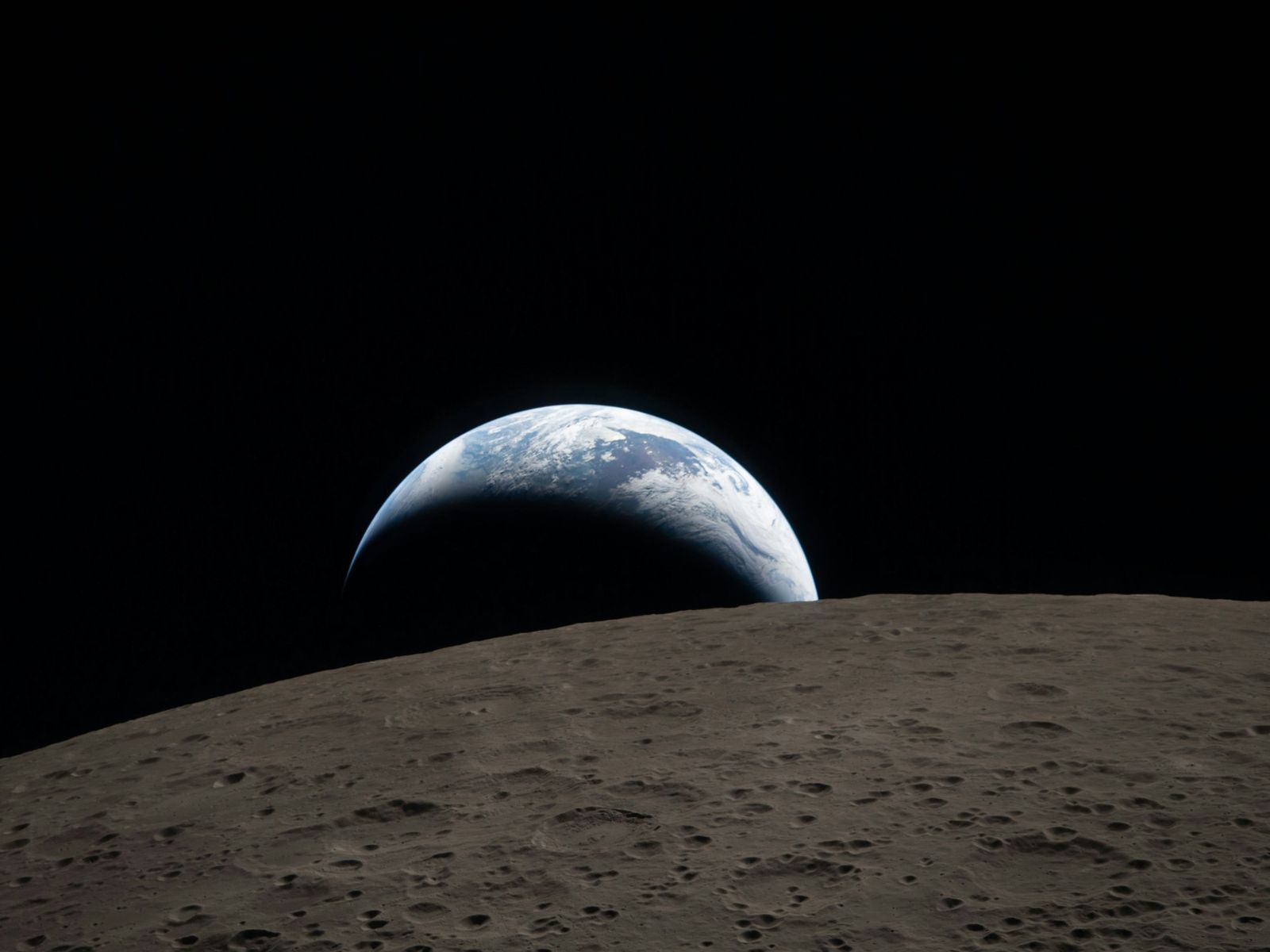
South Korean Lunar Probe Captures Falcon 9 Impact Site on the Moon
A South Korean lunar spacecraft has captured rare images of the spot where the upper stage of a SpaceX Falcon 9 rocket slammed into the Moon, offering scientists a closer look at a dramatic event that was difficult to observe from Earth.
The impact occurred on August 5, 2026, when the spent upper stage of a Falcon 9 rocket struck the lunar surface at an estimated speed of 5,400 mph, or about 8,700 km/h. While astronomers had been tracking the object’s path, direct images of the collision were limited because the impact could not be seen from Earth.
The rocket stage originally launched on January 15, 2025, as part of a mission carrying Firefly Aerospace’s Blue Ghost 1 lunar lander. After completing its primary role, the upper stage was left in space. Over time, the combined influence of solar wind and gravitational forces affected its path, eventually sending the 18-meter-long object into the Moon.
The Korea Aerospace Research Institute’s Danuri lunar orbiter later flew over the impact region during multiple passes and photographed the area. The newly released images show that the surface around the crash site appears darker than before, suggesting that the impact disturbed the lunar soil. A fresh crater also formed where the rocket stage struck.
Although dust and debris were thrown out during the collision, the ejected material is not clearly visible in the images. Still, the darker surface and new crater provide strong evidence of the impact and give researchers valuable data about how human-made objects interact with the Moon’s surface at high speeds.
Events like this are becoming increasingly important as more countries and private companies send spacecraft to the Moon. With lunar missions expected to grow in the coming years, scientists are paying closer attention to how rocket stages, landers, and other hardware affect the lunar environment.
The Danuri spacecraft’s observations add another important piece to the study of lunar impacts. By comparing images taken before and after such events, researchers can better understand crater formation, surface changes, and the behavior of lunar dust when struck by fast-moving objects.
The Falcon 9 impact may have been invisible to skywatchers on Earth, but thanks to South Korea’s lunar orbiter, its mark on the Moon has now been seen from above.