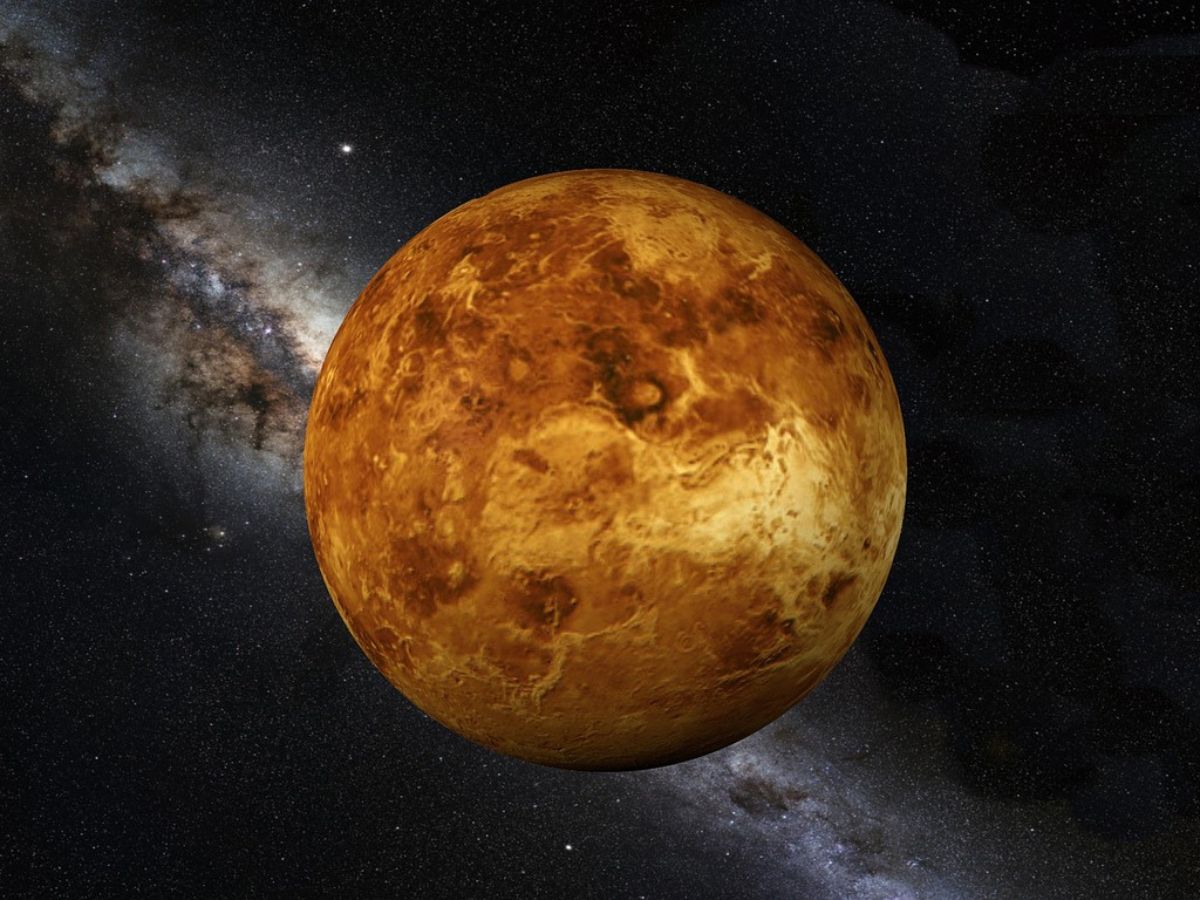
Earth’s so‑called twin just went quiet. For the first time in years, no spacecraft is circling Venus, and the timing couldn’t be worse for scientists eager to understand our neighboring world and the hazards lurking in the inner Solar System.
The silence follows the end of a remarkable mission. Launched in 2010, the Akatsuki probe set out to study Venus in detail. A critical engine failure after launch sent the spacecraft sailing past its target at high speed, and many assumed the mission was over. Instead, engineers and scientists refused to give up. Five years later, using creative navigation and smaller thrusters, Akatsuki executed a daring return and slipped into Venusian orbit—an improbable second chance that paid off in a big way.
From that vantage point, the probe delivered a wealth of discoveries about Venus’s thick, turbulent atmosphere. It tracked cloud motion, mapped complex wind patterns, and monitored weather systems over long periods, offering insights that reshaped models of the planet’s climate and circulation. Akatsuki’s specialized instruments gave researchers a continuous, close-up view of atmospheric dynamics that simply isn’t possible from Earth. Those observations helped address broader questions about how rocky planets form and evolve—and why two worlds of similar size, Earth and Venus, took such different paths.
But after roughly a decade on duty, Akatsuki has now fallen silent, and attempts to revive it have failed. With the spacecraft out of service, Venus currently has no orbiter keeping watch. That gap matters. Extended, high-resolution monitoring is essential for decoding the planet’s extreme weather, refining theories about planetary chemistry and geology, and probing the processes that can transform a once-habitable world into a hostile one.
There’s also a more immediate concern closer to home. The inner Solar System hosts populations of asteroids whose orbits can bring them near Venus. Studying this region—from a platform in Venus orbit—can improve models of how these objects move and evolve. Better data helps researchers assess which trajectories could one day intersect Earth’s path, sharpening our ability to predict and mitigate potential impact risks.
All of this adds urgency to getting another mission back to Venus orbit. A new probe could continue long-term atmospheric monitoring, capture higher-fidelity measurements across multiple wavelengths, and provide the kind of continuous coverage needed to spot changes and trends over time. It could also contribute to surveys of hard-to-observe asteroids that reside close to the Sun, a zone that is challenging to study from Earth due to glare and geometry.
The challenge, as ever, is funding. Space agencies face tight budgets, and when priorities shift, even well‑scoped missions can slip down the queue. That means years could pass before a replacement orbiter arrives, leaving a critical gap in our understanding of a planet that holds clues to both our past and our future.
In the meantime, telescopes and interplanetary spacecraft elsewhere in the Solar System will continue to gather what data they can. But they can’t match the power of a dedicated orbiter stationed above the clouds, watching day after day. Venus is a natural laboratory for atmospheric physics, planetary geology, and climate evolution—a place where we can test ideas about how worlds work and why some remain temperate while others become infernos.
The message is clear: to unlock Venus’s remaining secrets and strengthen our defenses against inner‑Solar‑System asteroids, we need eyes back in orbit. The sooner a new probe is funded and launched, the sooner we can resume the steady, transformative stream of science that only an on‑site observer can deliver.