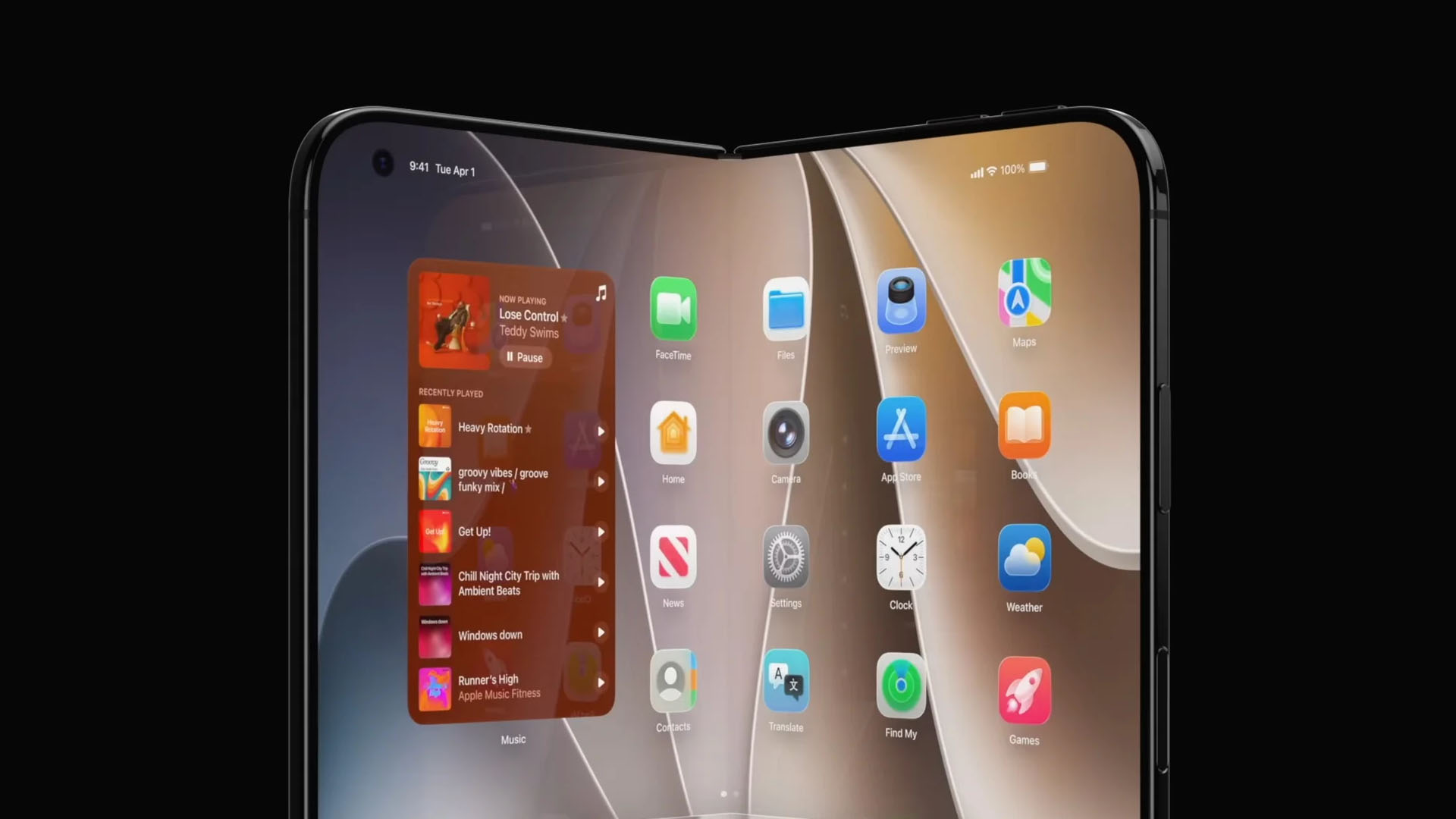
Apple’s First iPhone Fold May Use Samsung’s Most Advanced OLED Display, But Hinge Problems Could Threaten Its Launch
Apple’s long-rumored iPhone Fold is reportedly moving closer to production, with Samsung said to have received approval to begin manufacturing OLED panels for the device. The deal is expected to be exclusive, at least for the first wave of production, with around 3 million display units planned for the initial supply.
That sounds like a major step forward for Apple’s first foldable iPhone, but there may still be one serious obstacle standing in the way: the hinge.
According to recent supply-chain reports, Apple is preparing to use some of Samsung’s most advanced OLED display technology for the iPhone Fold. The panel is expected to combine Color Filter on Encapsulation, often called CoE, with Samsung’s M16 OLED technology. This setup could help Apple deliver a thinner, brighter, and more power-efficient foldable screen, which would be essential for a premium foldable iPhone.
However, the display may not be the biggest challenge. The hinge is reportedly becoming a major concern as Apple works toward mass production.
The iPhone Fold is rumored to feature a liquid metal 3D-printed hinge, a design that could mark a major shift in foldable smartphone engineering. If successful, it may improve durability, reduce weight, and help create a smoother folding mechanism. It could also push other smartphone brands to adopt similar hinge technology in future foldable devices.
But Apple is said to be facing stability issues with the component. Earlier rumors claimed the hinge produced rattling sounds after assembly, though that claim was later disputed. Now, similar concerns appear to have resurfaced, with reports suggesting Apple still has work to do before the hinge is ready for large-scale production.
For a foldable phone, the hinge is not just another internal part. It directly affects the user experience. A poorly tuned hinge can make the device feel less premium when opening and closing. It can also make the display crease more noticeable, which is one of the biggest complaints users have about foldable smartphones.
Apple is known for waiting until a product category feels refined enough before entering it, and that makes the hinge even more important. The company is unlikely to release a foldable iPhone if the folding mechanism feels loose, noisy, uneven, or unreliable.
Samsung is reportedly preparing its production lines to manufacture the advanced OLED panels, but final assembly of the iPhone Fold could still be delayed if Apple cannot resolve the hinge problem in time. Reports suggest production could be pushed back by 15 days to a full month if additional testing and inspection are required.
That may not sound like a long delay, but for a high-profile Apple launch, even a few weeks can have a major impact. If every hinge needs extra inspection, packaging time increases, production slows, and launch-day supply becomes more limited. That could make the iPhone Fold extremely difficult to buy when it first arrives.
The issue could also raise manufacturing costs. More hands-on inspection means more time spent on each device, and if the 3D-printed hinge has a higher defect rate than expected, Apple may have to reject more units before they reach customers. That would reduce total shipments and could make Apple’s first foldable iPhone even more expensive to produce.
A September announcement is reportedly being discussed, which would align with Apple’s usual iPhone launch schedule. However, availability may be a different story. Even if Apple unveils the iPhone Fold during a fall event, hinge-related production delays could limit shipments or push broader availability into 2027.
That would be a frustrating outcome for customers waiting for Apple’s first foldable phone, but it may not be a major financial disaster for the company. Strong demand for the iPhone 18 Pro and iPhone 18 Pro Max could help offset any revenue pressure if the foldable model launches later than expected or arrives in limited quantities.
For now, the iPhone Fold appears to be making progress, especially on the display side. Samsung’s involvement suggests Apple wants a premium OLED panel capable of competing with the best foldable screens on the market. Still, the hinge may ultimately decide whether the device launches smoothly or becomes another delayed Apple product.
If Apple can solve the hinge issue in time, the iPhone Fold could become one of the most important smartphone launches in years. If not, buyers may have to wait longer to see Apple’s first real answer to the foldable phone market.