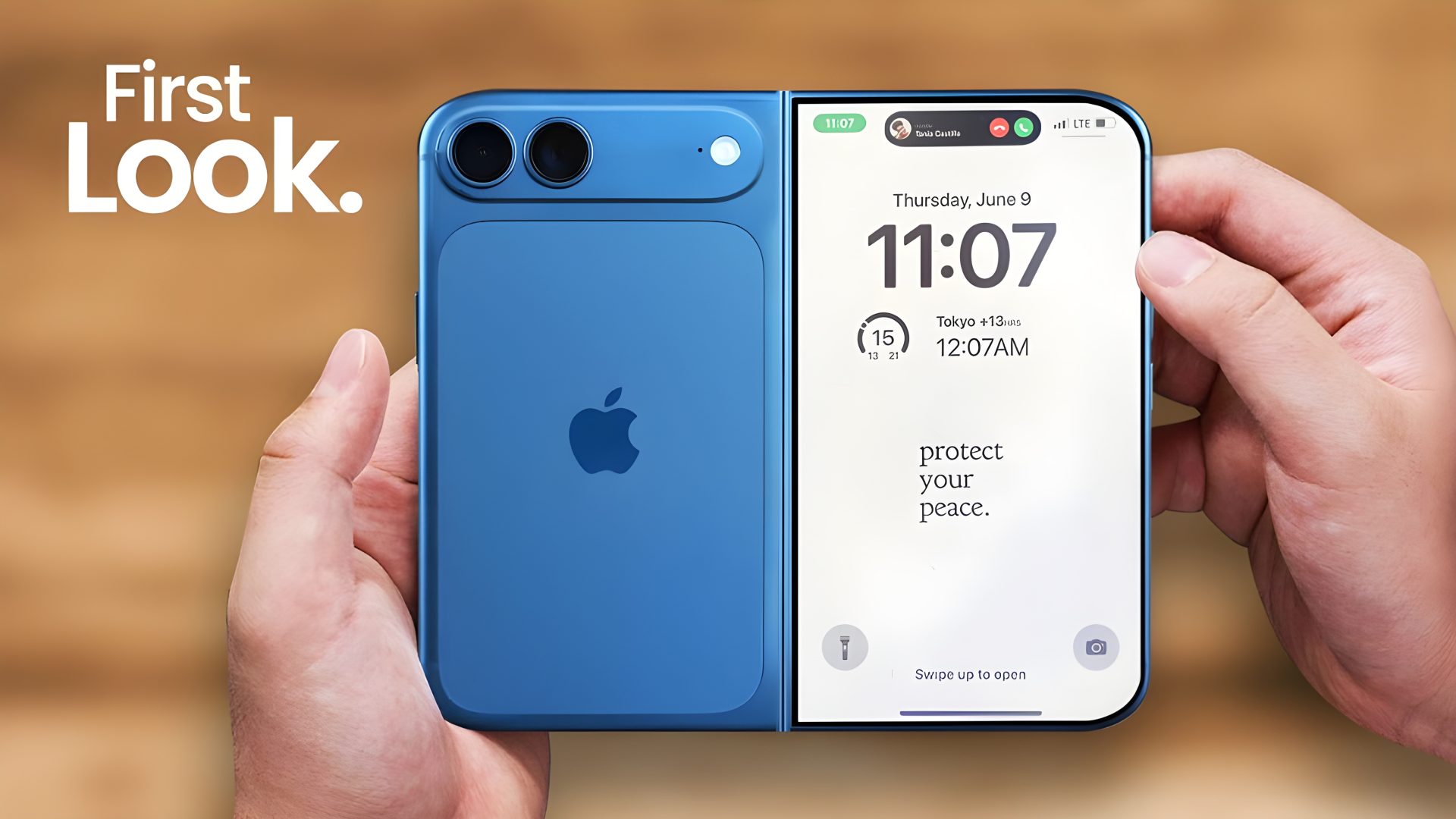
Apple’s Foldable iPhone Ultra Rumored to Feature Liquidmetal Hinge, Bigger Battery, and Titanium Frame
Apple’s long-rumored foldable iPhone appears to be moving closer to reality, with fresh claims suggesting that the company’s pre-production work is now progressing quickly. Prototype units of the upcoming device, widely referred to as the iPhone Ultra, are reportedly being sent to global carriers for testing and validation.
If accurate, this would mark a major step forward for Apple’s first foldable iPhone, indicating that the company may already be testing network compatibility, durability, and real-world performance before moving toward a wider production phase.
The latest leak suggests that Apple has settled on three major hardware choices for the iPhone Ultra: a Liquidmetal hinge, a larger battery, and a titanium frame. Together, these features point to a premium foldable device focused on durability, battery life, and long-term reliability.
One of the most interesting rumored upgrades is the Liquidmetal hinge. Apple has been associated with Liquidmetal technology for years, but its use in a foldable iPhone hinge would be especially meaningful. A foldable phone lives or dies by the strength and smoothness of its hinge, and Apple is likely aiming to avoid the durability concerns that have affected some earlier foldable devices.
Liquidmetal is a type of amorphous metal alloy. Unlike traditional metals, its atomic structure does not form a neat crystal pattern during manufacturing. Instead, it is rapidly cooled, creating a more glass-like atomic arrangement. This gives the material impressive strength while still allowing it to flex under pressure.
The result is a material that is said to be significantly harder than stainless steel and stronger than standard titanium. For a foldable iPhone, that could mean a hinge that is slimmer, tougher, and better suited for repeated folding over years of use.
Another major rumored upgrade is a larger battery. The iPhone Ultra is expected to pack a bigger cell than Samsung’s upcoming Galaxy Z Fold 8, which is rumored to feature a 4,800mAh battery. If Apple goes beyond that capacity, it could give the foldable iPhone a strong advantage in daily battery life, especially since foldable phones typically need more power to drive larger internal displays.
The device is also rumored to include a dedicated vapor chamber cooling system. That would help manage heat during gaming, video recording, multitasking, and other demanding workloads. A vapor chamber could be especially useful if Apple equips the iPhone Ultra with its next-generation A20 Pro chip, reportedly based on TSMC’s advanced 2nm process.
A more efficient chip combined with a larger battery could make the iPhone Ultra one of Apple’s longest-lasting flagship models, despite its foldable design and larger screen.
The titanium frame is another expected premium feature. Apple has already used titanium in its high-end iPhone lineup, and bringing it to a foldable model would make sense. Titanium is strong, relatively light, and gives the device a more premium feel. However, the combination of a larger battery, foldable hardware, and titanium construction may also make the iPhone Ultra heavier than rival foldables.
One well-known industry leaker has suggested that Apple’s foldable iPhone could weigh more than Samsung’s comparable Galaxy Z Fold 8, which is rumored to come in at around 201 grams. If true, the added weight may be the trade-off for a bigger battery, stronger hinge, and more durable materials.
Apple also appears to be making some compromises to achieve its foldable design. Current rumors claim the iPhone Ultra may skip Face ID, a telephoto camera, MagSafe support, a physical SIM card slot, and the Action button. The device is expected to be eSIM-only, which may disappoint some users but could free up internal space for the battery, hinge system, and other components.
The lack of Face ID would be one of the biggest changes if it happens. Apple could instead rely on Touch ID integrated into the power button or another biometric solution. Removing certain components may help Apple reduce thickness and improve internal layout, both of which are critical challenges in foldable phone design.
While none of these details have been officially confirmed, the latest rumors paint a clearer picture of Apple’s foldable iPhone strategy. Rather than racing to release a foldable device, Apple appears to be focusing on durability, battery life, cooling, and premium construction.
If the iPhone Ultra does launch with a Liquidmetal hinge, titanium frame, vapor chamber cooling, larger battery, and next-generation Apple silicon, it could become one of the most ambitious iPhone models ever released.
For now, Apple’s foldable iPhone remains one of the most closely watched upcoming devices in the smartphone market. With prototypes reportedly entering carrier testing, the iPhone Ultra may finally be moving from rumor to reality.