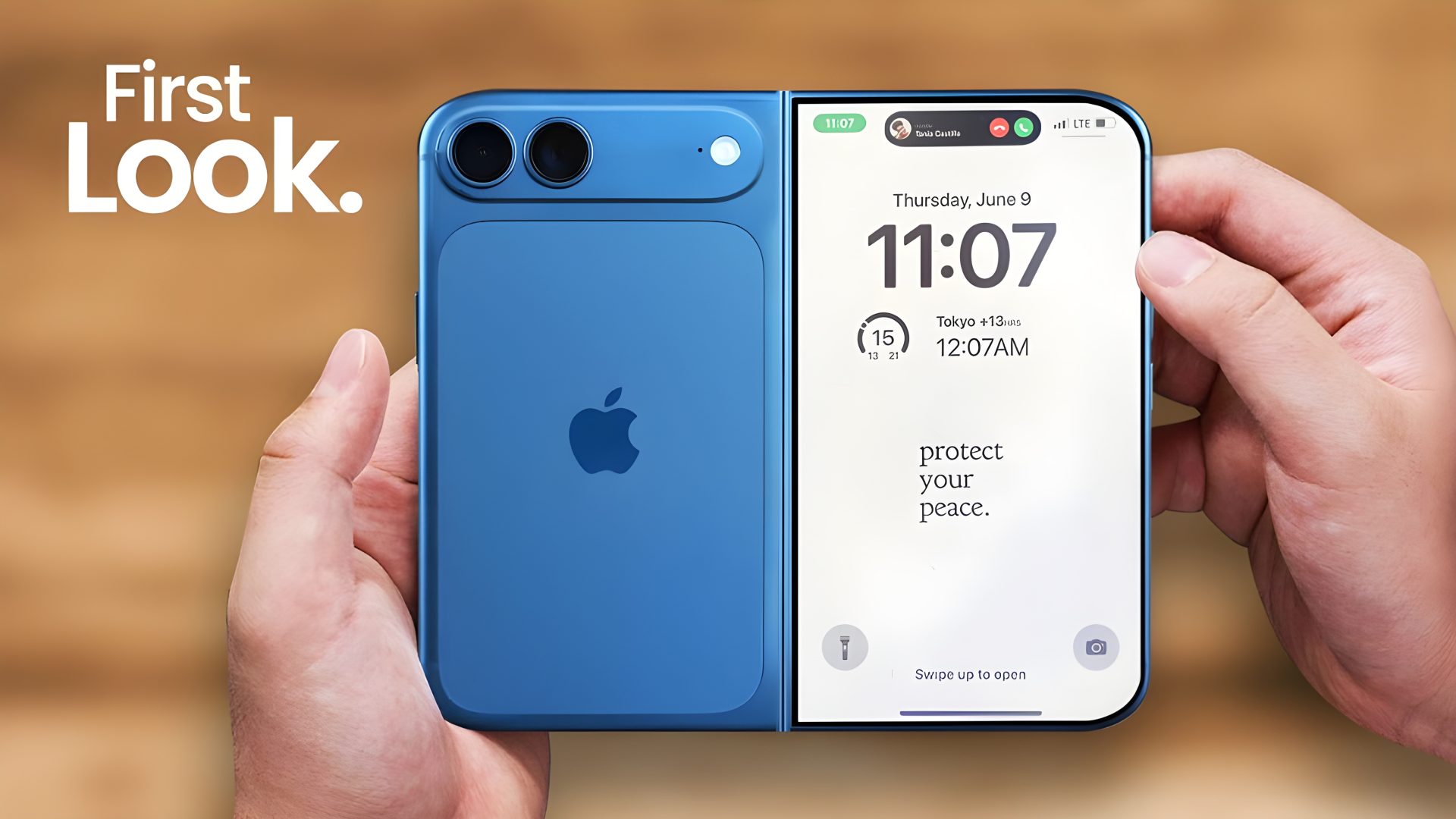
Leaks around Apple’s long-rumored foldable iPhone are no longer just occasional hints. The latest supply chain chatter is painting a much clearer picture of what’s being called the iPhone Fold, including eye-watering pricing, ambitious production goals, and a design that aims to fix some of the biggest complaints about today’s foldable phones.
iPhone Fold price leaks: potentially starting at $2,325
One of the biggest new details is expected pricing for the base storage model. Based on a leaked price in Chinese yuan and straightforward currency conversion, Apple’s first foldable iPhone could land in ultra-premium territory, with these rumored tiers:
256GB – $2,325
512GB – $2,645
1TB – $2,905
If this holds, iPhone Fold pricing would position it as one of the most expensive mainstream smartphones Apple has ever sold, clearly targeting early adopters and power users who want a phone-and-tablet hybrid in one device.
Apple reportedly ramps up production targets: 20 million units in play
The other major development is a possible increase in Apple’s initial production expectations. Earlier reports suggested Apple’s foldable iPhone would account for less than 5% of typical annual iPhone sales. With Apple shipping around 247 million iPhones in 2025, that would imply annual iPhone Fold sales below roughly 12 million units.
Now, multiple new signals point to a higher target. The latest supply chain talk suggests Samsung Display could be preparing to supply as many as 20 million foldable panels for Apple—said to be roughly a 20% increase versus earlier forecasts around 13–15 million units. In parallel, reporting has also indicated Apple may have boosted initial inventory plans, which would be significant for its main assembly partners.
While the exact number is still being debated, the direction is clear: Apple may be more confident about foldable iPhone demand than initially expected.
A foldable iPhone designed for multitasking, with iPad-like layouts
On the software side, Apple is expected to keep the iPhone Fold on standard iOS, but with interface changes that better fit a larger, foldable display. The big usability upgrade being discussed is iPad-like layouts and side-by-side apps, aimed directly at multitasking.
The internal display is rumored to be closer to an iPad-sized experience with a wider aspect ratio, while the outer screen is expected to feel more like a compact iPhone display. This aligns with earlier talk of a wider, passport-like form factor rather than a tall, narrow foldable design.
Even if the device doesn’t run iPad apps natively out of the box, the large existing ecosystem of iPad-optimized apps could make it easier for developers to adapt their iPhone apps for the foldable format—especially for content viewing and split-screen use.
Apple’s big foldable challenge: minimizing the crease
A major pain point for foldable phones is the visible crease running through the center of the folding display. Apple reportedly isn’t eliminating it entirely, but is said to have reduced it substantially. One figure being discussed is an extremely shallow 0.15mm crease depth.
To get there, Apple is believed to be leaning on advanced Ultra-thin Flexible Glass (UFG) and a redesigned hinge, with reports suggesting the hinge could use a “liquid metal” approach for improved durability and smoother folding.
Display tech upgrades: COE filtering for efficiency
Another notable rumor involves Apple applying a Color Filter on Encapsulation (COE) to the OLED panel’s protective encapsulation layer. The goal would be to create a display that’s lighter and more power-efficient—two things that matter a lot when you’re trying to balance a large foldable screen with battery life.
Cameras and biometrics: Touch ID returns, Face ID reportedly removed
On the outside display, Apple is rumored to use a small hole-punch cutout while still supporting the Dynamic Island-style UI for alerts and notifications. More surprisingly, Face ID is rumored to be removed, with Touch ID integrated into the side button instead.
For photography, the iPhone Fold is expected to feature a dual rear camera setup, with previous reports pointing to 48MP sensors for both cameras. On the front, selfie camera specs discussed in leaks go as high as 24MP.
For the inner screen camera, Apple has reportedly tested under-display camera technology, but image quality issues may keep it from appearing in early production models.
Other rumored iPhone Fold specs and features
Additional details circulating right now include:
A dedicated vapor chamber for thermal management
2,713 x 1,920 resolution and a 4:3 aspect ratio on the main screen
A20 Pro chip, 12GB RAM, and an in-house C2 5G modem
Battery capacity rumored between 5,400mAh and 5,800mAh
eSIM-only launch variant
What this could mean for Apple’s foldable iPhone launch
If the pricing, production scale, and hardware ambitions are accurate, the iPhone Fold is shaping up to be Apple’s most aggressive attempt yet at redefining what an iPhone can be—more iPhone than a tablet when closed, and closer to an iPad mini-like experience when opened.
The biggest question now is whether Apple can deliver a foldable that feels meaningfully more refined than what’s already on the market—especially at a rumored starting price above $2,300. If the crease reduction, multitasking upgrades, and display efficiency improvements are real, Apple may be betting that “better” matters more than “first.”