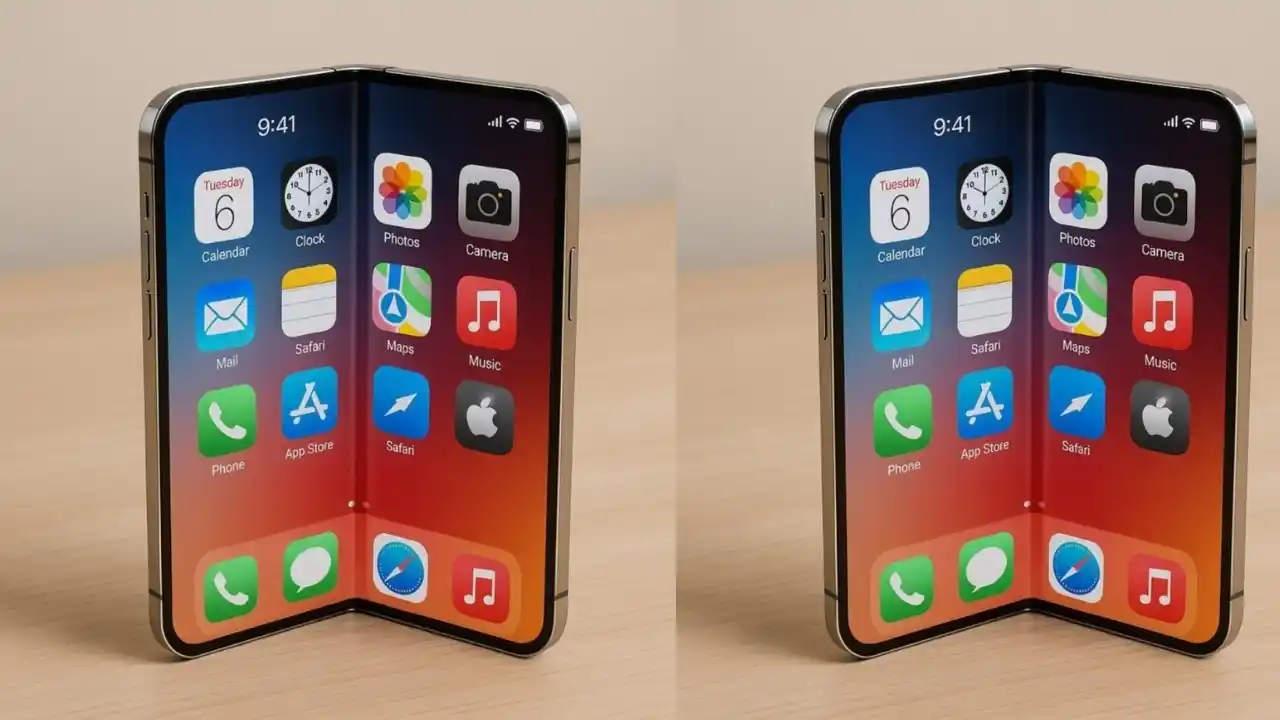
Apple’s first foldable iPhone is increasingly being seen as the device that could finally push foldable phones into the mainstream. But a new timeline being discussed suggests fans may need to be patient a little longer. According to well-known Apple analyst Ming-Chi Kuo, the so-called iPhone Fold is running behind schedule, and reliable, high-volume availability may not arrive until 2027 due to early production hurdles.
Kuo shared these thoughts during a wide-ranging MacroMicro interview focused on Apple, consumer electronics, and major AI trends. A key takeaway: Apple feels growing pressure from rapid AI innovation across the industry, especially as the company is often viewed as trailing rivals in the AI race. In response, Apple is said to be shifting toward more aggressive innovation across the iPhone lineup to strengthen its position and keep the product experience feeling fresh.
Even with this push, Apple’s longer product development cycle remains a limiting factor. Kuo suggested that while Apple can make incremental moves in the near term, more meaningful changes to the iPhone user experience are expected to arrive in 2026. That’s also where the foldable iPhone fits in—at least on paper.
The current expectation, per Kuo, is that Apple could announce the iPhone Fold in the second half of 2026. The problem is supply. Foldables are notoriously difficult to manufacture at scale, and Kuo specifically pointed to early-stage yield and ramp-up challenges. In plain terms: Apple may be able to unveil the device in 2026, but buyers could face limited stock, long waits, and restricted availability until shipments become “smooth” in 2027. If accurate, that would make the iPhone Fold a hard-to-get product through at least the end of 2026.
As rumors and forecasts have built momentum, a clearer picture of the iPhone Fold’s possible design has also emerged. Current expectations describe a book-style foldable with a somewhat squat shape, featuring a larger main display around 7.7 inches and a 5.4-inch cover screen for quick use when closed. The inner display is widely expected to target a 4:3 aspect ratio with a 2,713 x 1,920 resolution, positioning it as a potentially strong format for productivity, reading, browsing, and multitasking.
One of the most discussed elements is the screen itself. The iPhone Fold is rumored to pursue a crease-less design, a major goal for foldable manufacturers because the crease remains one of the most visible compromises of today’s foldable phones. To manage heat in a thinner, more complex chassis, the device is also anticipated to include a dedicated vapor chamber for improved cooling.
On the authentication side, the iPhone Fold is rumored to use Touch ID rather than Face ID, which would be a notable shift for a flagship iPhone-class product. Performance expectations include an A20 Pro chip paired with 12GB of RAM, plus Apple’s in-house C2 5G modem. Camera expectations point to a dual 48MP rear setup, along with an in-display front-facing camera that could reach up to 24MP.
Battery size is also expected to be substantial, with estimates ranging from about 5,400mAh to 5,800mAh—likely reflecting the power demands of a larger display and the realities of fitting enough capacity into a foldable design.
Other predictions include an eSIM-only launch approach and a premium price that could land around $2,399. As for sales volume, first-year shipments are projected to land somewhere between 7 million and 9 million units, though much depends on how quickly Apple can stabilize manufacturing yields and scale production.
AI plays a central role in why Apple may be pushing into foldables now. Kuo emphasized that Apple is under heavy pressure to show stronger AI progress at WWDC 2026. In the near term, that could involve leaning more heavily on Google’s Gemini to bolster Apple’s AI capabilities. Longer term, however, Kuo still expects Apple to build toward an in-house AI model, arguing that AI will become core to product design rather than just another feature layer.
It’s also been reported that Apple has already made arrangements to use a customized 3-trillion-parameter Gemini model for cloud-based Apple Intelligence, with an annual payment to Google said to be around $1 billion. Meanwhile, Apple is reportedly working with Broadcom on its first AI server chip, internally codenamed “Baltra,” with deployment currently expected in 2027—another sign that Apple is investing in the infrastructure needed to compete in AI over the long haul.
When it comes to the iPhone Fold specifically, Kuo pointed out that the larger screen could be a natural fit for AI-era experiences, especially for displaying multimodal content—information that blends text, images, and other media in more interactive ways. A bigger canvas could make AI features feel more useful, more contextual, and easier to navigate than on traditional phone screens.
At the same time, Kuo also sketched a longer view of where consumer devices may be headed. He suggested that smart glasses with displays could eventually replace many of today’s screen-based electronics, though meaningful growth may only happen once the technology and business models mature—more likely in the 2028 to 2030 window.
Apple is reportedly aiming for a 2026 release of new AI-enabled smart glasses with built-in cameras, microphones, and speakers designed for hands-free notifications, real-time AI help, and AI-powered translation. These glasses are not expected to include a built-in AR display, at least not initially, but they would still lean heavily on an upgraded Siri-like assistant experience that can interact through audio and on-the-go context.
That would put Apple into more direct competition with Meta’s popular smart glasses approach, which already offers a strong feature set and continues to improve through software updates.
For now, the iPhone Fold story appears to be a classic Apple narrative: a high-impact product that could reshape a category, paired with the reality that perfecting new hardware—and building it at Apple-scale—can take longer than expected. If Kuo’s timeline holds, the foldable iPhone may debut in 2026 but truly arrive for most buyers in 2027, when supply finally catches up with demand.