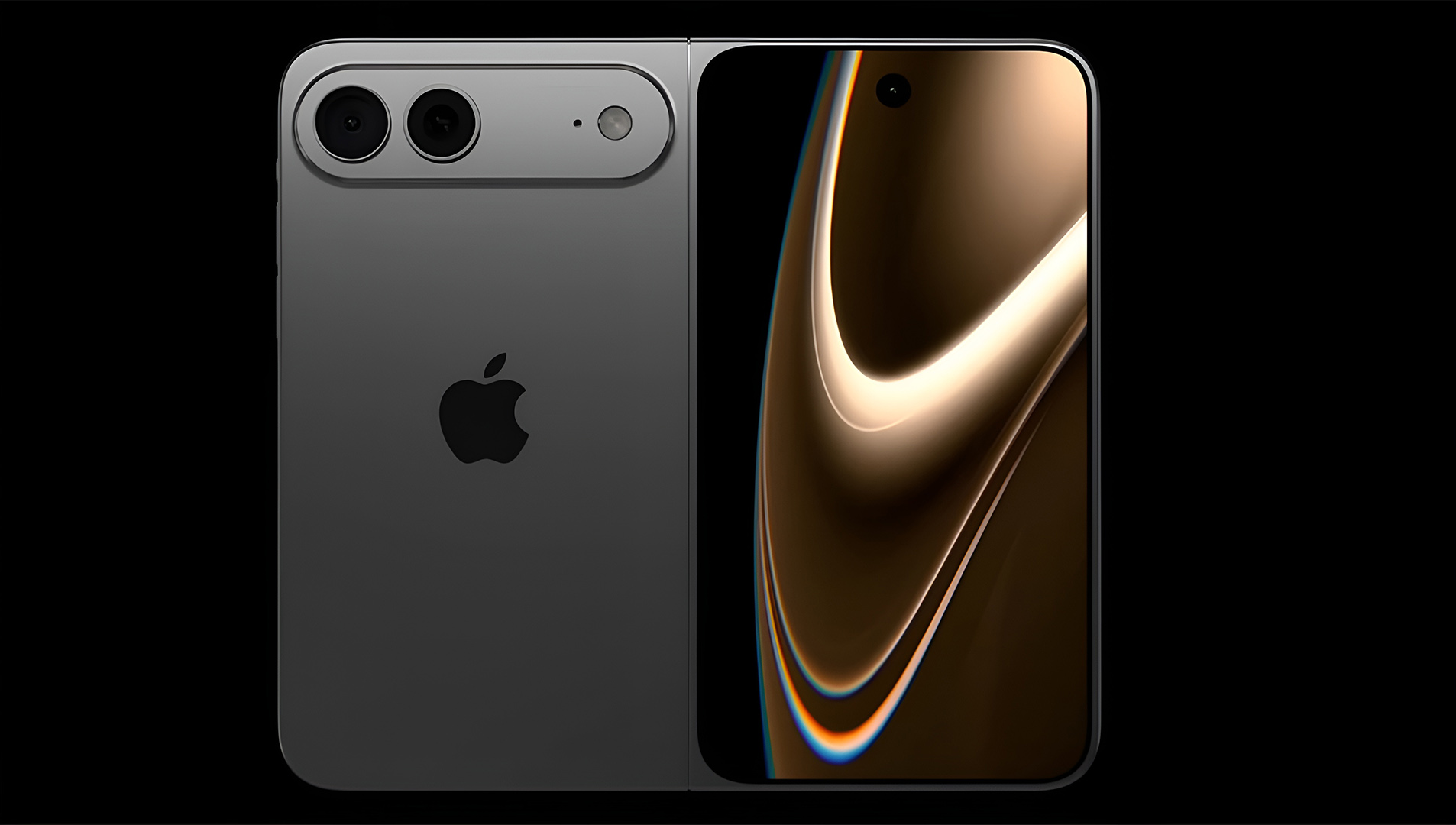
Apple’s first foldable iPhone is shaping up to be one of the biggest smartphone launches in years, and most expectations still point to a September 2026 reveal alongside the iPhone 18 Pro and iPhone 18 Pro Max. But a new investor note suggests buyers may need to wait a bit longer than anticipated to actually get their hands on it.
A Barclays analyst, Tim Long, believes the iPhone Fold may not begin shipping until December 2026, pushing availability to the very end of the year. That timing lines up with concerns Apple leadership has previously highlighted around constrained manufacturing capacity for advanced chip production and continued turbulence in the memory supply chain—two factors that can quickly squeeze early production of a brand-new device category like a foldable.
Another possible explanation is strategy rather than pure supply trouble. Apple could be planning a staggered rollout to better control early demand while it ramps production of its next-generation A20 Pro chip, which is widely expected to power not only the foldable iPhone but also the iPhone 18 Pro models. If multiple premium iPhones are competing for the same cutting-edge silicon during the same launch window, spacing out shipments could help prevent shortages and delays across the lineup.
Still, some parts of the analyst’s broader forecast raise questions. The same note suggests Apple could push additional iPhone 18 family launches into March 2027, including either an “iPhone Air 2” or an “iPhone 18 Plus” alongside the iPhone 18 and iPhone 18e. Since the “iPhone 18 Plus” is a name that hasn’t meaningfully surfaced in other credible chatter, it adds a layer of uncertainty to the overall timeline prediction—even if a late-2026 shipping window for the foldable remains plausible.
On the hardware side, the iPhone Fold’s display engineering may be where Apple tries hardest to differentiate. One key rumor claims the crease depth could be as little as 0.15mm—an impressively subtle fold line by today’s standards. Achieving that would likely require extensive use of ultra-thin flexible glass and a refined hinge design, with reports pointing to a “liquid metal” approach for parts of the hinge mechanism to improve durability and smoothness over time.
Price is another major point of interest for anyone waiting for an Apple foldable. A reported target starting price of around $2,000 would still place it firmly in ultra-premium territory, but it would also be notably lower than earlier estimates in the $2,300 to $2,400 range. If Apple can land closer to $2,000, it could make the iPhone Fold more competitive in the foldable phone market—especially for buyers already invested in the Apple ecosystem.
Software may end up being just as important as the hardware. The foldable iPhone is expected to introduce more iPad-like layouts and side-by-side apps, designed specifically to make multitasking feel natural on a larger internal screen. The approach is said to be simpler than the more desktop-style direction seen in recent iPad software, suggesting Apple wants the foldable to feel powerful without becoming complicated.
The rumored screen sizes also hint at Apple’s intended use case. The inner display is expected to be closer to an iPad-like experience with a wider aspect ratio, while the outer display may resemble a smaller iPhone screen—an approach consistent with a passport-style form factor that emphasizes practicality when closed and productivity when open.
In terms of design choices, the iPhone Fold’s outer display may include a small hole-punch cutout while still using the Dynamic Island interface for notifications and activity indicators. Face ID is rumored to be removed entirely, with Touch ID integrated into the side button instead—likely a space-saving decision that also simplifies the engineering around two displays and a complex hinge assembly.
Camera plans are also starting to come into view. Current expectations point to a dual rear camera system, with both sensors rumored at 48MP. For selfies and video calls, a front camera could reach up to 24MP. Apple has reportedly explored under-display camera technology for the inner screen, but testing has produced image quality that’s not yet good enough for a final product, making it less likely to appear in the first-generation iPhone Fold.
There are also signs Apple is focused on making the foldable thinner and more efficient. One reported technique involves applying a color filter on the encapsulation layer of the OLED panel (often referenced as COE, or Color Filter on Encapsulation). The goal would be a lighter display module with improved efficiency—useful in a foldable where space is at a premium.
Additional rumored specs paint a clearer picture of what Apple may be targeting with its first foldable iPhone:
– A dedicated vapor chamber for improved cooling
– 2,713 x 1,920 resolution with a 4:3 aspect ratio
– A20 Pro chip, 12GB RAM, and an in-house C2 5G modem
– Dual 48MP rear cameras
– Up to a 24MP selfie camera
– A battery capacity in the 5,400–5,800mAh range
– eSIM-only configuration
If these details hold, the iPhone Fold could arrive as a high-performance, productivity-focused foldable designed to feel like an iPhone when closed and closer to an iPad when opened. The biggest question left may be timing: a September 2026 announcement still seems likely, but if shipping really slips to December, the first wave of buyers may be heading into the holiday season before they can finally buy Apple’s long-awaited foldable iPhone.