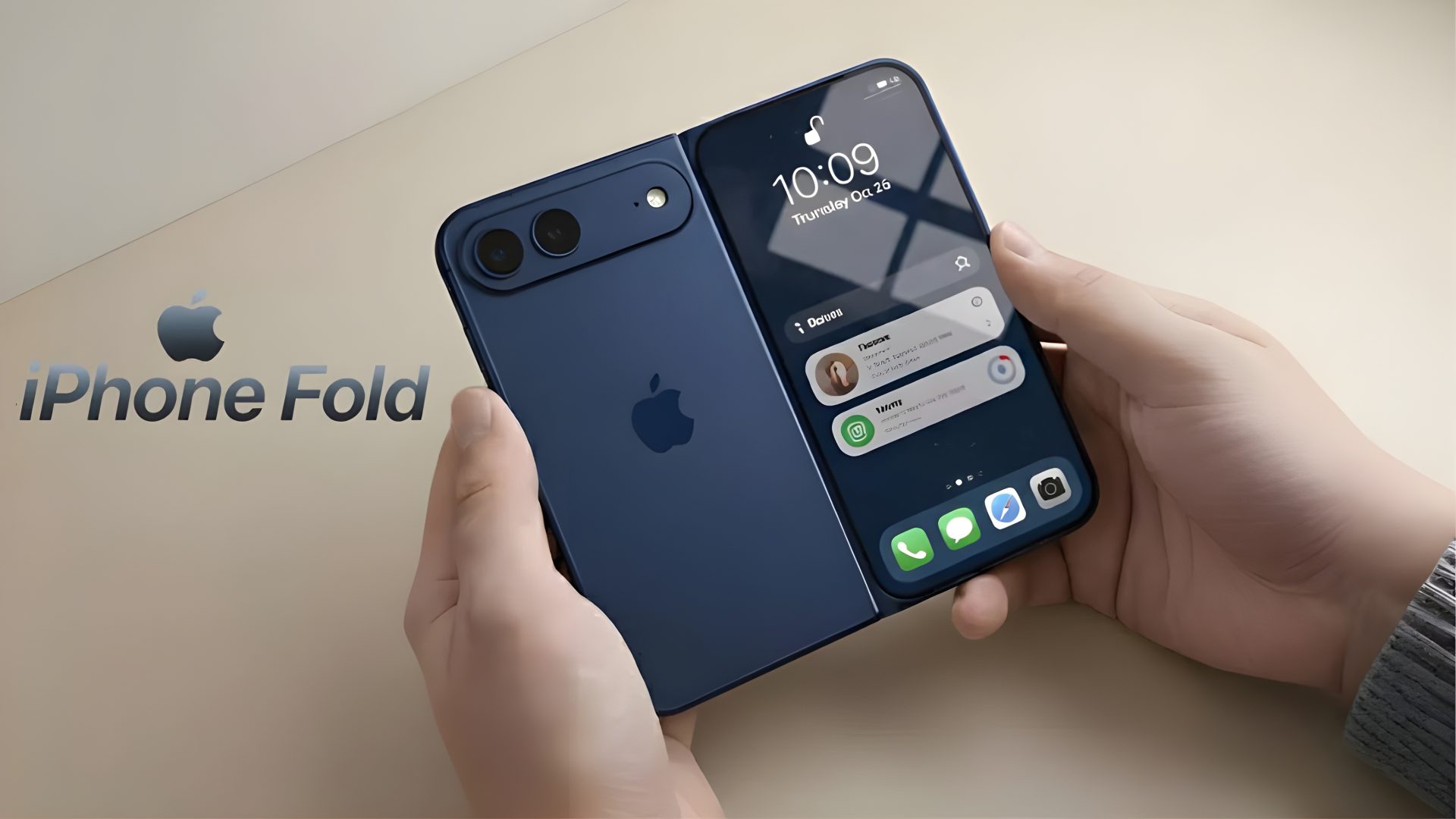
Apple’s first foldable iPhone may be arriving later than many fans expected. After early chatter suggested the iPhone Fold could debut alongside the iPhone 18 Pro lineup in September 2026, a newer and increasingly supported prediction points to a delayed release window—potentially pushing availability to December 2026 instead.
The idea of a late-2026 iPhone Fold launch gained traction earlier this month when a research note claimed Apple might not be able to ship the device until December. Now, well-known Apple watcher Mark Gurman has echoed a similar expectation, saying the foldable likely won’t ship alongside the iPhone 18 Pro models in September 2026. If that’s accurate, Apple may be planning a staggered iPhone launch strategy, spacing out major releases instead of dropping everything at once.
This kind of rollout would make sense given the supply-side pressure Apple has openly acknowledged. Tim Cook recently pointed to limited capacity for advanced chip production and ongoing memory market disruptions as real concerns. When you’re trying to launch multiple high-demand flagship products—especially a first-generation foldable with brand-new engineering—staggering release dates can help Apple keep supply steadier and avoid shortages.
So what’s making the iPhone Fold so complex? A big part of it appears to be Apple’s push to solve the two problems that make many foldables feel “first-gen”: durability and the crease.
Reports suggest Apple is working on a modified hinge mechanism that uses “liquid metal,” a material often associated with higher strength and better wear resistance. On top of that, Apple is reportedly exploring a display structure that sandwiches the main panel between two layers of ultra-thin glass or ultra-thin flexible glass. The goal is to better distribute stress during folding, reduce long-term mechanical wear as the hinge moves, and minimize the visible crease. One report claims the crease depth could be as little as 0.15mm—an extremely small number if Apple can actually achieve it at scale.
Apple is also said to be considering a more advanced OLED stack to make the foldable display thinner, lighter, and more power-efficient. One technique in play is a Color Filter on Encapsulation (CoE) approach, where the traditional thick circular polarizer layer is replaced with a thinner color filter layer deposited directly into the panel structure. Combined with a black pixel definition layer, this can improve light transmittance and cut power consumption. For a foldable device, thinner display layers aren’t just about aesthetics—they can reduce stress during folding, improve longevity, and enable a tighter folding radius.
As for price, a new report out of South Korea suggests Apple is considering a starting price around $2,000. That would still place the iPhone Fold firmly in ultra-premium territory, but it’s notably lower than earlier rumors that floated pricing closer to $2,300–$2,400. If Apple does come in at or near $2,000, it could make the device more competitive in the high-end foldable market—especially if it delivers Apple-level polish and long-term software support.
On the software side, the foldable experience reportedly won’t just be a stretched iPhone interface. Gurman says Apple is working on iPad-like layouts and side-by-side apps designed to make multitasking feel natural on a larger internal screen. At the same time, expectations are that it will be simpler than the more desktop-like multitasking direction Apple has explored on iPad in recent software iterations. In other words, Apple may be aiming for a middle ground: more productivity than an iPhone, without turning it into a full “desktop UI” experience.
The form factor described so far points to a passport-style design with a wider aspect ratio. The internal display is expected to be roughly iPad-sized, while the outer screen may resemble a smaller iPhone display—useful for quick tasks without unfolding the device.
Hardware details being discussed paint a picture of a seriously high-end device. The outer screen is rumored to use a small hole-punch cutout, while still supporting Apple’s Dynamic Island-style interface for notifications and system activity. Interestingly, Face ID is said to be removed entirely, with Touch ID integrated into the side button—a move that could help save internal space and simplify design constraints in a foldable chassis.
Camera choices are also starting to take shape. Apple reportedly continues testing an under-display camera for the inner screen, but current prototypes allegedly produce image quality that isn’t good enough for a final consumer product, making it less likely to appear in the first iPhone Fold. Instead, the device is expected to include a hole-punch camera solution and a dual rear camera setup, with both rear cameras rumored at 48MP. A front-facing “selfie” camera resolution of up to 24MP has also been mentioned.
Other rumored specifications include:
A20 Pro chip with 12GB RAM
Apple’s in-house C2 5G modem
A dedicated vapor chamber for cooling
Internal display resolution of 2,713 x 1,920 with a 4:3 aspect ratio
Side-mounted Touch ID instead of Face ID
Dual 48MP rear cameras
Up to 24MP front camera
Battery capacity estimated around 5,400–5,800mAh
eSIM-only configuration at launch
If these details hold, Apple’s foldable won’t just be an expensive experiment—it’s shaping up to be a full flagship-class device built to compete on performance, efficiency, and long-term durability. The bigger question now is timing. With more credible voices aligning around a December 2026 shipping window, the iPhone Fold may end up being Apple’s “holiday surprise” rather than a September headliner.


