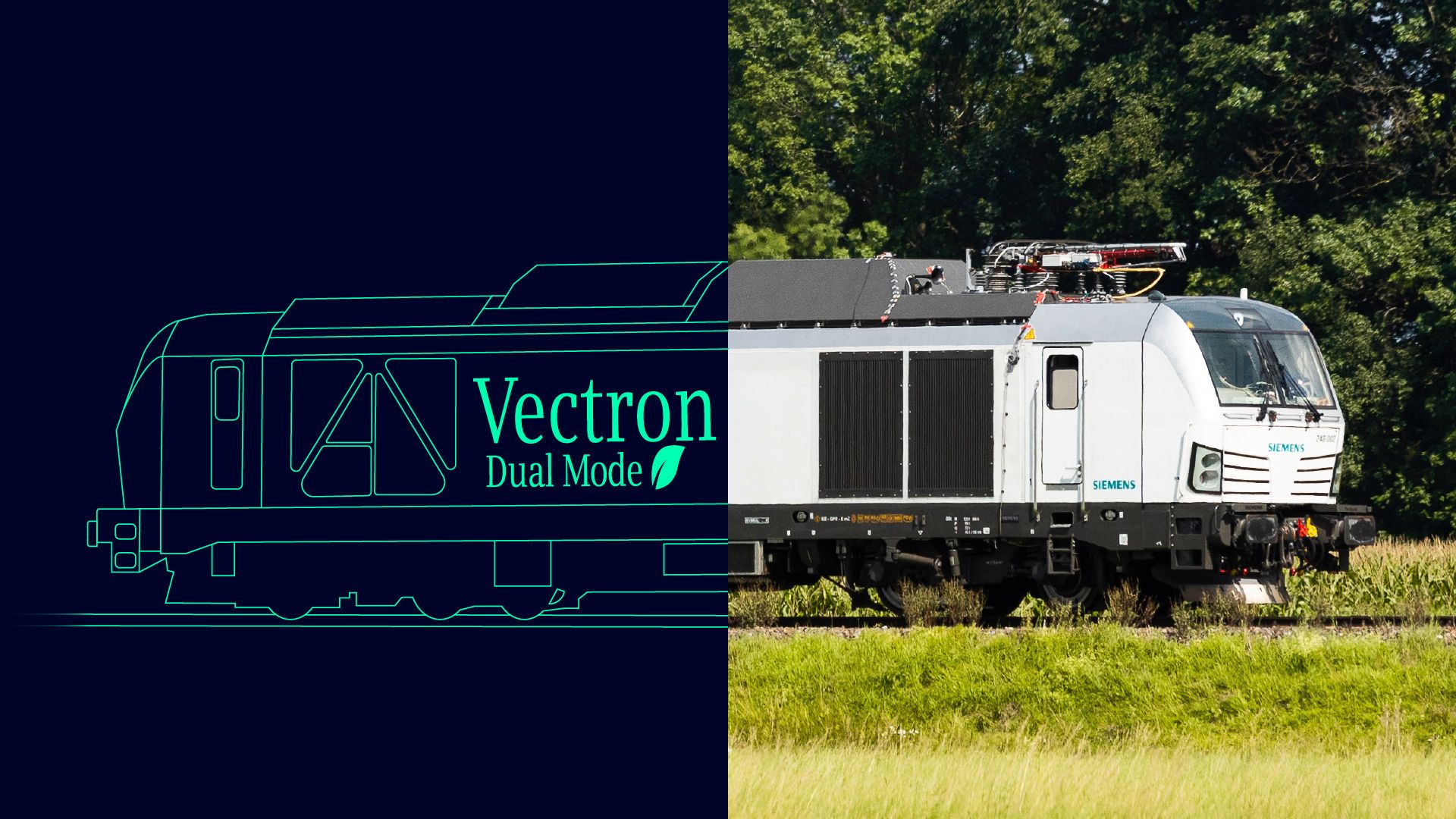
Siemens Mobility is preparing a new take on its well-known Vectron Dual Mode locomotive—one that swaps the usual diesel generator for a high-capacity battery. Officially named the Vectron Dual Mode Electric/Battery, this upcoming model is designed to keep trains moving on routes where overhead power lines aren’t available, without relying on diesel power for onboard electricity generation.
The headline feature is its 2 MWh battery pack. That’s a substantial amount of stored energy for rail applications and is positioned as a major step up compared with battery capacity seen in shorter regional battery trains. While those battery-equipped regional units are built for relatively short, stop-and-go passenger routes, this Vectron variant is a mainline locomotive built to haul trains over longer distances—territory where dual-mode engines are frequently used, especially in freight service.
Speed-wise, the battery Vectron Dual Mode is rated for up to 99 mph. That matches the speed figure quoted for a Vectron used with the new diesel ICE L sets, but it’s notably below other Vectron offerings that reach higher top speeds. The difference strongly hints at where this locomotive may fit best: freight corridors and mixed-traffic duties where flexibility matters more than running at the very highest speeds. Still, passenger use isn’t off the table—particularly in countries like Germany, where key routes still lack overhead wires in certain sections, and where diversions and long-term construction projects can force trains onto non-electrified stretches.
Siemens Mobility hasn’t shared a specific range estimate for the 2 MWh battery configuration, which is understandable because range for a locomotive can vary dramatically depending on the weight it’s pulling and operating conditions. A lightly loaded consist and a heavy freight train will draw very different amounts of energy, so a single range number can be misleading.
One of the more interesting performance details is that the locomotive is rated for 2,400 kW at the wheels in both operating modes. That makes the battery operation particularly compelling, because the diesel-equipped dual-mode version delivers 2,400 kW from its generator but only 2,000 kW at the wheels. Starting tractive effort is listed at 300 kN, which is solid for dual-mode operation even if it trails some standard Vectron variants that are available with higher tractive effort figures. In simple terms, the design prioritizes operational flexibility—being able to keep moving across electrified and non-electrified segments—while accepting some trade-offs versus the highest-performing all-electric Vectron configurations.
The battery-equipped version weighs 99 tons, essentially matching the mass of a conventional dual-mode unit with a full fuel tank. Unlike diesel, that weight doesn’t decrease during a trip, but the payoff is a different kind of convenience: it can charge while running under overhead wires, potentially reducing downtime and avoiding dedicated refueling stops. The setup also opens the door to capturing energy during braking even when no overhead line is present, thanks to onboard storage—an advantage diesel-electric dual-mode locomotives don’t offer in the same way, although Siemens Mobility didn’t explicitly confirm regenerative braking behavior in its announcement.
For rollout plans, Siemens Mobility says the leasing company Akiem will be the first customer. Akiem already operates Vectron locomotives configured for multiple electrical systems, making it a natural early partner for a locomotive aimed at improving cross-network flexibility. The first units are expected to be delivered in the 2029/2030 timeframe, signaling that this is a longer-term shift toward battery-backed mainline locomotives rather than an immediate production ramp.
Taken together, the Vectron Dual Mode Electric/Battery points to a future where rail operators can reduce diesel dependence without waiting for every last route segment to be fully electrified. With a 2 MWh battery, mainline capability, and the ability to recharge under the wire, Siemens Mobility is positioning this locomotive as a practical bridge between today’s rail infrastructure and a more electrified, lower-emission network.