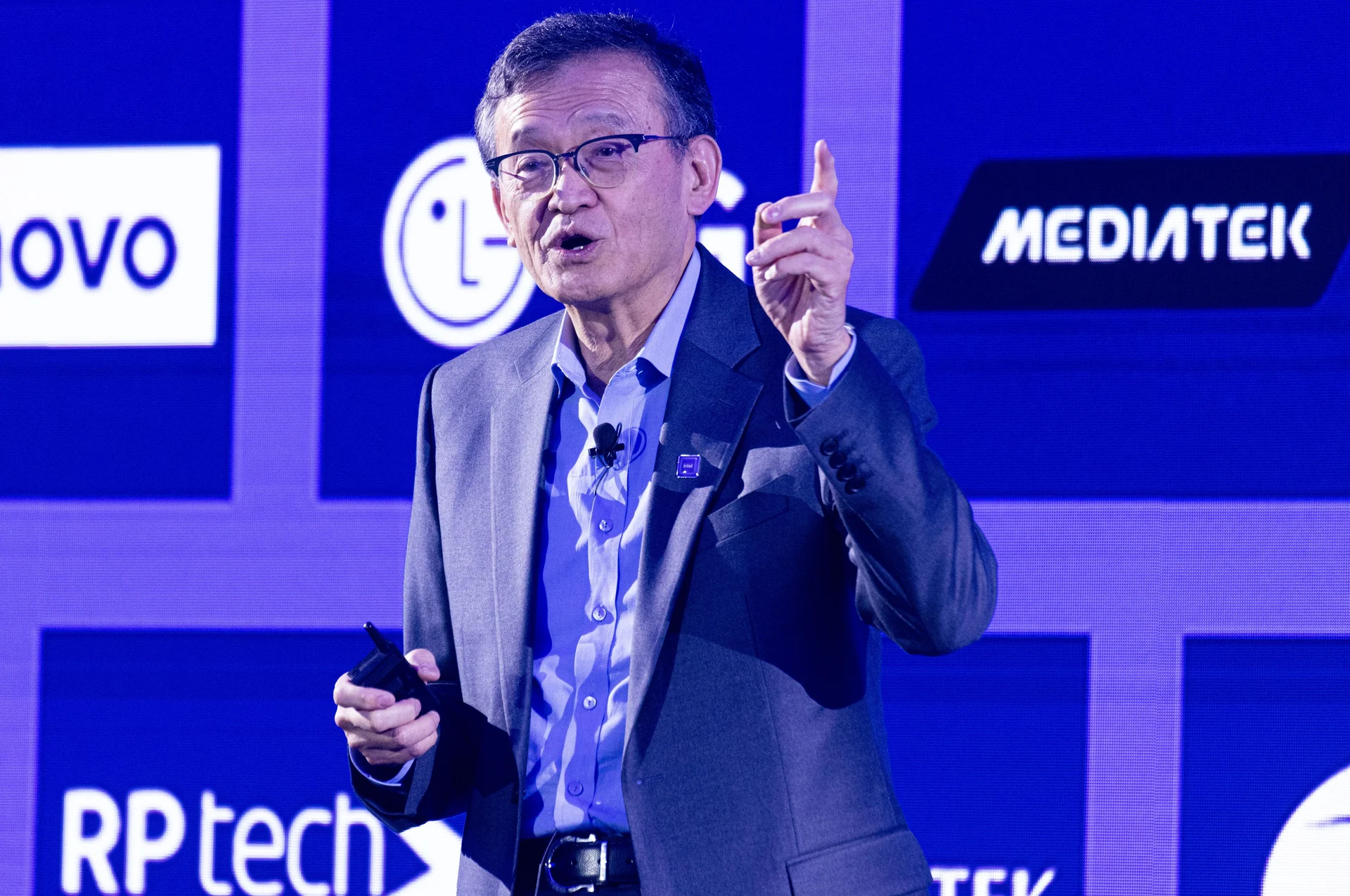
Intel CEO Lip-Bu Tan is moving aggressively to reshape Intel Foundry, with a sharper focus on execution, product quality, and long-term process leadership. During a recent fireside chat at the J.P. Morgan Global Technology, Media and Communications conference, Tan outlined Intel’s progress on future semiconductor nodes, its advanced packaging strategy, and a strict internal policy designed to prevent delays caused by repeated chip revisions.
One of the biggest updates centered on Intel’s upcoming 14A process technology. Tan reaffirmed that Intel 14A remains on schedule for risk production in 2028, followed by volume production in 2029. That timeline puts Intel’s 1.4nm-class node in the same general window as competing next-generation foundry technologies expected from major rivals.
Tan described the 14A program as an important breakthrough for Intel Foundry. The company is already speaking with major potential customers as it works to prove that its foundry business can deliver leading-edge manufacturing at scale. For Intel, the goal is not simply to launch one competitive node, but to build confidence in a multi-generation roadmap.
According to Tan, customers do not choose a foundry for a single process generation alone. They want to know what comes next, how reliable the roadmap is, and whether the foundry partner can support future products over many years. That is why Intel is already looking beyond 14A and beginning work on even more advanced technologies, including 10A and 7A.
The 10A node refers to a 1.0nm-class process, while 7A points to a future 0.7nm-class technology. Intel has not yet provided official launch dates for these nodes, but Tan’s comments confirm that the company is actively planning for its post-14A future. This is a key part of Intel’s effort to position itself as a long-term alternative in the global semiconductor manufacturing market.
Tan also highlighted Intel’s strength in advanced packaging, calling it a pleasant surprise since taking leadership. Intel offers technologies such as EMIB and Foveros, which allow different chip components to be connected in highly efficient ways. These packaging solutions are becoming increasingly important as the industry moves beyond traditional chip scaling and relies more heavily on chiplet-based designs.
Advanced packaging is especially critical for artificial intelligence, high-performance computing, data centers, and next-generation processors. Demand for advanced substrates and packaging capacity has surged as AI hardware becomes more complex. Intel is also investing in glass substrates, which are expected to become a major technology for future high-performance chips around the end of the decade.
Another major update involved Intel’s 14A process design kit, commonly known as a PDK. A PDK gives chip designers the tools and rules needed to create products for a specific manufacturing process. Tan said Intel released an early 0.5 PDK to external customers earlier this year and expects to make the more advanced 0.9 PDK available to outside customers around October 2026. Internal customers are expected to receive access earlier.
Tan referred to the 0.9 PDK as the “holy grail” for 14A because it represents a crucial maturity point for the process. A stronger PDK gives customers more confidence that they can design chips with fewer surprises, better performance expectations, and a clearer path to production.
Beyond technology roadmaps, Tan also made it clear that Intel’s internal culture is changing. He said he has introduced a much stricter approach to chip development, especially within the foundry business. The aim is to reduce missed schedules, repeated design revisions, and delays that can damage customer confidence.
In chip development, the first version of a taped-out product is often called A0. If issues are found, companies may move to later steppings such as B0, C0, and beyond. Tan said he wants Intel teams to move from A0 to production with far fewer delays. His message was blunt: reaching B0 may still be acceptable, but anything beyond that could have serious consequences for the teams responsible.
Tan said some employees initially thought he was joking when he introduced the policy, but they now understand that he is serious. The goal is to make teams fix issues earlier, improve design quality, and deliver products on schedule. In his view, a stronger execution culture is necessary if Intel wants to compete as a world-class foundry.
This tougher approach reflects how important Intel Foundry has become to the company’s future. Intel is trying to rebuild trust with customers, prove its manufacturing roadmap is reliable, and show that it can compete at the most advanced levels of semiconductor production.
If Intel can keep 14A on track, deliver a mature PDK by 2026, execute risk production in 2028, and reach volume production in 2029, it could mark a major turning point for the company’s foundry ambitions. Combined with advanced packaging, future nodes like 10A and 7A, and stricter internal accountability, Intel is making it clear that it wants to be seen as a serious long-term force in chip manufacturing.