Intel Foundry gains momentum as AI demand pushes more customers toward U.S. chip manufacturing
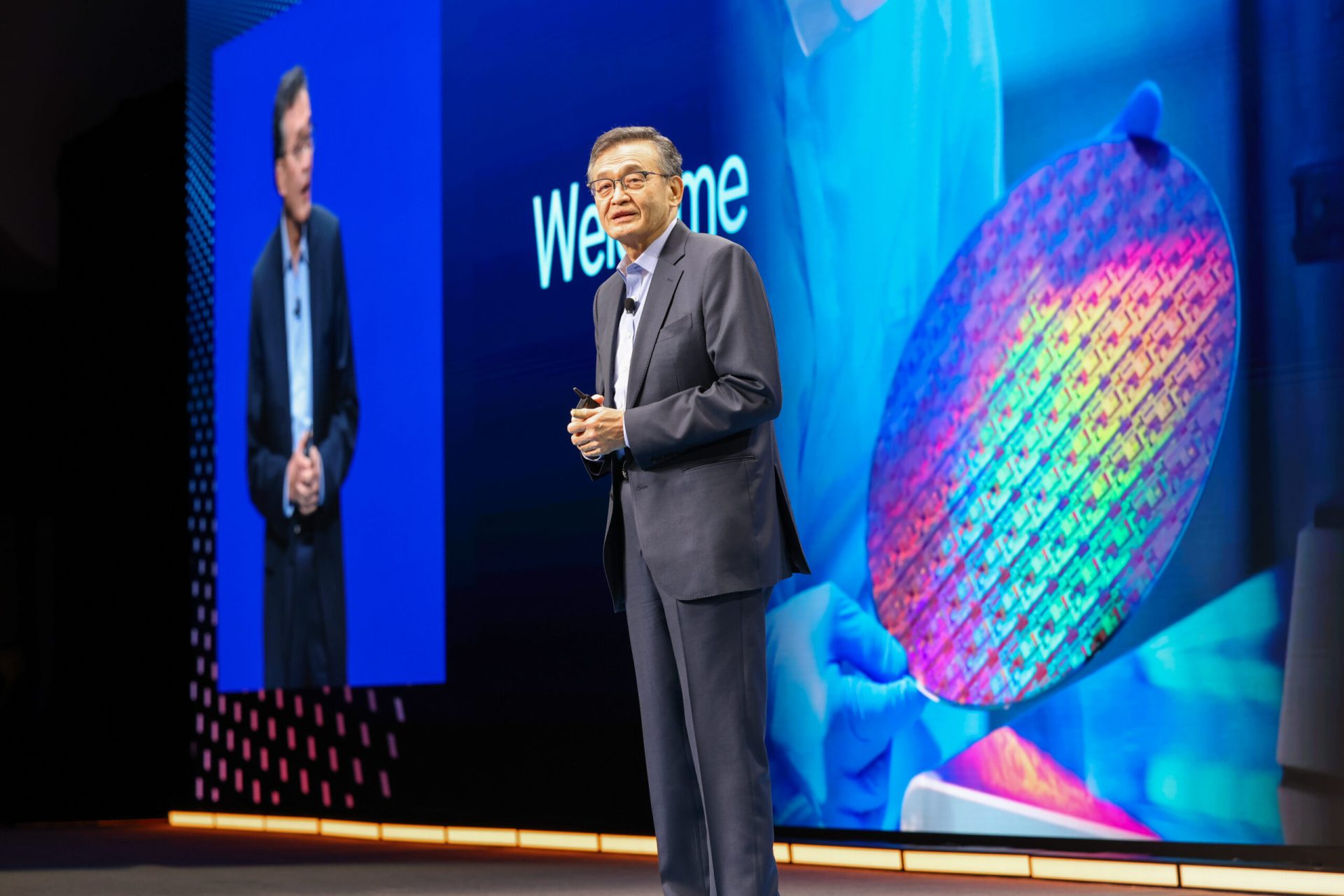
Intel CEO Lip-Bu Tan says the company’s Foundry business is becoming one of the most important pillars of Intel’s future, describing it as a “national treasure” at a time when advanced chip manufacturing is increasingly viewed as a strategic priority.
Tan emphasized that the majority of the world’s most advanced processors are still manufactured outside the United States. In his view, bringing more semiconductor production back to the U.S. is not just a business opportunity for Intel, but also a major step toward strengthening the country’s technology independence.
Intel Foundry is now seeing growing interest from external customers, especially as demand for AI processors, CPUs, advanced packaging, and cutting-edge manufacturing capacity continues to rise. According to Tan, several companies are already engaging with Intel, and some customers are even making advance payments to secure critical substrate supply.
One of the biggest signs of progress is Intel’s 18A process technology. Tan said that when he took over as CEO, the yield performance of 18A was not where it needed to be. To fix that, Intel worked closely with ecosystem partners to analyze data, identify weaknesses, and improve manufacturing efficiency.
The company’s goal was to reach the industry’s best-practice yield improvement rate, which Tan described as roughly 7% to 8% per month. He said Intel is now seeing that kind of progress, and the results are arriving earlier than expected.
That improvement is important because Intel’s upcoming Panther Lake processors are based on the 18A node. With yields improving, Intel is preparing to ship Panther Lake in higher volumes in the coming months. Tan said this progress has encouraged outside customers to ask whether Intel can open up 18A manufacturing capacity for their own products.
While Tan did not name specific customers, he noted that many companies already know and trust him from his long career in the semiconductor industry. He said Intel is in discussions with multiple firms that are interested in working with the company’s Foundry division.
Beyond 18A, Intel is also preparing its next major manufacturing node: 14A. This process is expected to be one of Intel’s most advanced technologies and is designed to compete directly in the next generation of leading-edge semiconductor manufacturing.
Tan said 14A is planned for risk production in 2028, followed by volume production in 2029. He described this as a major breakthrough for Intel, especially because the timing is expected to put Intel in direct competition with other leading foundry players at the 1.4nm-class level.
Intel already has early customer engagement around 14A, with the company making progress on its process design kit. The availability of early PDK versions is an important step because it allows customers to begin preparing chip designs for a future manufacturing node.
Another key area of growth for Intel Foundry is advanced packaging. Tan highlighted Intel’s EMIB technology, calling it one of the company’s strongest advantages. Advanced packaging is becoming increasingly important in the AI era because modern chips often rely on multiple chiplets, high-bandwidth memory, and complex interconnects to deliver higher performance.
Intel is working to bring EMIB into reliable high-volume production so customers can depend on it for future products. Tan said some customers are already prepaying for substrates, a clear sign of commitment and confidence in Intel’s roadmap.
Substrates have become a major supply chain bottleneck across the chip industry. These components are essential because they provide the foundation that connects a processor to the rest of the system. Without enough substrate supply, even companies with strong chip demand can struggle to ship finished products at scale.
Tan said Intel needs to secure these materials early, and customer prepayments help the company lock in supply. This is especially important as AI-related demand continues to strain semiconductor supply chains.
CPU demand is also rising sharply. Tan shared that one customer asked Intel to increase its forecast by three times, but he explained that such a jump cannot happen overnight. Instead, Intel may need several quarters to catch up with that level of demand.
According to Tan, the surge is being driven in part by agentic AI, a fast-growing area of artificial intelligence that relies heavily on compute resources. He believes this demand is not temporary and could continue for the next several years.
The bigger picture is that Intel Foundry appears to be gaining credibility after a challenging period. Improvements in 18A yields, progress on 14A, strong interest in EMIB advanced packaging, and customers willing to secure substrate supply in advance all suggest that Intel is rebuilding confidence among external partners.
The company still faces major competition and must prove it can deliver consistent yields, reliable production, and competitive technology on schedule. However, Tan’s message is clearly optimistic: Intel Foundry is no longer just a long-term ambition. It is becoming a central part of Intel’s comeback strategy.
With AI demand accelerating, global chip supply chains under pressure, and the U.S. pushing for stronger domestic semiconductor manufacturing, Intel has an opportunity to position itself as a major alternative for advanced chip production. If the company continues to execute on 18A, 14A, and advanced packaging, Intel Foundry could play a much larger role in the next era of AI computing and high-performance processors.


