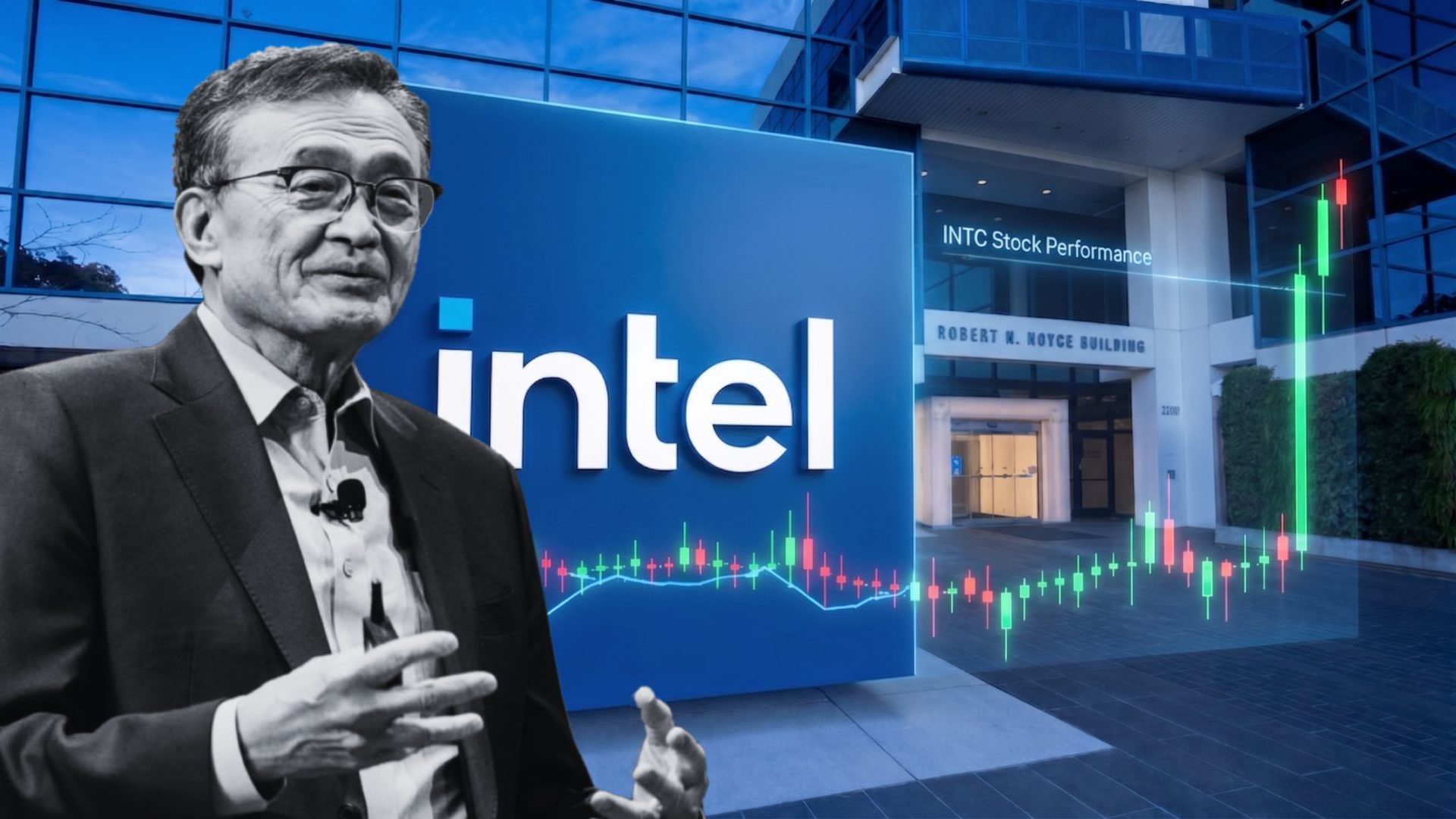
Intel’s stock surged after its Q1 2026 results, and the rally wasn’t driven by hype alone. The company didn’t just edge past expectations; it beat its own revenue guidance for the quarter and delivered strong guidance for Q2. Under the hood, two areas stood out as clear momentum builders: Intel Foundry and its Data Center and AI business. Meanwhile, the Client Computing segment slipped a bit, with management pointing to inflationary pressure and a continuing RAM supply crunch weighing on demand.
Some skeptics argue the post-earnings jump is overdone. But key remarks from Intel’s earnings call suggest a company that’s finally showing measurable execution improvements in the places that matter most for its long-term turnaround: manufacturing competitiveness, advanced packaging, and AI-era platform strategy.
Intel Foundry: 18A yield progress is a meaningful inflection point
Intel’s manufacturing roadmap has been the center of its comeback plan, and the 18A process is the flagship. Leadership has previously framed 18A as pivotal to the company’s future, and for good reason: it’s positioned as the foundation for a wide span of upcoming products, from mainstream mobile chips to major server platforms. Because of that broad dependence, yield improvements aren’t just a technical milestone—they directly affect product availability, cost structure, and Intel’s credibility with potential foundry customers.
On the call, CEO Lip-Bu Tan said Intel 18A yields are running ahead of internal projections, calling it a meaningful inflection in execution and factory output. That matters because healthy yield ramps are what separate promising nodes from commercially successful ones. If Intel can sustain this trajectory, it strengthens the case that 18A can support both Intel’s own product needs and external foundry demand—especially critical at a time when older nodes can face capacity constraints.
Intel 14A: early signs are even better, and customer interest is building
Beyond 18A, Intel also shared encouraging signals about its next major step: 14A. Tan noted that 14A maturity yield and performance are outpacing where 18A was at a similar stage, and that Intel is continuing to develop process design kits (PDKs) with multiple customers actively evaluating the technology. Intel expects earlier design commitments to begin emerging in the second half of 2026 and build into the first half of 2027.
That timeline is important for anyone tracking the foundry story. Design commitments represent real intent—companies don’t spend engineering resources on evaluation and PDK work unless the node looks viable for future products. Intel hasn’t confirmed internal products on 14A yet, but industry chatter points to higher-volume Intel production on 14A around the second half of 2027, which suggests more clarity on internal adoption could arrive sooner rather than later.
Data Center and AI: confidence in XPUs, advanced packaging, and a bigger accelerator push
Intel’s Data Center and AI business showed healthy growth in the quarter, and the call leaned into what Intel believes can differentiate it in a crowded CPU-and-accelerator landscape. When asked about competitive advantages versus other x86 and Arm players, Tan highlighted a combined strength: CPUs plus advanced packaging plus foundry-level integration—an approach Intel frames under the broader idea of “XPUs,” mixing architectures to meet different workloads.
Tan also suggested Intel is quietly building its GPU efforts with new hiring and moving further into accelerators so it can serve customers from edge deployments through larger AI initiatives. Intel’s message was clear: it wants to be a platform provider across CPU, GPU, packaging, and manufacturing, rather than competing on a single chip category alone.
That’s especially notable given Intel’s recent history in AI accelerators. After cancelling Falcon Shores, Intel refocused its approach, discussing concepts like Jaguar Shores (a rack-scale direction with limited public detail) and more recently Crescent Island, described as a lower-cost accelerator based on Xe3P with 160GB of LPDDR5X memory.
Even so, without a clear head-to-head answer to the biggest high-end inference accelerators on the market, it’s fair to say Intel still has something to prove in the most visible tier of AI inference hardware. The interesting takeaway from Tan’s remarks is the implication that Intel may be scaling up specifically to compete more aggressively in inference accelerators. If that translates into a more full-featured, high-bandwidth product direction, the competitive landscape could get a lot more crowded.
A major shift in AI hardware demand: CPUs could become more important in agentic workloads
One of the most intriguing parts of the call came from CFO David Zinsner, who described how the CPU-to-GPU ratio changes depending on the AI workload. For training, the typical deployment might run around seven to eight GPUs per CPU. For inference, it moves closer to three to four GPUs per CPU. But as workloads evolve into agentic and multi-agent systems, Zinsner suggested it could move toward one-to-one—or even flip in the other direction.
That possibility matters because agentic AI involves orchestration, planning, tool use, and multi-step reasoning flows where a “control plane” can become CPU-heavy. In that model, multiple CPUs may manage scheduling, memory movement, security, and coordination, while a smaller number of GPUs handle the core model execution. If that shift accelerates, it expands the total addressable market for CPUs inside AI deployments—and could reshape how data centers allocate budgets between general compute and accelerators.
Intel also believes its advanced packaging and supply chain control could become a real advantage in this future, especially if blended compute designs and tightly integrated systems become more common.
The bigger picture: why the stock move makes more sense now
The market’s reaction appears tied to a clearer narrative: Intel is showing tangible progress in manufacturing execution (especially 18A yields), laying early groundwork for 14A customer engagement, and positioning itself for the next phase of AI infrastructure where packaging, integration, and CPU orchestration may matter more than many investors previously assumed.
Client Computing weakness remains a pressure point, particularly with inflation and memory-related constraints impacting the PC ecosystem. But the call’s most important signals were about forward trajectory: improving factory output, strengthening foundry credibility, and a renewed push to compete across AI compute layers rather than relying on a single product category.
If Intel continues to execute on yields, brings in external foundry commitments on schedule, and turns its accelerator and packaging strategy into shipping products that customers adopt at scale, this quarter may be remembered as a turning point rather than a one-off beat.