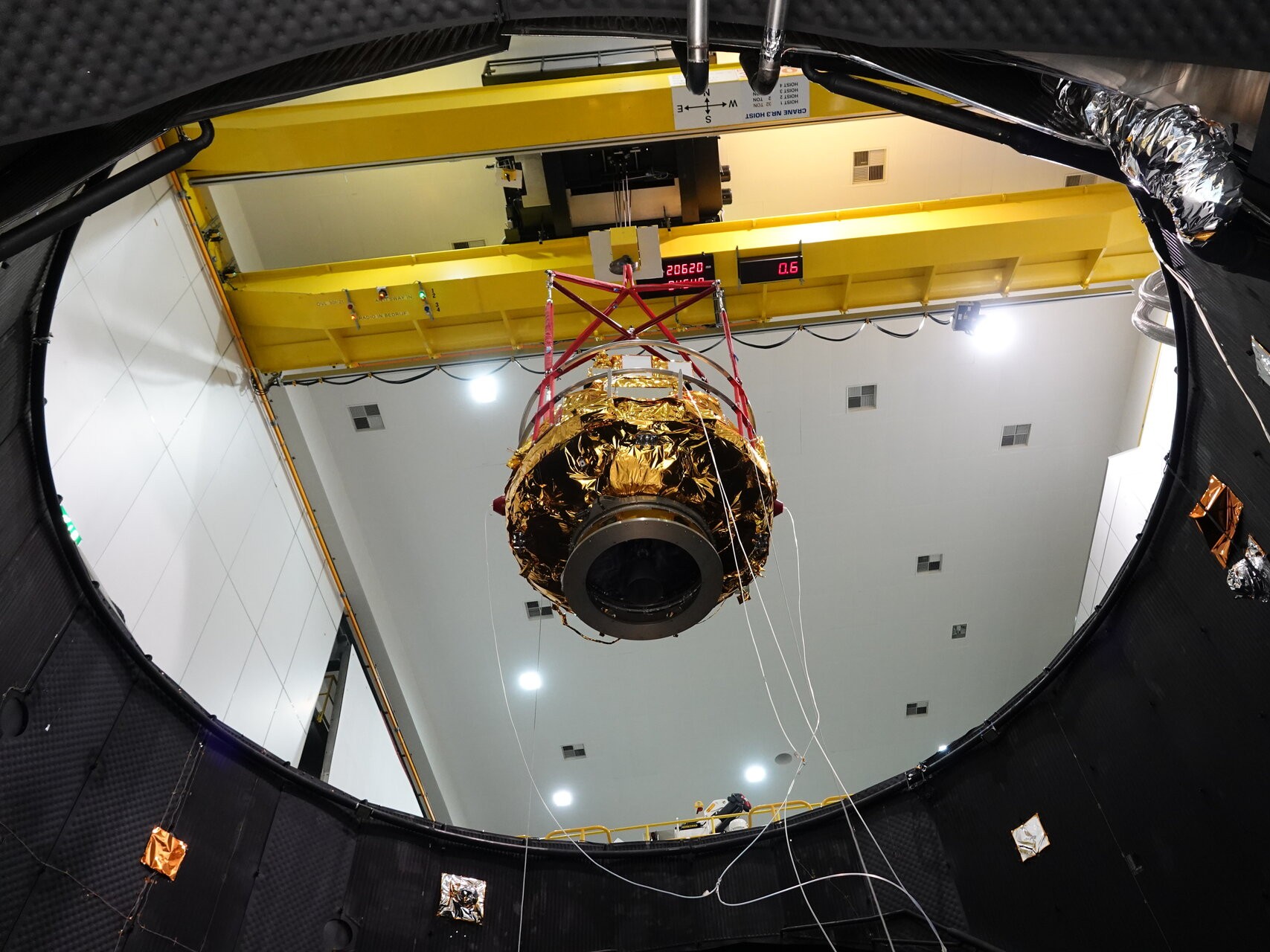
A new era in space weather research is about to begin. The European Space Agency and the Chinese Academy of Sciences are preparing to launch SMILE, the Solar Wind Magnetosphere Ionosphere Link Explorer, a joint mission designed to capture the first-ever global view of how the Sun interacts with Earth’s magnetic shield.
The Sun is constantly streaming charged particles known as the solar wind and occasionally unleashes explosive coronal mass ejections. These outbursts can be intense, but Earth is safeguarded by the magnetosphere, an invisible shield created by our planet’s magnetic field. Scientists know this defense flexes and reshapes in response to solar activity, yet most previous missions have observed only small regions at a time. SMILE changes the game by imaging the system as a whole, revealing the big-picture dynamics that drive auroras, geomagnetic storms, and disruptions to satellites and power grids.
SMILE’s breakthrough approach hinges on a phenomenon called solar wind charge exchange. When fast-moving charged particles from the solar wind meet neutral atoms in Earth’s upper atmosphere, they trigger emissions in X-ray wavelengths. SMILE will detect this X-ray glow to trace large-scale boundaries and disturbances in near-Earth space, offering an unprecedented, global perspective on how the magnetosphere responds when the Sun turns up the pressure.
The spacecraft will also monitor Earth’s auroras in ultraviolet light, delivering continuous imaging of both the northern and southern lights. Notably, it will watch the northern lights for stretches longer than 40 hours, capturing how the shimmering curtains of light pulse, brighten, and shift as solar particles pour into the atmosphere along magnetic field lines. By tying these ultraviolet views to the X-ray measurements, scientists can directly connect changes in the magnetosphere to visible effects in the skies over high latitudes.
Why this matters goes beyond curiosity. Space weather can disturb GPS and radio communications, increase radiation exposure for satellites and astronauts, and even induce currents that strain power grids on the ground. With a complete global picture of Sun–Earth interactions, scientists aim to improve forecasting, giving operators of satellites, airlines, and utilities more time to prepare for storms.
A one-month launch window has been set for SMILE between April 8 and May 7, 2026. Once in orbit, the mission will begin delivering continuous, system-wide views of the solar wind’s impact on Earth, filling a critical gap in our understanding of the space environment that surrounds our planet.
In short, SMILE is poised to do what no mission has done before: show, in real time and on a global scale, how Earth’s magnetic shield responds to the solar wind and coronal mass ejections. From aurora watchers to satellite operators, the entire space weather community is watching closely as this pioneering spacecraft prepares for liftoff.


