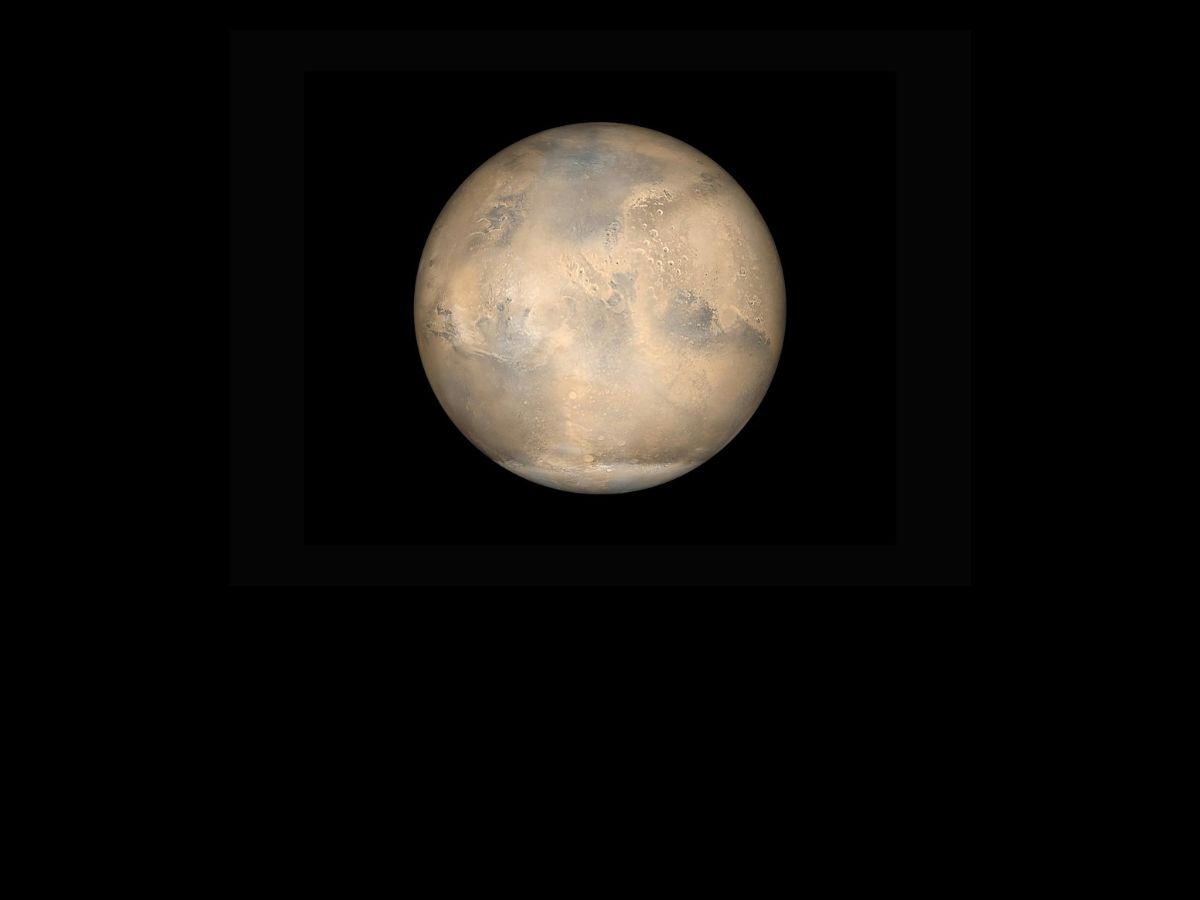
Mars hasn’t always been the frozen, dusty world we picture today. Long ago, scientists believe the Red Planet was warmer and wetter, with a much thicker atmosphere—closer to Earth’s than what remains now. Over billions of years, that protective blanket thinned dramatically, and Mars transformed into the cold, dry planet we see today.
So what happened to Mars’ atmosphere? A major culprit is the solar wind, a constant stream of charged particles flowing outward from the Sun. On Earth, our strong global magnetic field helps deflect much of that onslaught. Mars, however, has a far weaker magnetic shield. With less protection, the solar wind can interact directly with the planet’s upper atmosphere, knocking atmospheric particles loose and helping them escape into space. As the atmosphere dwindled, Mars likely cooled, lost the ability to keep liquid water stable on its surface, and became far less hospitable.
To better understand how the Sun strips away a planet’s air over time, NASA has launched an ambitious mission called the Escape and Plasma Acceleration and Dynamics Explorer, or ESCAPADE. The mission includes two spacecraft designed to work together to study Mars’ space environment in detail. Their goal is to measure key factors that influence atmospheric loss, including the structure of Mars’ magnetosphere, the strength and behavior of the solar wind at Mars, how atmospheric particles are accelerated away from the planet, and what’s happening in the ionosphere—the electrically charged layer of the upper atmosphere.
ESCAPADE’s journey is also notable for how it’s getting to Mars. Instead of launching only when Earth and Mars are ideally aligned, the mission took an earlier departure and will first loop around Lagrange Point 2, a gravitationally stable region of space. From there, it will travel deep into Earth’s magnetotail, giving the spacecraft a chance to study solar wind interactions closer to home before heading onward. Later, ESCAPADE will use Earth’s gravity for a sling-like boost toward Mars in November 2026, with arrival expected in September 2027.
Beyond solving a long-standing mystery about Mars’ lost atmosphere, ESCAPADE is expected to improve our understanding of space weather around the Red Planet—information that matters for the future of exploration. By learning exactly how solar activity affects Mars and how particles escape its atmosphere, scientists can develop better guidance for spacecraft shielding, smarter safety procedures, and stronger protections for astronauts and equipment during future missions.


