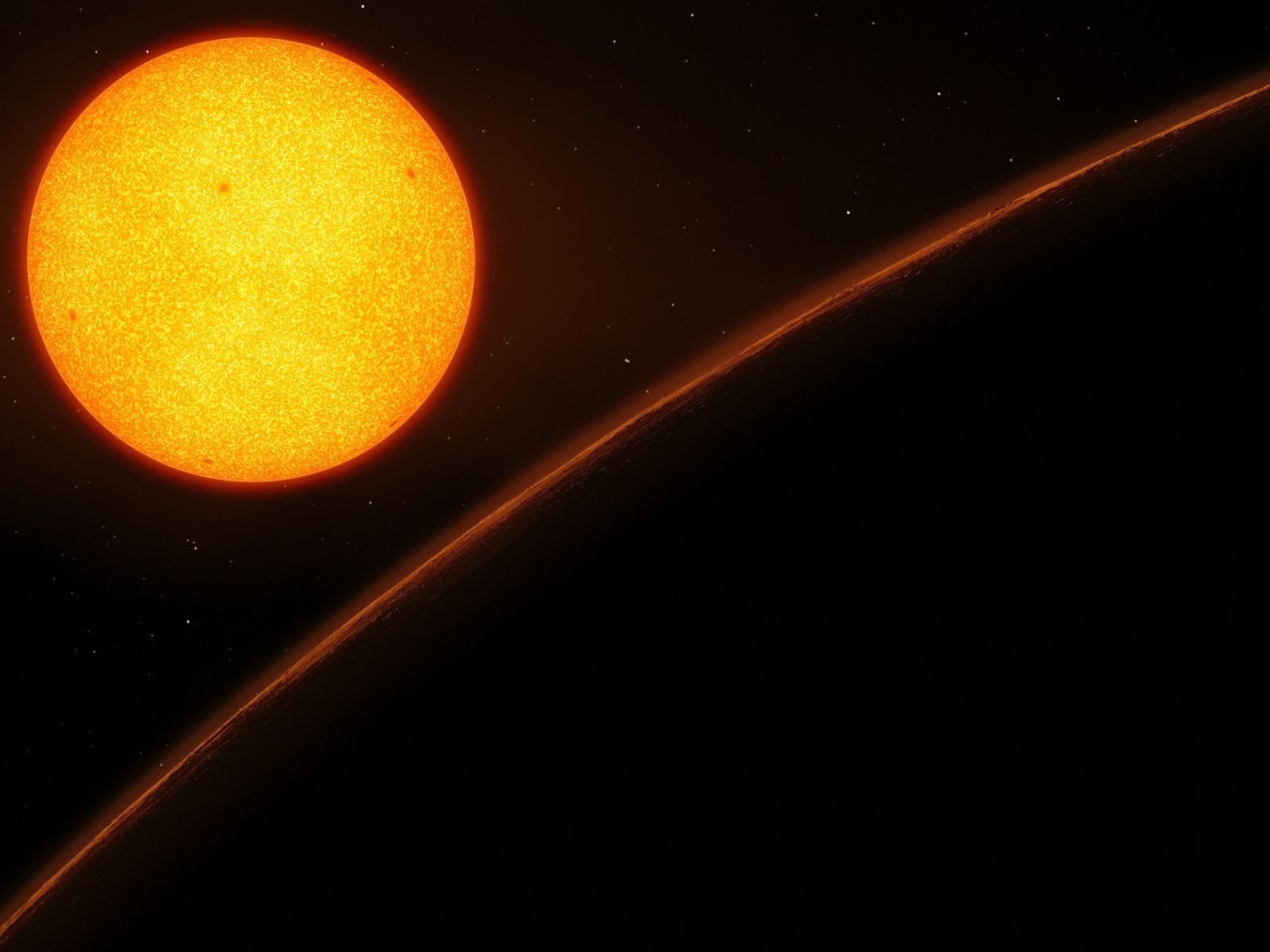
Astronomers have added an exciting new chapter to the search for worlds beyond our solar system: two additional exoplanets have now been confirmed orbiting the nearby red dwarf star GJ 887, and one of them appears to sit in the star’s habitable zone.
GJ 887 is a cool, small red dwarf located about 10.7 light-years from Earth, making it one of the closer stars in our cosmic neighborhood. Red dwarfs are especially interesting to planet hunters because they’re common in the Milky Way and their smaller size can make planet signals easier to detect. Even so, GJ 887 has remained somewhat enigmatic despite years of observation. Earlier research had already suggested the presence of three planets, but the latest work strengthens the case for more.
In a study published in Astronomy & Astrophysics, researchers combined observations from multiple instruments to confirm two new worlds around GJ 887. The key came from precise measurements captured by the HARPS and ESPRESSO spectrographs—tools designed to detect the subtle gravitational “wobble” a planet causes in its host star. To refine the findings further, the team paired these results with photometric data from NASA’s Transiting Exoplanet Survey Satellite (TESS) along with data from the All-Sky Automated Survey.
One planet in particular is drawing attention. The newly confirmed world, designated GJ 887 d, completes an orbit every 50.8 days. That orbital distance places it in the habitable zone of GJ 887, the region where temperatures could allow liquid water to exist under the right atmospheric conditions. While “habitable zone” doesn’t mean “inhabited,” it does mean this planet joins a short list of nearby targets that could be especially valuable for future habitability studies.
GJ 887 d is estimated to have about six times Earth’s mass, putting it in the category known as a super-Earth. Scientists say it could be a rocky planet, or possibly a world with significant water coverage—an ocean planet. Determining which is correct will take additional follow-up, including better constraints on its density and atmosphere, if one can be detected.
For now, the discovery highlights how combining data from ground-based observatories and space telescopes can reveal hidden planets even in systems that have already been studied for years. Further observations of GJ 887 and its growing planetary family could help researchers learn more about how planets form around red dwarfs—and, ultimately, bring astronomers closer to answering one of science’s biggest questions: could life exist elsewhere in the universe?