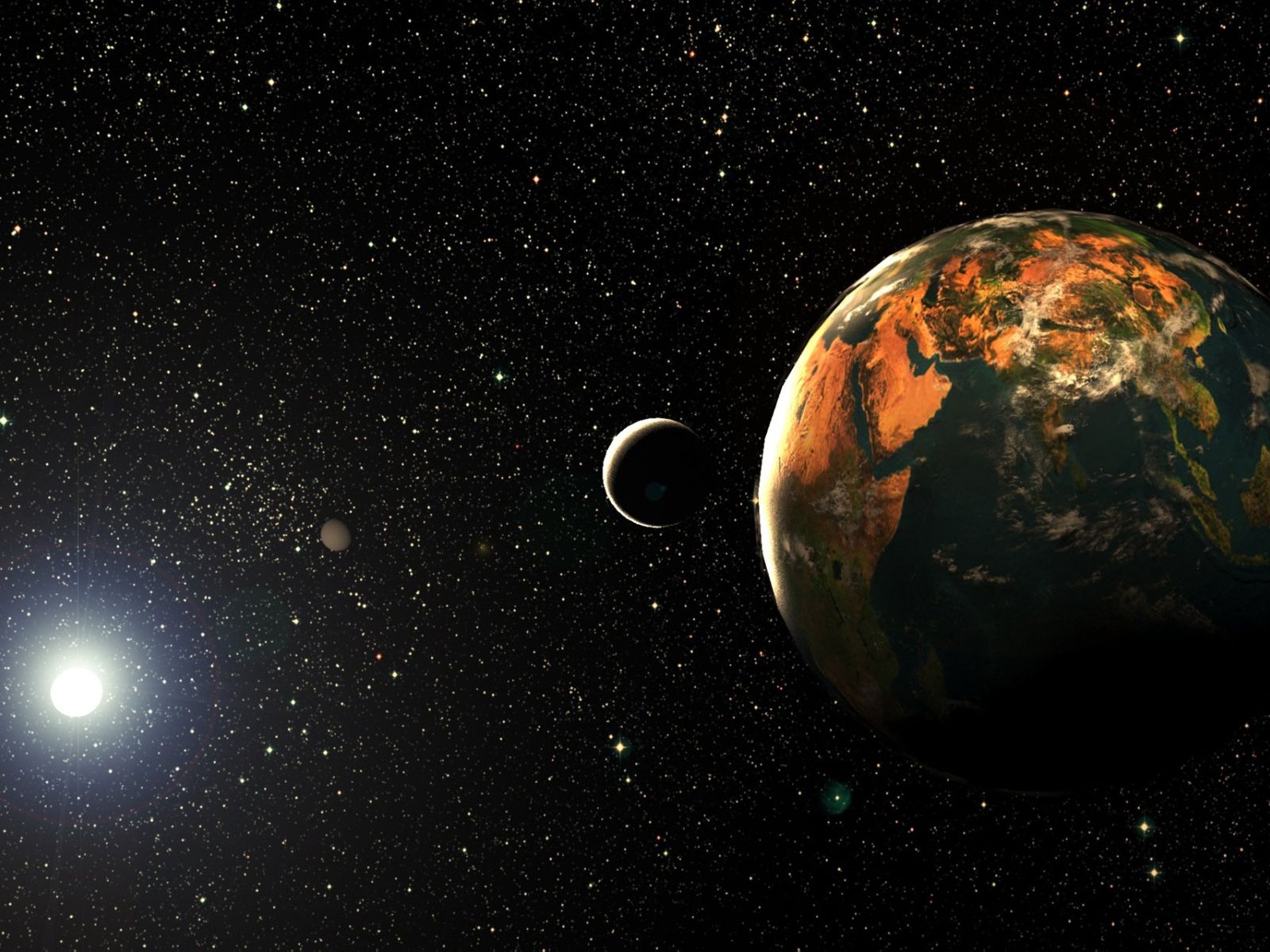
Astronomers have just highlighted 45 rocky exoplanets that sit in the “habitable zone” of their parent stars, the region where temperatures may be mild enough for liquid water to exist. Because water is considered one of the most important ingredients for life as we know it, this new list instantly becomes a valuable roadmap for the ongoing search for life beyond Earth—and it could reshape how scientists think about habitable worlds across the universe.
The hunt for extraterrestrial life has long fascinated researchers, and for good reason: the universe is filled with planets. Over the past few decades, astronomers have confirmed more than 6,000 exoplanets (planets outside our solar system), thanks to planet-hunting tools and missions such as the TESS space telescope. Yet discovering a planet isn’t the same as finding a potentially life-friendly world. Many exoplanets orbit too close to their stars, become scorched by heat and radiation, or sit too far away in deep freeze. That’s why planets located in the habitable zone draw so much attention—they’re in the sweet spot where conditions could, in theory, support liquid water on the surface.
According to research published in Monthly Notices of the Royal Astronomical Society, these 45 rocky exoplanets stand out as promising candidates in the broader catalog of discovered worlds. Some of them are already familiar names to space enthusiasts. Proxima Centauri b, for example, orbits the star closest to our solar system and lies roughly 4 light-years away, making it one of the nearest targets for future study. Another well-known system is TRAPPIST-1, famous for its cluster of Earth-sized planets that continue to spark debate and excitement about habitability.
Within that TRAPPIST-1 family, several planets are considered especially compelling—TRAPPIST-1 d, e, f, and g. Located about 40 light-years from Earth, these worlds are seen as strong candidates because they may be able to sustain liquid water under the right atmospheric conditions. Some of the planets on this list also receive an amount of starlight comparable to what Earth gets from the Sun, which makes them even more attractive for follow-up observations.
Beyond the excitement of adding “45 more worlds” to the life-search conversation, this kind of research serves a bigger purpose. By comparing rocky planets in habitable zones across different star systems, astronomers can improve how they define and model the habitable zone itself. That, in turn, helps refine which targets deserve priority when powerful telescopes scan exoplanet atmospheres for signs of habitability—and potentially for biosignatures, the chemical hints that life might be active.
In short, these 45 rocky exoplanets don’t prove life exists elsewhere, but they sharpen the focus of one of humanity’s biggest scientific questions: are we alone, or is life common in the cosmos?