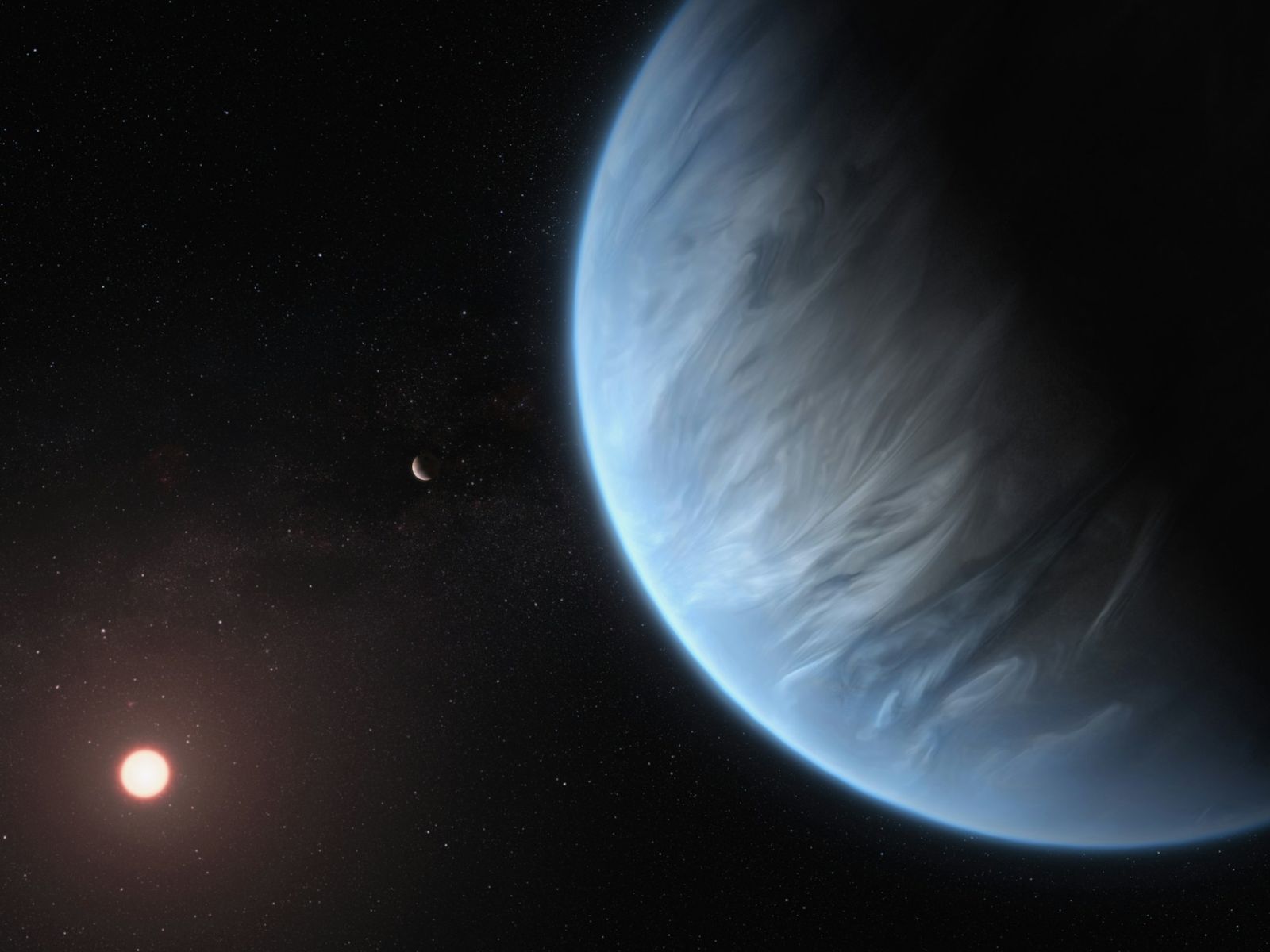
Nearby Exoplanet GJ 3378 b Could Be a Promising Candidate in the Search for Life
Astronomers are taking a closer look at a newly studied exoplanet just 25 light-years from Earth, and early findings suggest it may be one of the more intriguing worlds in the search for potentially habitable planets.
The planet, known as GJ 3378 b, orbits a red dwarf star called GJ 3378 in the Milky Way. It was first detected in 2024 by French astronomers using the Canada–France–Hawaii Telescope, and researchers have since been working to learn more about its size, orbit, and chances of supporting conditions suitable for life.
Current observations show that GJ 3378 b has a mass about 2.3 times greater than Earth’s. It completes one orbit around its star every 21 days, placing it much closer to its host star than Earth is to the Sun. However, because red dwarf stars are smaller and cooler than the Sun, planets can orbit nearer to them and still remain in the habitable zone.
That detail is what makes GJ 3378 b so interesting. The habitable zone is the region around a star where temperatures may allow liquid water to exist on a planet’s surface, assuming the planet has the right atmospheric conditions. Since liquid water is considered one of the key ingredients for life as we know it, worlds in this zone are especially valuable targets for astronomers.
Still, there are major unanswered questions. Scientists do not yet know whether GJ 3378 b has an atmosphere. This is crucial because an atmosphere can help regulate temperature, protect the surface from harmful radiation, and allow liquid water to remain stable. Without one, the planet could be barren despite being in the right orbital region.
The challenge comes from its star. Red dwarfs are known for strong stellar activity, including powerful winds and bursts of radiation. Since GJ 3378 b orbits close to its star, it may have been exposed to intense stellar winds capable of stripping away its atmosphere over time. If that has happened, the planet’s potential habitability would be greatly reduced.
To answer these questions, astronomers will need more advanced tools. Future space telescopes, including the Habitable Worlds Observatory expected to become operational around 2040, could allow scientists to study GJ 3378 b in far greater detail. Such instruments may be able to search for signs of an atmosphere and possibly detect chemical markers linked to habitability.
For now, GJ 3378 b remains a fascinating nearby exoplanet with real scientific potential. Its location in the habitable zone, relatively close distance to Earth, and Earth-like mass range make it a strong candidate for future observations. While it is far too early to say whether this world could support life, it gives astronomers another exciting target in the ongoing search for life beyond our solar system.