Astronomers Identify an Ultra-Low-Density Super-Neptune 383 Light-Years Away
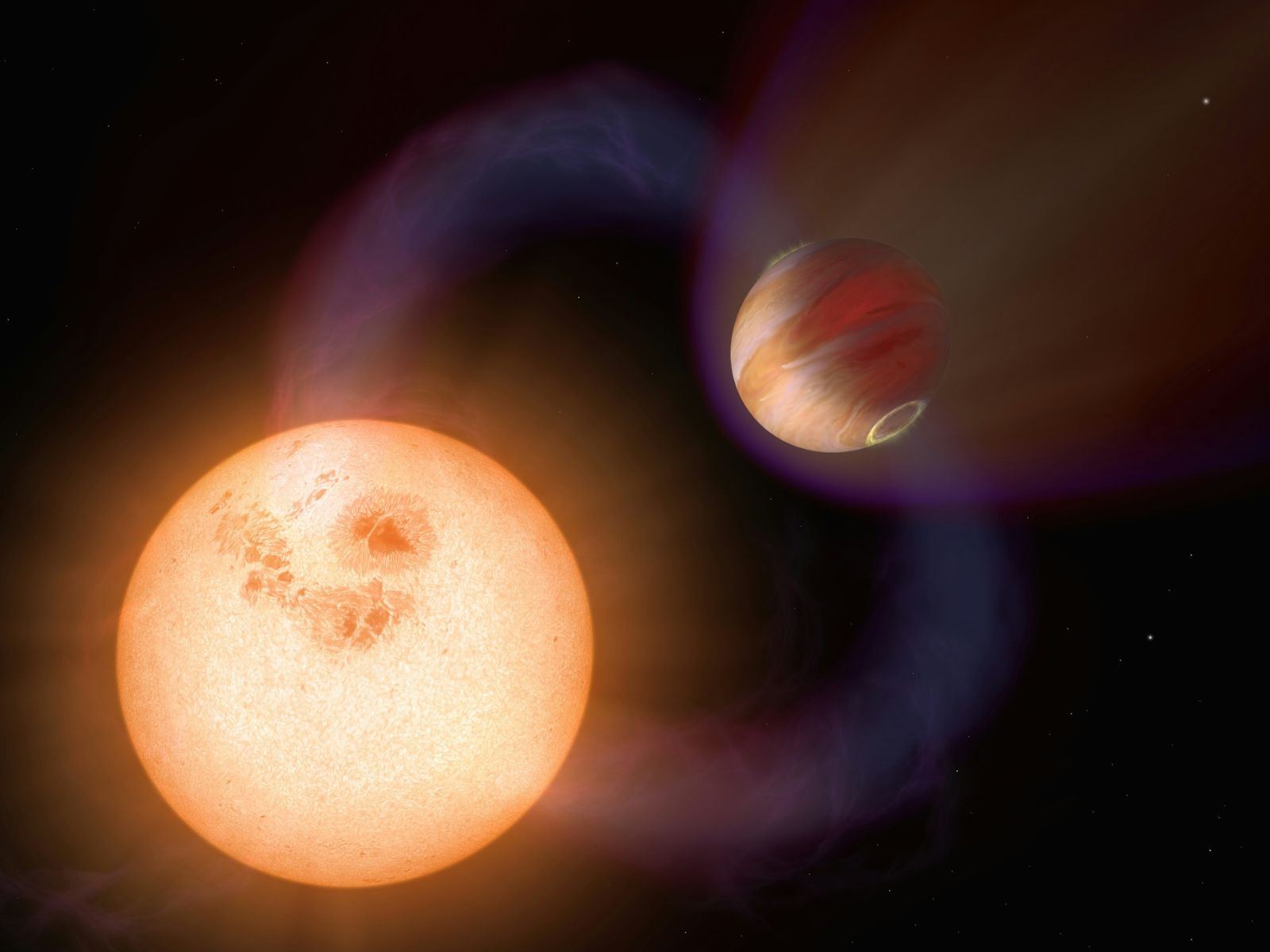
Astronomers have uncovered new details about TOI-1883 b, a strange and unusually lightweight exoplanet that may rank among the lowest-density super-Neptunes ever detected. The planet, located roughly 383 light-years from Earth, is offering researchers a fascinating look at how some worlds can become extremely inflated while orbiting close to their stars.
TOI-1883 b was first identified in 2024 and orbits a red dwarf star known as TOI-1883. Unlike planets in our own solar system that take months or years to complete an orbit, this distant world races around its star in just 4.5 days. That means it sits very close to its host star, a position that may have played a major role in shaping its unusual structure.
Although astronomers had already detected the planet, questions remained about its mass. To investigate further, a research team led by Izuru Fukuda from the University of Tokyo used the Infrared Doppler instrument on the Subaru Telescope in Hawaii. This powerful observatory is equipped with multiple instruments that allow scientists to study space across different wavelengths, making it especially useful for examining planets around cooler stars such as red dwarfs.
The new observations suggest that TOI-1883 b has a mass about 13.7 times greater than Earth’s. Its radius, however, is approximately 5.7 times larger than Earth’s. When those measurements are combined, the result is striking: the planet’s estimated density is only about 0.4 grams per cubic centimeter.
That makes TOI-1883 b incredibly light for its size. For comparison, water has a density of 1 gram per cubic centimeter, meaning this exoplanet is far less dense than many familiar materials on Earth. Its extremely low density suggests that it may have a huge, extended atmosphere, giving it a bloated or “puffy” appearance.
Scientists believe the planet’s close orbit could be key to understanding its current state. One possibility is that TOI-1883 b formed farther away from its star and later migrated inward. As it moved closer, intense ultraviolet radiation from the red dwarf may have stripped away part of its atmosphere over time. Despite that loss, the planet may still retain a large gaseous envelope, explaining its unusually inflated size.
Super-Neptunes like TOI-1883 b are valuable targets for astronomers because they do not have direct equivalents in our solar system. They are larger and more massive than Neptune-like planets in some ways, yet their internal structures and atmospheric compositions can vary widely. Studying them helps researchers better understand how planets form, move, and evolve in different stellar environments.
TOI-1883 b remains a mysterious world. Its low density raises important questions about its composition, age, and history. Is it still losing atmosphere today? Did it form with an unusually thick envelope of gas? How did it survive so close to its star while remaining so large and diffuse?
To answer these questions, astronomers will need additional observations. Future studies could examine the planet’s atmosphere in greater detail, search for signs of atmospheric escape, and refine estimates of its mass and radius. These efforts may reveal whether TOI-1883 b is an extreme example of planetary inflation or part of a broader population of lightweight worlds waiting to be discovered.
For now, TOI-1883 b stands out as one of the most intriguing super-Neptune exoplanets found so far. Its combination of large size, low mass, and close orbit makes it an important target for future exoplanet research and a reminder that the universe continues to produce planets far stranger than anything in our own cosmic neighborhood.