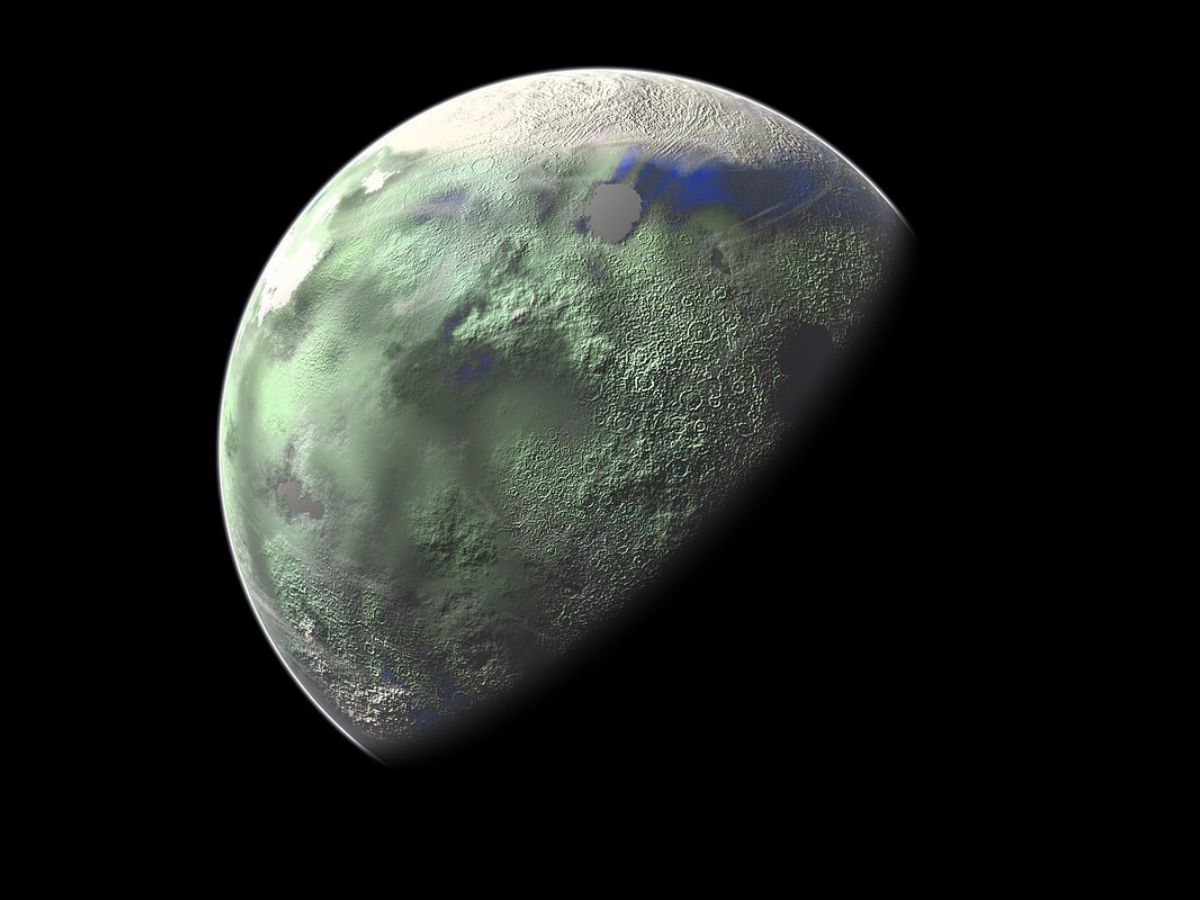
Astronomers have spotted a newly identified rogue planet drifting through the Milky Way about 10,000 light-years from Earth, and it’s roughly the size and mass of Saturn. Discoveries like this are exciting not just because they reveal another hidden world, but because they highlight how much remains unknown about planets that travel through space without a host star.
Most planets form in a system and stay gravitationally bound to one or two stars, the way Earth orbits the Sun. Rogue planets, however, don’t follow that script. They roam the galaxy alone, making them extremely difficult to detect because they don’t shine with reflected starlight the way typical exoplanets do.
This particular object was identified using a technique called gravitational microlensing. As the rogue planet passed in front of a distant background star, its gravity briefly bent and magnified the star’s light, creating a telltale signal that instruments could measure. By combining observations, researchers were able to estimate both its distance—around 9,950 light-years away—and its Saturn-like mass. The find adds to growing evidence that free-floating planets may be common, with researchers suggesting the galaxy could be filled with them.
Yet the biggest question hasn’t changed: how do rogue planets end up alone in the first place?
Astronomers have several leading ideas. One possibility is that young planetary systems can be chaotic, with strong gravitational interactions flinging some planets outward until they escape their star’s pull entirely. Another scenario involves close stellar flybys—passing stars can disrupt a system’s orbits and effectively “steal” stability, potentially ejecting planets into interstellar space. There’s also the intriguing hypothesis that some rogue planets might form on their own, directly from collapsing clouds of gas and dust, without ever becoming part of a traditional star-and-planet system.
The newly cataloged object, designated KMT-2024-BLG-0792/OGLE-2024-BLG-0516, may help scientists test these competing explanations as more data is gathered. And it likely won’t be the last. With improved surveys and next-generation telescopes coming online, astronomers expect to find more rogue planets—possibly even smaller ones—helping piece together how these wandering worlds form, how many exist, and what they can reveal about the history and dynamics of our galaxy.


