Astronomers Discover the Youngest Exoplanet Ever Found
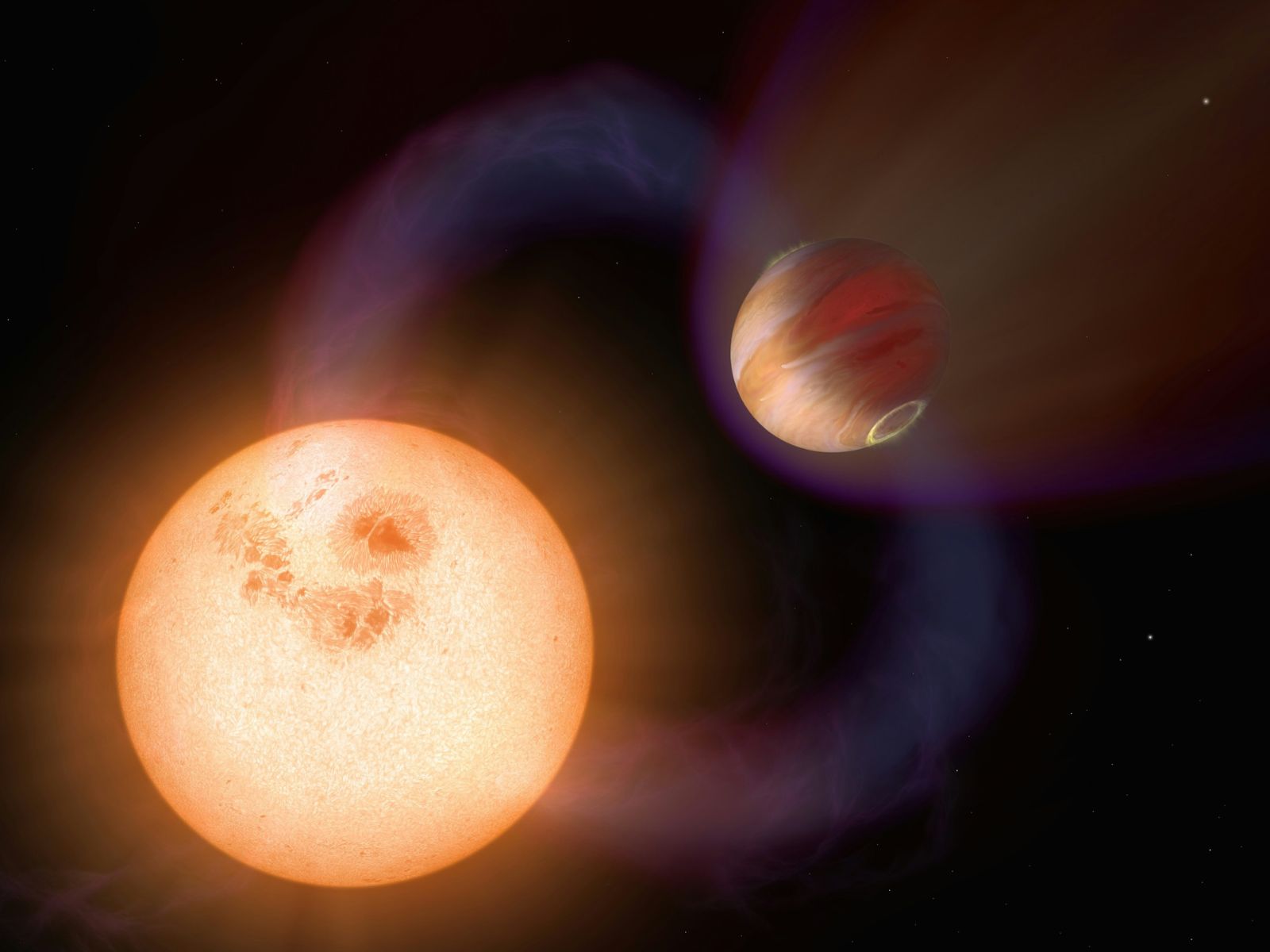
Astronomers have identified what is now considered the youngest exoplanet ever detected, offering a rare look at how planets are born and evolve during their earliest stages. The newly confirmed world, known as Elias 2-24 b, orbits a young star called Elias 2-24 and sits roughly 450 light-years away from Earth.
Exoplanets, planets that orbit stars outside our solar system, are discovered regularly as telescopes become more advanced. But Elias 2-24 b stands out because of its extraordinary age. Scientists estimate that it is less than one million years old, making it exceptionally young in astronomical terms. For comparison, Earth is about 4.5 billion years old.
The discovery was made by a research team led by Andrea Bernardi, a doctoral candidate at Universidad Diego Portales in Chile. The team examined archived observations from the W. M. Keck Observatory in Hawaii, focusing on seven young stars surrounded by debris disks. These disks are made up of gas, dust, ice, and rock, the raw materials that can eventually form planets.
To search for hidden planets within these bright and dusty environments, the researchers used a coronagraph. This instrument blocks the overwhelming light from a star, making it easier to detect faint objects nearby. With the star’s glare reduced, Elias 2-24 b became visible.
The planet is estimated to have a mass between 1.9 and 4 times that of Jupiter. Its large size and extremely young age make it a valuable target for astronomers who want to better understand how giant planets form around young stars.
At first, researchers were cautious about confirming whether Elias 2-24 b was truly a planet. Young star systems are complex, and bright clumps of dust or other features in a debris disk can sometimes mimic the appearance of a planet. To resolve this, the team searched additional Keck Observatory archives and found earlier observations from 2018 and 2020.
By comparing these images over time, the researchers studied the object’s movement. Its behavior matched what would be expected from a planet orbiting its host star, strengthening the case that Elias 2-24 b is indeed a real exoplanet.
The discovery is important because observing planets this young is extremely difficult. Most known exoplanets are much older, meaning astronomers usually see them long after the formation process has already taken place. Elias 2-24 b gives scientists a rare opportunity to study a giant planet while it is still in the early stages of development.
This could help answer major questions about planet formation. Scientists are still working to understand how quickly planets grow, how they gather material from surrounding disks, and how massive worlds like Jupiter form around young stars. Elias 2-24 b may provide new clues about these processes.
Even though this discovery sets a new record, it may not hold that title forever. Future space telescopes and advanced imaging instruments are expected to find even younger exoplanets in the years ahead.
One of the most promising tools for this search is the Nancy Grace Roman Space Telescope, which is designed to study distant planets, dark energy, and the structure of the universe. Its powerful coronagraph technology could allow astronomers to directly image more young worlds around nearby stars.
As telescope technology continues to improve, discoveries like Elias 2-24 b may become more common. Each new find brings scientists closer to understanding how planetary systems form, including systems like our own solar system billions of years ago.