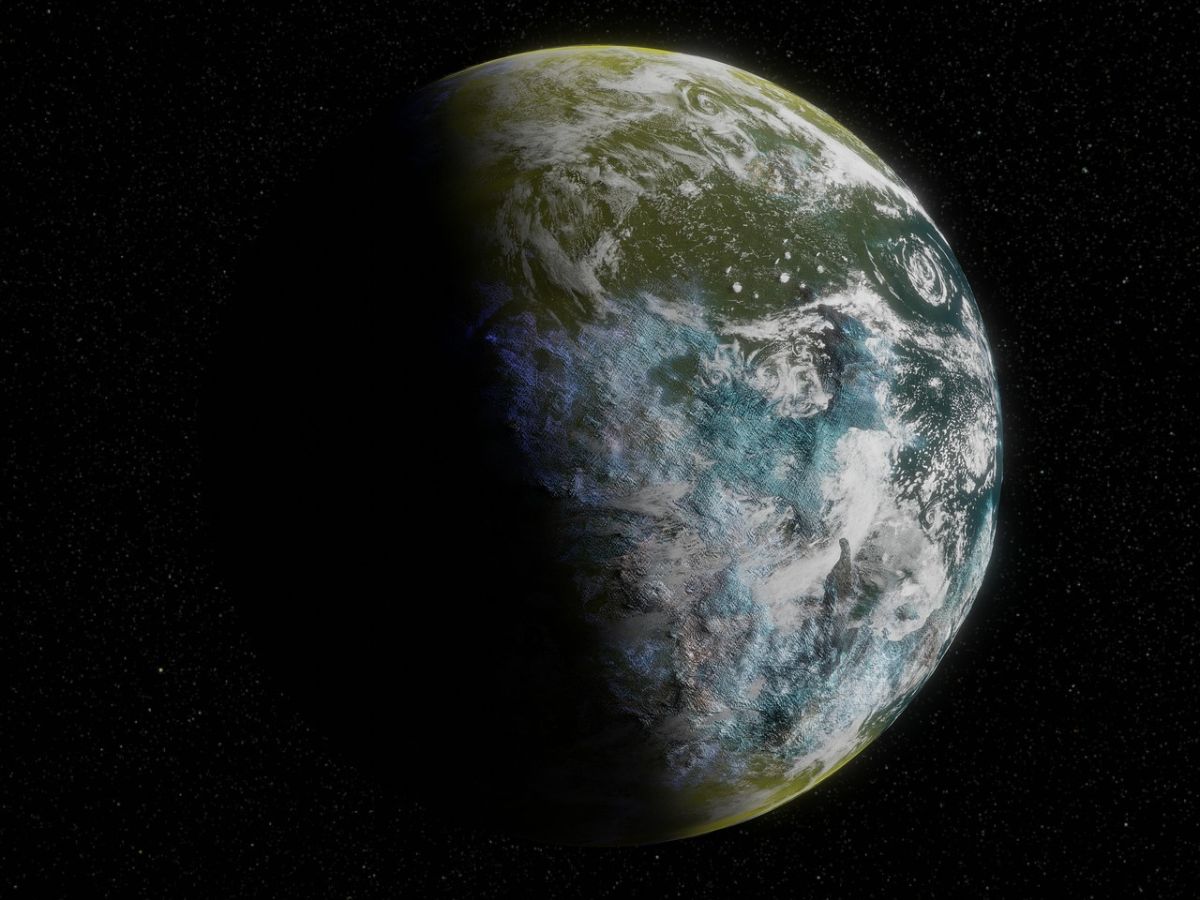
Astronomers have uncovered a compelling new candidate in the hunt for potentially life-friendly worlds: an Earth-like exoplanet spotted in archived Kepler Space Telescope data. The planet, called HD 137010 b, lies roughly 146 light-years from Earth and appears to sit within the habitable zone of its star, the region where conditions may allow liquid water to exist under the right circumstances.
The find, published in The Astrophysical Journal Letters, is drawing attention because HD 137010 b looks surprisingly familiar on paper. Researchers estimate it’s only about 6% larger than Earth and completes an orbit in around 355 days, a duration remarkably close to our own year. That combination of Earth-size proportions and an Earth-like orbital period makes it an especially intriguing target compared with many previously detected exoplanets.
There’s a twist, though. HD 137010 b circles an orange dwarf star that shines less brightly than the Sun. Because the star is dimmer, the planet may receive less energy overall, with estimated surface temperatures around minus 68 degrees Celsius (about minus 90 degrees Fahrenheit). Those conditions could be closer to Mars than Earth—at least if the planet lacks a strong warming mechanism.
That’s where the atmosphere becomes the big unanswered question. Scientists note that if HD 137010 b has a dense atmosphere rich in carbon dioxide, it could trap heat more effectively and raise surface temperatures through a greenhouse effect. In other words, while the basic temperature estimate sounds bleak, a thick atmosphere could significantly change the planet’s real habitability potential.
The discovery also underscores how collaborative science and smart data analysis can still pull major surprises from existing observations. HD 137010 b was identified through the Planet Hunters project, which has helped researchers and volunteers sift through vast amounts of telescope data to spot subtle planetary signals that automated systems can miss.
Even with more than 6,000 confirmed exoplanets discovered so far, most fall into categories that are hard to compare to Earth—massive gas giants, worlds orbiting dangerously close to their stars, or planets located too far away for detailed follow-up. That’s why HD 137010 b stands out: it’s relatively Earth-sized, potentially in the habitable zone, and close enough (in cosmic terms) to justify deeper investigation.
For now, HD 137010 b remains a fascinating mystery. To understand whether it’s truly a promising Earth-like exoplanet—or simply an icy world with the right-looking orbit—astronomers will need follow-up studies that can better constrain its atmosphere, composition, and climate. What’s clear is that discoveries like this continue to refine the search for habitable planets and bring us closer to answering one of humanity’s biggest questions: are we alone in the universe?


