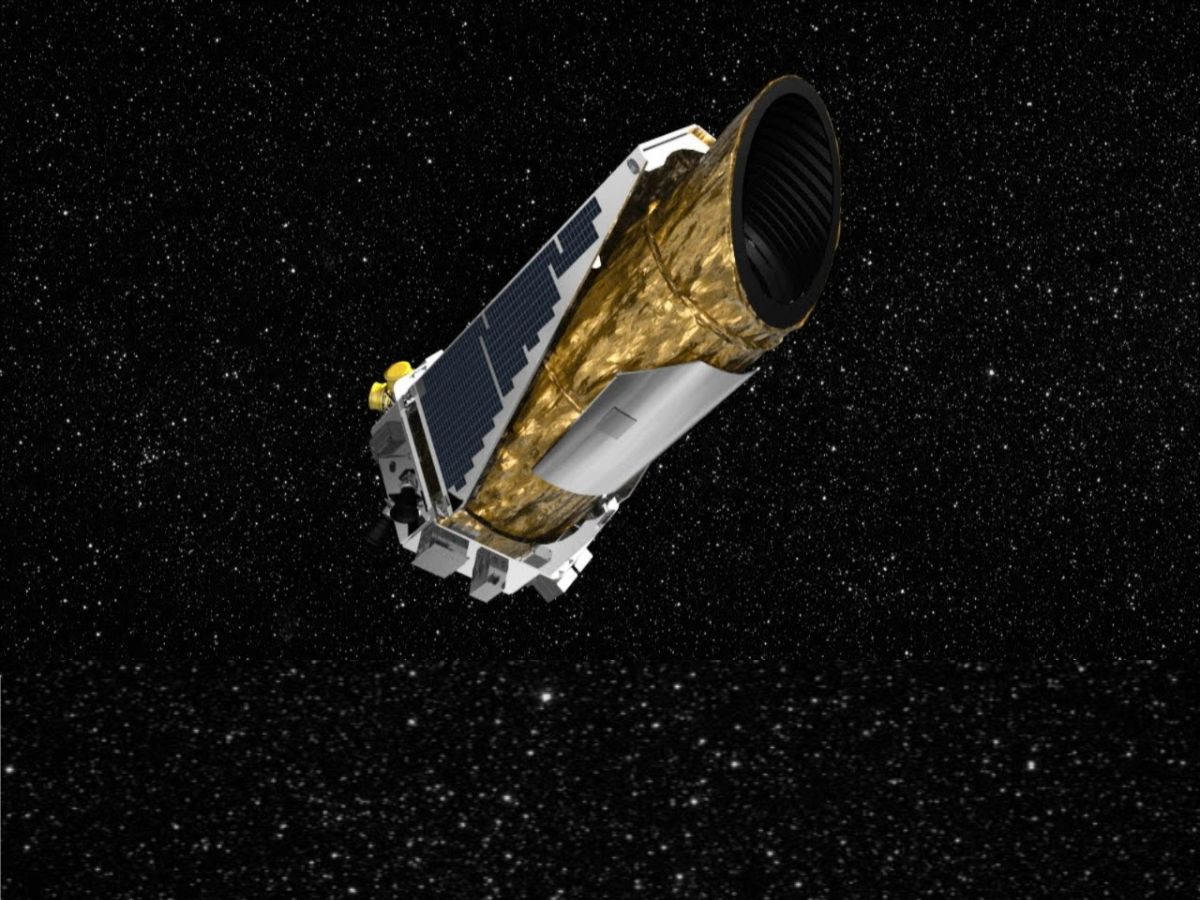
A newly spotted world in NASA’s retired Kepler Space Telescope data is turning heads for an unusual reason: it looks somewhat Earth-like on paper, but it may be far colder than anything we’d want to visit without extreme gear. An international team of scientists has identified a candidate exoplanet called HD 137010 b, a possible rocky planet orbiting a Sun-like star roughly 146 light-years from Earth.
What makes HD 137010 b especially intriguing is its orbit. Based on the team’s analysis, it likely takes about one Earth year to complete a trip around its star. That puts it in a familiar rhythm compared to our own planet, and it also places the candidate near a particularly important region for exoplanet hunters: the habitable zone, the range of distances where a planet could potentially support liquid water on its surface if it has the right atmosphere.
According to the researchers’ models, HD 137010 b may sit right around the outer edge of its star’s habitable zone. Their calculations suggest a 40% chance the planet falls inside the “conservative” habitable zone (the stricter definition) and a 51% chance it lands within the wider “optimistic” habitable zone. However, the team also cautions that it’s essentially a coin flip overall—there’s about a 50-50 chance the planet is actually beyond the habitable zone entirely, which would make surface liquid water even less likely.
Even if HD 137010 b is technically in the right neighborhood, the environment may still be brutally cold. While its star is described as Sun-like, it’s also cooler and dimmer than our Sun. That means HD 137010 b would receive only about one-third of the heat and light Earth gets. With so little energy reaching the surface, scientists estimate temperatures topping out at around minus 90 degrees Fahrenheit—chillier than Mars, which averages around minus 85 degrees Fahrenheit. At those temperatures, liquid water on the surface would be very hard to sustain unless the planet has an atmosphere that traps heat far more effectively than Earth’s, potentially with much higher levels of carbon dioxide.
The discovery itself is also a reminder of how much valuable information still hides in old datasets. HD 137010 b was flagged from a single observed transit, the moment when a planet passes in front of its star and causes a subtle dip in brightness. In this case, the transit lasted about 10 hours. That one event was enough to qualify HD 137010 b as a candidate exoplanet—but not enough to confirm it beyond doubt.
For now, HD 137010 b sits in the “promising but unconfirmed” category: a potentially rocky, Earth-timed planet near the edge of habitability, yet likely frozen unless its atmosphere can create a powerful greenhouse effect. The next step is follow-up observations to determine whether this signal truly belongs to a planet and, if so, to narrow down its orbit and characteristics more precisely.