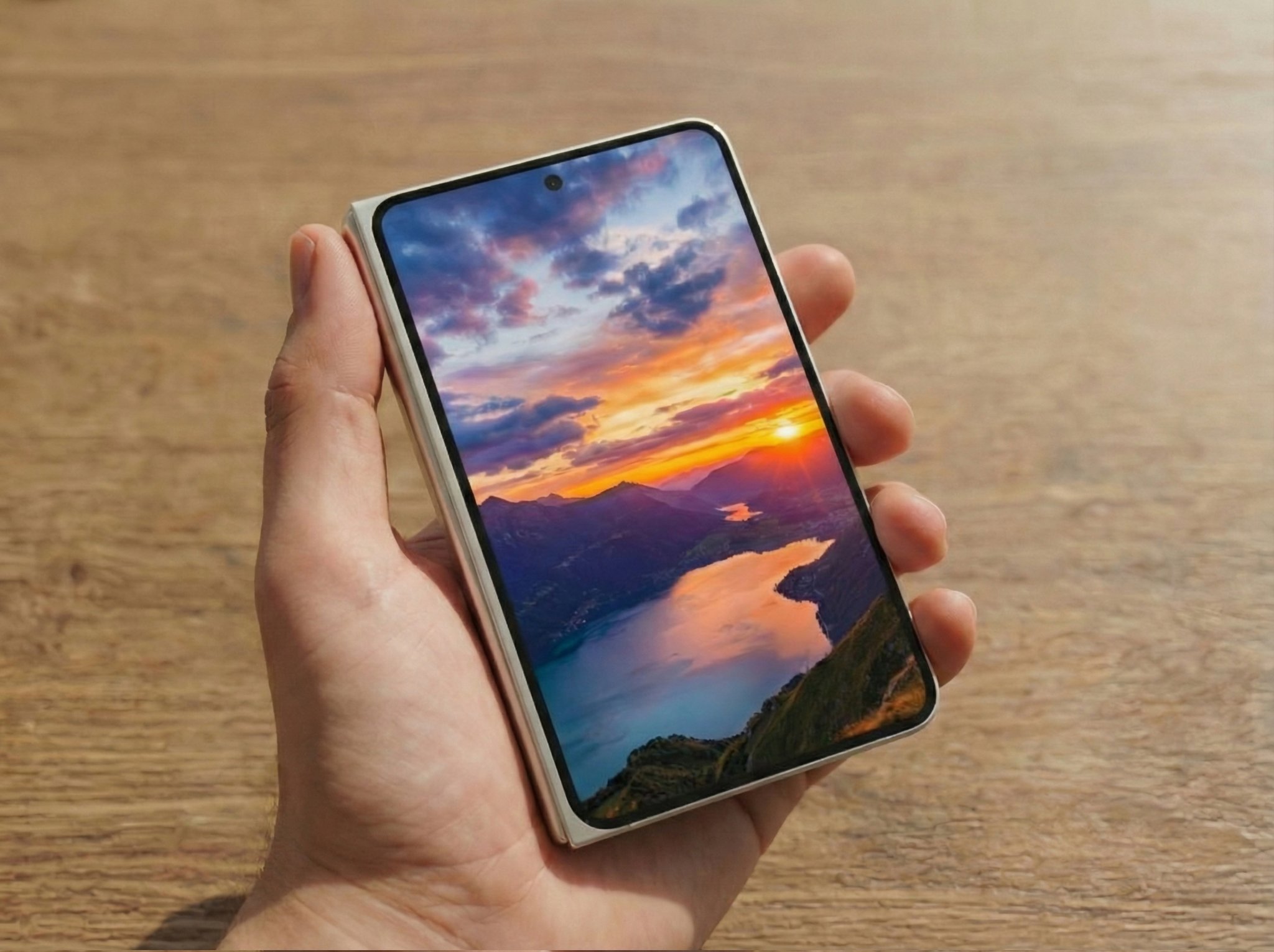
Rumors around the next wave of foldable phones suggest Samsung and Apple may be heading in a similar direction on paper, while still delivering two very different looks and feels in the hand. Both companies are reportedly exploring wider foldables that use a 4:3 aspect ratio for the inner display, a shape that’s closer to a small tablet and typically better suited for reading, browsing, and multitasking than the tall, narrow screens many foldables have used in recent years.
Where things start to diverge is the design language. The so-called Samsung Wide Fold is said to lean into a sharper, more angular aesthetic, giving it a crisp, geometric profile when unfolded. The rumored iPhone Fold, by comparison, is described as having rounder edges and a softer silhouette, closer to the “passport-style” approach popularized by earlier compact foldables. That rounded design could make the device feel more comfortable to hold for long sessions, especially when used like a small tablet.
This wider-and-shorter foldable style isn’t new, and it has clear advantages. The original Oppo Find N showed why a compact, landscape-first foldable can be so appealing: it’s easier to pocket when closed, and when opened it naturally becomes a mini tablet in landscape orientation. Many people prefer that layout over the portrait-first unfolding seen in several book-style foldables, because it feels more natural for watching video, using split-screen apps, and typing on a wider keyboard.
If Apple truly goes for a passport-style form factor instead of simply mirroring the typical tall foldable approach, it could help the iPhone Fold stand out in a market that’s quickly becoming crowded. A wider inner screen can also improve productivity use cases, making space for better multitasking, larger app layouts, and less awkward scaling in tablet-style apps.
Timing-wise, both the Samsung Wide Fold and the iPhone Fold are currently expected to land in the second half of 2026. That’s still far enough away that plans could shift, whether due to hardware challenges, durability goals, display supply, or changing market priorities. For now, it’s best to treat these details—especially around dimensions, final aspect ratios, and exterior styling—as early rumors rather than locked-in specs.