Apple’s long-rumored foldable iPhone is leaking again, and this time the details focus on the part that matters most: the display. New chatter from well-known tipsters suggests Apple’s first iPhone Fold is edging closer to a real production timeline, with its advanced OLED panels reportedly approaching mass production ahead of an expected 2026 launch.
The latest supply chain talk claims Samsung will begin mass production of display panels for the iPhone Fold in May 2026. That point is notable because it lines up with how Apple typically ramps up critical components well before a fall release. The same leak suggests the foldable portion of the screen could follow a little later, potentially around July 2026, putting Apple on track for a September 2026 debut alongside the iPhone 18 Pro family.
One of the biggest questions around any foldable phone is the crease, and rumors are once again pointing to Apple trying to outdo the current foldable field. Another tipster says the first foldable iPhone may deliver screen “flatness” that exceeds many existing foldable models, hinting at a noticeably reduced crease. Separate reporting has put the crease depth at around 0.15mm, which would be extremely small in real-world use. To get there, Apple is widely expected to lean heavily on ultra-thin flexible glass technology, along with an upgraded hinge design rumored to use a “liquid metal” material intended to improve durability and help keep the screen looking smoother over time.
Price expectations are also shifting. A fresh report suggests Apple could target a starting price around $2,000. If accurate, that would come in lower than earlier speculation that pegged the iPhone Fold closer to the $2,300–$2,400 range, though it would still position the device as a premium, flagship-tier foldable aimed at power users.
On the software side, the iPhone Fold is expected to run iOS rather than iPadOS, but with changes designed specifically for a larger inner screen. The goal appears to be an iPad-like experience in key areas, including side-by-side apps for multitasking. Even if Apple avoids the more desktop-style interface found on recent iPad software, the foldable iPhone is still expected to handle two apps at once, which would make the expanded display far more useful for productivity, messaging, browsing, and media consumption.
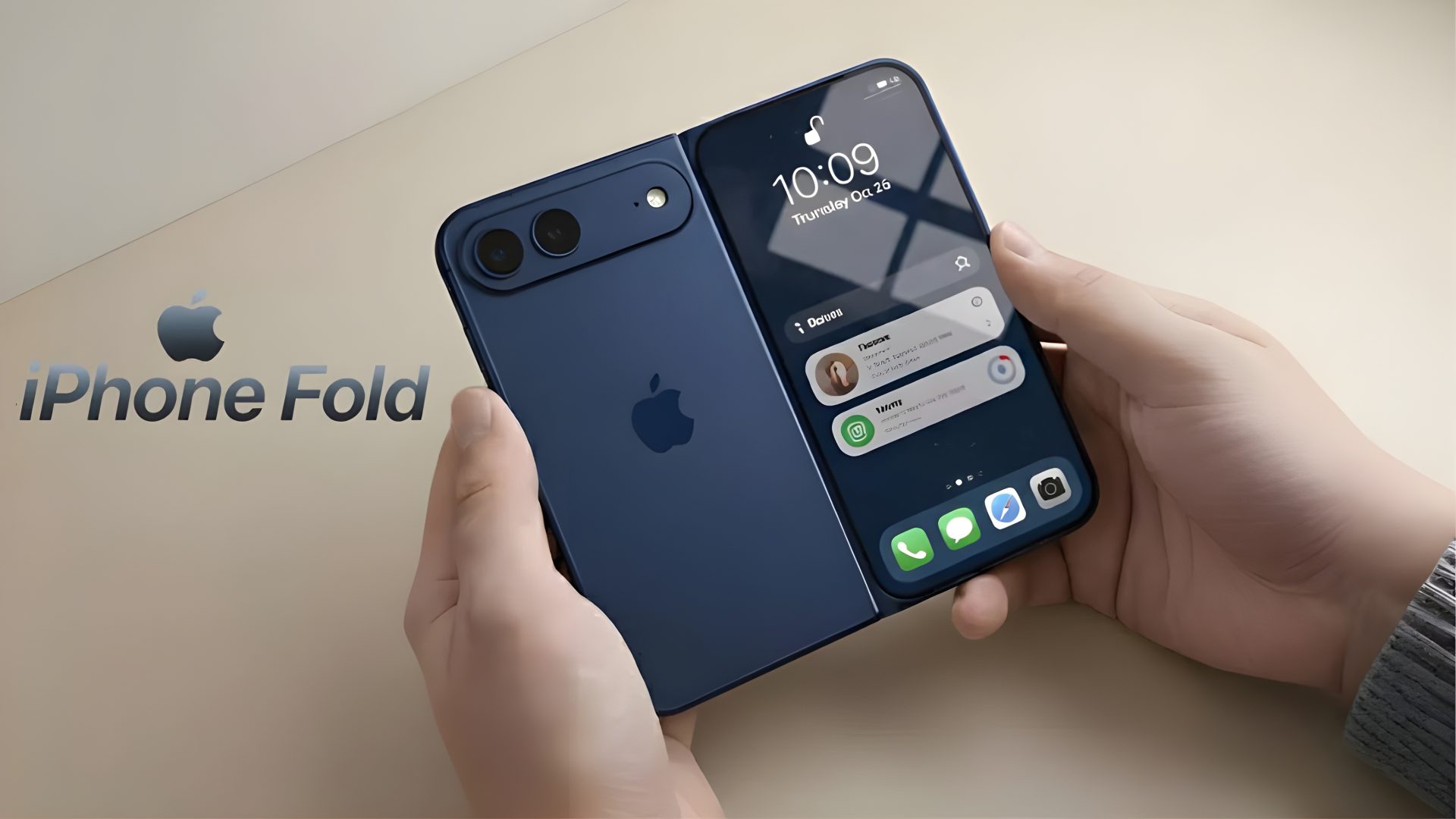
The hardware layout being discussed sounds like a “passport-style” form factor: a wide, tablet-like inner display paired with a smaller outer screen closer to what you’d see on a compact iPhone. The inner panel is expected to be iPad-like in feel, with a wider aspect ratio that’s more comfortable for reading, web browsing, documents, and video.
Camera and biometrics details are also taking shape. Reports indicate Apple may ditch Face ID on the iPhone Fold and instead use Touch ID integrated into the side button, a move that could help free up internal space and simplify the engineering around two displays. The outer display is rumored to include a small hole-punch cutout, while still supporting the Dynamic Island interface for alerts and system activities.
As for the inner screen camera, Apple is said to be testing under-display camera technology, but current testing reportedly produces image quality that isn’t up to Apple’s standards. If that doesn’t improve quickly, the first-generation iPhone Fold may stick with a more conventional approach rather than fully hiding the camera under the display.
On the rear, the device is expected to feature a dual-camera system, with earlier reports pointing to two 48MP sensors. For selfies and video calls, a front-facing camera may reach up to 24MP, depending on the final design.
Other rumored iPhone Fold specifications paint a picture of a true flagship: a dedicated vapor chamber for cooling, a high-resolution inner display around 2,713 x 1,920 with a 4:3 aspect ratio, and an Apple A20 Pro chip paired with 12GB of RAM. Connectivity could come via an in-house C2 5G modem, and the device is expected to launch as an eSIM-only model.
Battery capacity is rumored to land in the 5,400–5,800mAh range, which would be a meaningful figure for a foldable designed to power a larger screen and multitasking features. Apple is also expected to apply a Color Filter on Encapsulation (COE) layer to the OLED stack, potentially making the display lighter and more power-efficient—exactly the kind of incremental engineering that can make a foldable feel less bulky and more refined.
If these timelines hold, the iPhone Fold is no longer a distant concept. With display mass production reportedly penciled in for mid-2026, Apple’s first foldable iPhone looks like it’s entering the phase where designs harden, components lock in, and the path to a launch becomes much more real.